ScienceNot yet confirmed elsewhere1 publisher2 min readPublished
Study explains how doxycycline flips the G12 RNA switch in yeast and human cells
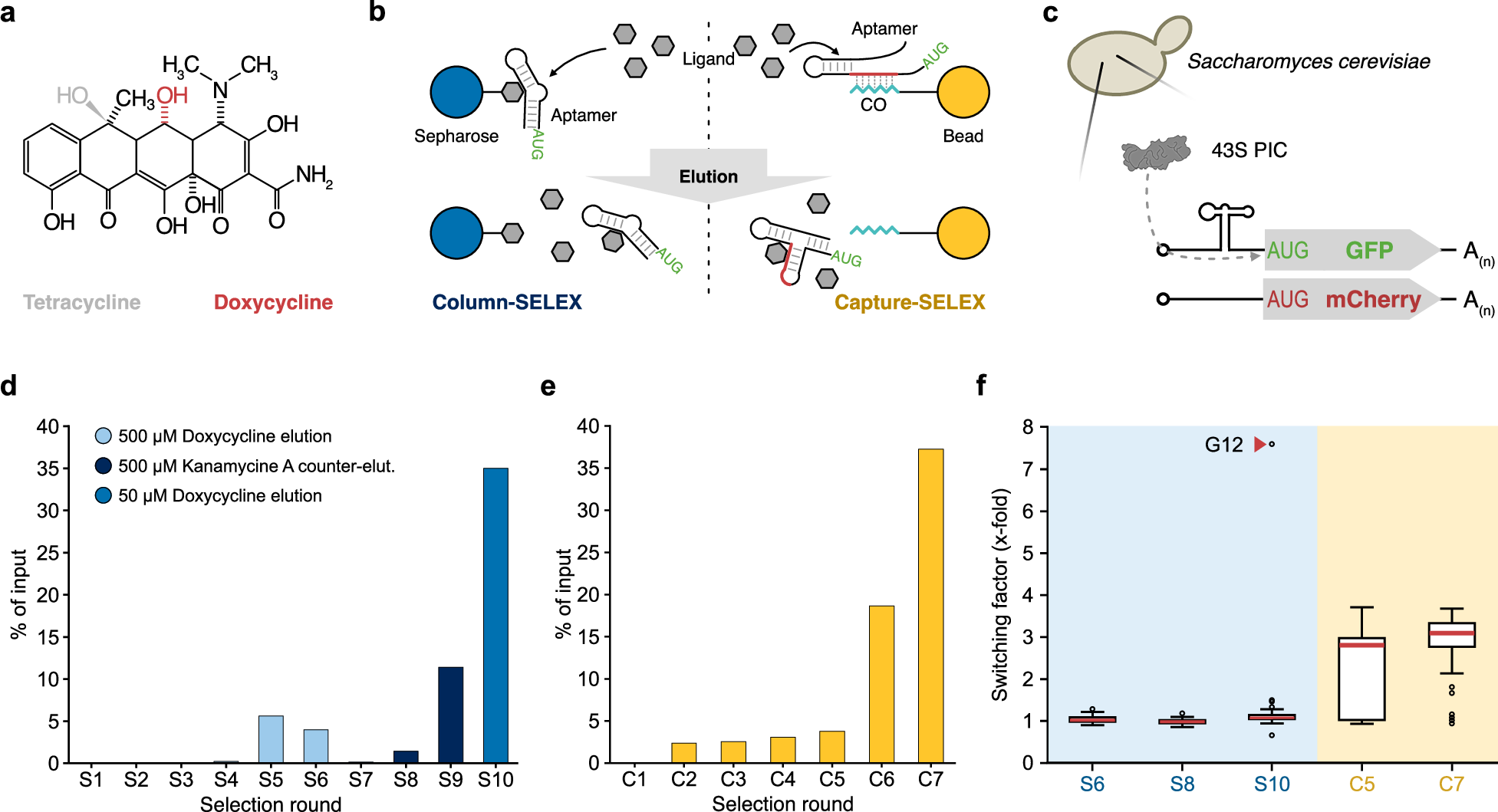
TU Darmstadt researchers have explained how their lab-built G12 riboswitch senses doxycycline and switches genes on or off in yeast and human cells. The Nature Communications paper could let a well-tolerated antibiotic act as an external control for gene expression.
The Scientist · Science desk
What happened
- Doxycycline has treated bacterial infections for decades, is well tolerated and enters cells easily, and the summary says those traits make it a natural signaling molecule.
- G12 builds on the group's 2003 tetracycline-responsive switch in yeast, now with doxycycline as the trigger, and the summary says it works better.
- The team is still examining G12's three-dimensional structure in more detail, and says the results could guide the design of future RNA switches.
- One proposed extension pairs G12 with self-cleaving ribozymes, so that doxycycline decides whether a messenger RNA stays intact or is cleaved and degraded.
Why it matters
- capability A developer picking an inducer for a human-cell switch can start from a drug whose tolerability is already established, and G12 is reported to work in human cells.
- constraint Most RNA that binds a small molecule never becomes a switch, so each new design still means library screening and living-cell tests until a structural rule exists.
- decision Anyone choosing between the tetracycline switch and G12 will need the paper's effect size, because the summary offers only the phrase 'more effective'.
The summary says the study demonstrates for the first time why G12 works so well [8]. It also says the team is still examining G12's three-dimensional structure in more detail [5]. We'd take that to mean the recognition and switching steps are established, and a finer structural picture is still being assembled. The summary does not say which method produced the explanation or which human cells were tested.
Many RNA molecules bind small compounds, but few become effective riboswitches [4]. Binding alone is not enough, because the RNA has to turn recognition into a structural change strong enough to alter gene expression [4]. Finding a candidate takes screening of large RNA libraries, extensive sequencing and, above all, functional tests in living cells [4]. The team says its structural findings could help in the targeted design of future switches [5].
G12 has a lineage. In 2003, Süß and colleagues showed in Nucleic Acids Research that aptamers, short RNA fragments that recognize one substance with pinpoint accuracy, could be applied to tetracycline to regulate protein production in yeast [9]. The summary calls that one of the pioneering platforms for synthetic RNA switches [9].
The team is working with academic and industry partners on adapting G12 to plants, for controlled expression of selected genes [6]. For medicine, the idea is an RNA-based "emergency brake" that could one day slow or halt production of a therapeutic protein if undesirable effects arise [13]. The team describes those uses as still in the early stages of development [13]. In the long term, the summary says, doxycycline-gated mRNA could add control and safety to mRNA medicines, vaccines included, and to gene therapies [12].
In our view, the claim the evidence supports today is narrow: a lab-built switch that responds, in yeast and in human cells [7], to a drug with decades of use against bacterial infections [3], plus a better account of why. Every medical use in the summary is phrased as "could", "one day" or "in the long term". Whether doxycycline can be dosed to hold a switch where a patient needs it is a separate experiment.
What to watch
- The Nature Communications paper's quantitative comparison of G12 with the tetracycline-based switch, including how much more effective it is.
- Publication of G12's detailed three-dimensional structure, which would show whether the recognition mechanism supports rational redesign.
- First data on G12 aptazymes or on G12 in plants, the two extensions the team says it is pursuing.
Clarity's read
What the record supports and how the coverage leans. The claims behind it follow.
Reality
- Evidence50
- Adoption
- Insufficient
- Hype gap+25
- Incentives40
- Confidence50
Claim ledger
Ranked by verification strength, evidence, and original report placement.
- [1]
An international research team led by TU Darmstadt Professor Beatrix Süß, working with partners in Germany and Denmark, elucidated how an RNA switch newly developed at TU Darmstadt recognizes the antibiotic doxycycline and thereby selectively activates or deactivates gene expression.
- [2]
The team published its findings in Nature Communications.
- [3]
Doxycycline has been used for decades to treat bacterial infections; it is well tolerated and easily penetrates cells, which the summary says makes it an ideal signaling molecule for controlling a riboswitch from the outside.
- [4]
Many RNA molecules can bind small compounds but only a few can be converted into effective riboswitches, because the RNA must also translate recognition into a structural change strong enough to influence gene expression; finding such candidates requires extensive screening of large RNA libraries, extensive sequencing and, above all, functional tests in living cells.
- [5]
The research team is currently investigating the three-dimensional structure of G12 in greater detail to better understand how it works, and these findings could help in the targeted design of future RNA switches.
- [6]
Together with partners from academia and industry, the team is exploring how G12 can be adapted for broader applications in synthetic biology, including the controlled expression of selected genes in plants.
- [7]
The switch, known as G12, was developed in the laboratory and functions reliably in both yeast and human cells.
- [8]
The study demonstrates for the first time why G12 works so well.
- [9]
In 2003, Süß and colleagues showed, in work published in Nucleic Acids Research, that aptamers (short RNA fragments that recognize a specific substance with pinpoint accuracy) could be applied to the antibiotic tetracycline to conditionally regulate protein production in yeast, establishing one of the pioneering platforms for synthetic RNA switches.
- [10]
The new study builds on the group's 2003 tetracycline-aptamer work in yeast, now using doxycycline as the trigger, and according to the summary proves more effective than the tetracycline-based switch.
- [11]
Combining G12 with self-cleaving ribozymes could produce hybrid constructs called aptazymes, designed so that doxycycline determines whether a messenger RNA remains intact or is cleaved and subsequently degraded.
- [12]
In the long term, the aptazyme principle could provide an additional level of control and safety for mRNA-based medicines, including vaccines, as well as for gene therapies.
- [13]
Such an RNA-based emergency brake could one day make it possible to slow down or halt the production of a therapeutic protein should undesirable effects arise; the applications are still in the early stages of development.
Sources
1 independent publisher whose own reporting we read for this story.
- phys.orgA small RNA switch with huge potential opens up new possibilities for synthetic biology
1 article · October 13, 2026
Topics and entities
Follow any of these and your For You feed starts watching them — no settings page required.