Science1 publisher2 min readPublished
Crystals from three La Palma eruptions trace each one to a deep magma recharge days or weeks earlier
Crystals in lava from La Palma's 1712, 1971 and 2021 eruptions show hot mantle magma stirring a mush 18 to 25 km down days or weeks before each one. The authors say that record helps read future unrest at depths monitoring networks struggle to see, though it cannot date the next eruption.
The Scientist · Science desk
What happened
- The 2021 Tajogaite eruption, La Palma's first in 50 years, ran almost three months, destroyed thousands of buildings and forced more than 7,000 people from their homes.
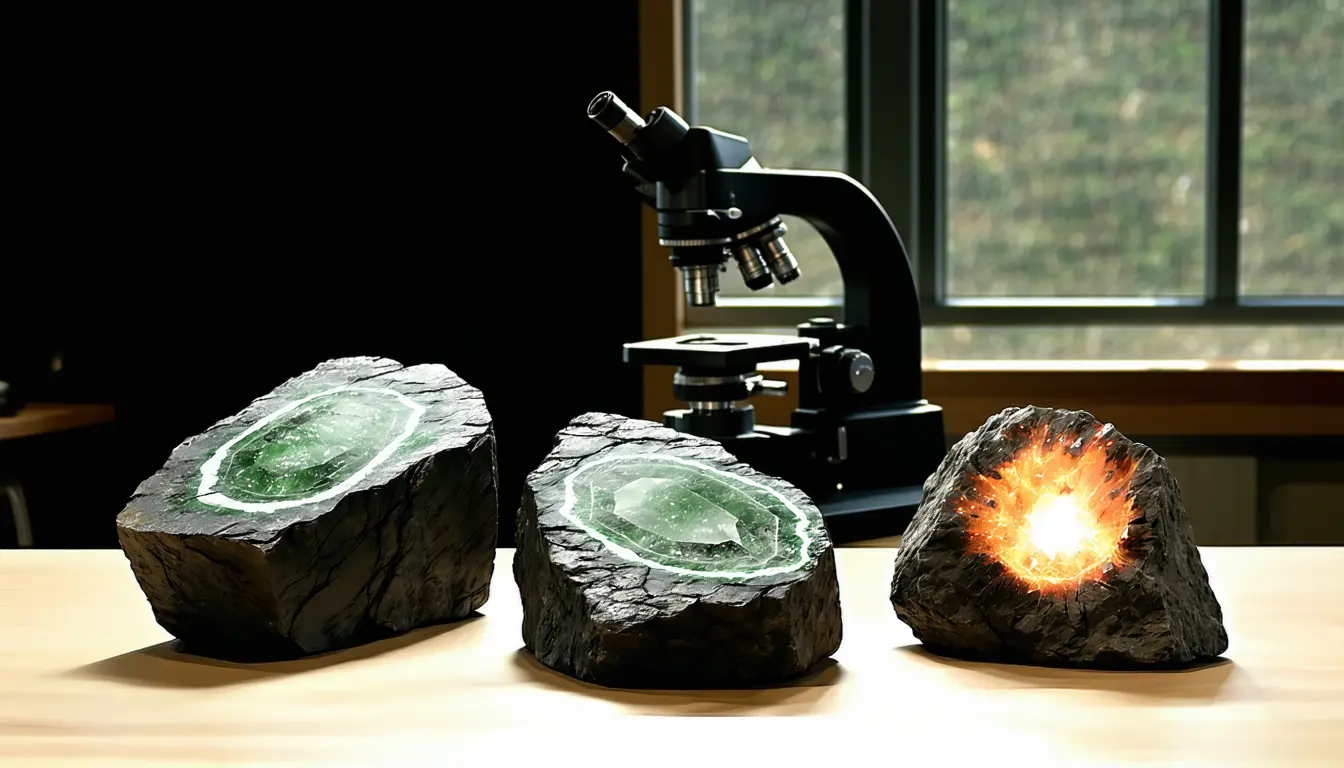
- The team read the crystals' growth zones with high-resolution chemical imaging, treating the layers like tree rings, and found one sequence repeating across more than 300 years.
- The crystal cores grew in an old, cool, crystal-packed mush that had sat undisturbed for a long time before hot magma was injected into it.
- The outermost rings record a fast final ascent as the magma broke through the overlying rock to feed each eruption.
Compiled by The ScientistSomething wrong?How this is made
Why it matters
- constraint Much of La Palma's magma gathers in the upper mantle, so unrest can build where earthquake, deformation and gas networks see least.
- decision When La Palma's observatory detects unrest, it can compare it with the days-to-weeks gap between deep recharge and eruption that the crystals record, to judge how fast an eruption might come.
- precedent If the similar zoning in Azores, Cape Verde and Galapagos crystals reflects the same deep trigger, La Palma's way of reading deep unrest would apply at other volcanic islands too.
Three eruptions spread across 309 years is a small sample, but it is the right kind for this question [3][1]. Clinopyroxene adds layers slowly as magma cools. Each layer keeps a record of the temperature, depth and chemistry of the melt around it [2]. A deep recharge found only in 2021 crystals could be a quirk of that one eruption. According to the study's authors, who published the work in Nature Communications, the same zoning turns up in lava from 1712 and 1971 as well [3].
The middle rings hold the finding that matters most for monitoring. They show hot magma rising from the mantle days or weeks before each eruption, partly melting the old crystals and stirring the mush [6]. That mush sat 18 to 25 kilometres down, in the upper part of the mantle [4]. Monitoring networks pick up earthquakes, ground deformation and gas emissions as magma moves. Magma at that depth is much harder to detect than magma near the surface [8].
The authors are measured about the payoff. "While our research does not forecast when the next eruption will occur, it does help us interpret future episodes of volcanic activity," they wrote [11]. They argue that knowing the trigger sits deep lets observatories judge how quickly an eruption might develop once warning signs appear [12].
The thing this doesn't tell you is whether the deep injection produces a signal instruments could catch in time. The crystals come from lava that has already erupted [3], so they reconstruct the preparation after the fact. Days or weeks is the gap the crystals record between recharge and eruption [6]. It is not a measured lead time for any seismic or deformation signal. The published account also does not say how many crystals were analysed or how tightly that interval is pinned down.
For volcanoes that go decades between eruptions, I think crystal records are most useful as a guide for reading instrument data. La Palma had no volcanic activity for 50 years before Tajogaite [1]. Crystals from earlier eruptions can tell an observatory ahead of time that the next episode may start in the upper mantle and reach the surface within days or weeks of fresh magma arriving [4][6]. Whether that guide carries to other islands depends on whether their crystals record the same timing. Clinopyroxene from the Azores, Cape Verde, the Galapagos and other Canary Islands shows similar zoning, and the authors call those records consistent with deep mushes that may be widespread beneath volcanic islands [10].
What to watch
- Whether crystals from the Azores, Cape Verde and the Galapagos are timed the same way and show the same days-to-weeks gap between deep recharge and eruption.
- Whether the next unrest episode at La Palma produces a deep seismic or deformation signal that lines up with the recharge interval the crystals record.