Science1 publisher2 min readPublished
Nottingham study finds root's cellular complexity sets how far it can remodel itself in response to microbes
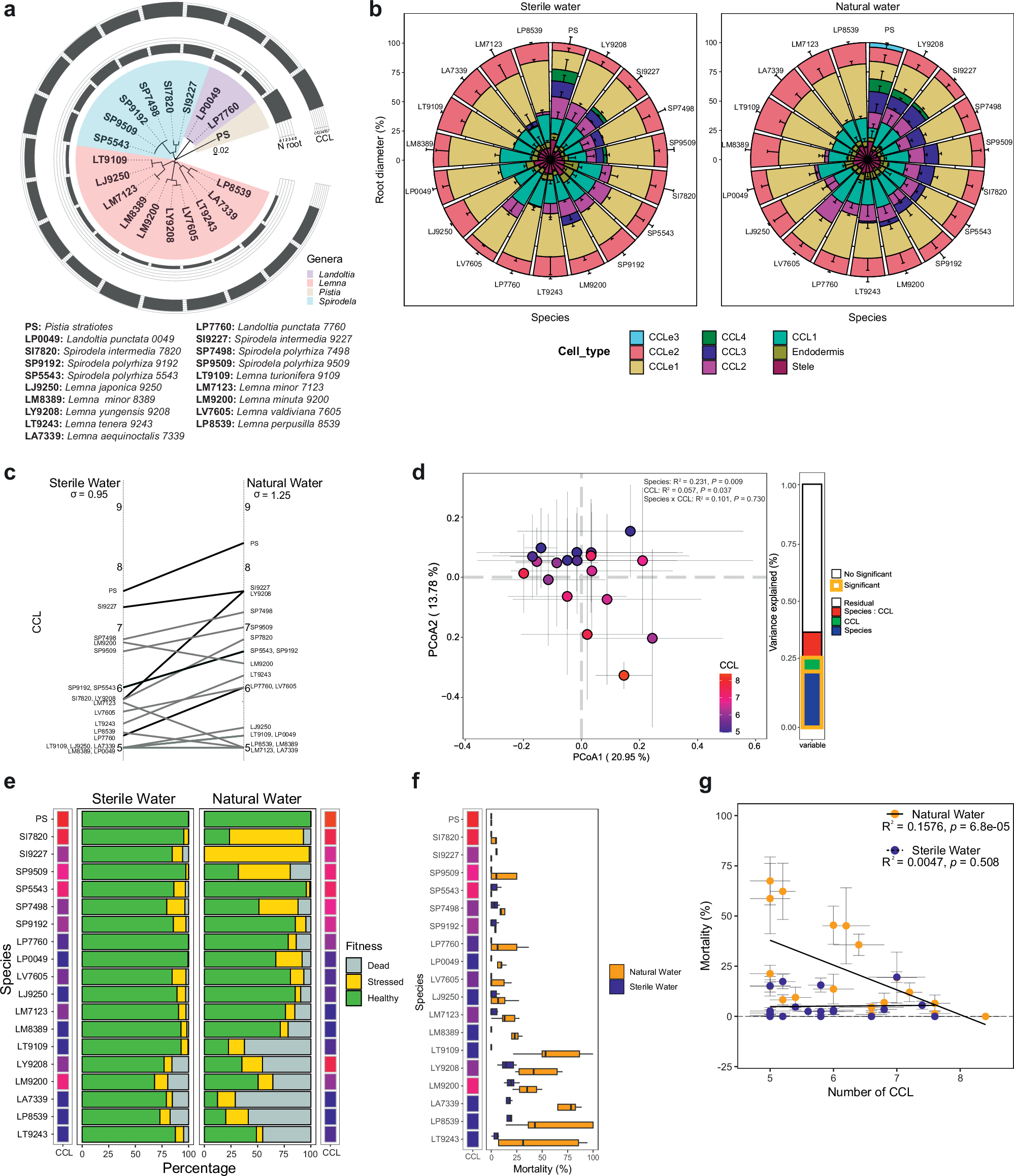
A Nature Communications paper from the University of Nottingham reports that microbial colonization reprograms a root's metabolism while the root rebuilds its anatomy, and that the root's structural complexity sets how much rebuilding is available.
The Scientist · Science desk
What happened
- Nottingham biologists report that the complexity of a root's cellular layout determines how far it can remodel itself once microbes colonize it, producing a microhabitat the plant can alter in response to bacteria.
- Root cross-sections differ enormously between species, from the thick woody root of a mangrove to the fine hairlike strands of a scallion or duckweed.
- The release names direct application of N6,N6,N6-trimethyl-L-lysine, together with synthetic biology approaches, as possible ways to steer root-microbe interactions toward beneficial outcomes.
- The work appears in Nature Communications under the title 'The metabolic and anatomical complexity of root microhabitats modulate their interaction with the microbiota'.
Compiled by The ScientistSomething wrong?How this is made
Why it matters
- capability Controlling which metabolites a root secretes would give a grower or breeder a way to feed a chosen microbe directly, since Castrillo identifies those metabolites as the carbon sources beneficial strains live on.
- constraint Anatomy becomes a variable an inoculant screen has to hold constant, because a host root with few cell layers may not be able to make the microhabitat the strain was selected in.
- decision Breeding programmes selecting on root architecture are, on this account, also selecting on microbiome capacity, so the two traits stop being separate choices at the plot stage.
The finding contains two claims, and each needs a different experiment. One is that colonization changes the root while it is under way, with metabolic reprogramming running alongside the anatomical change [3]. That can be shown in a single species, with microbes and without. The second claim, that the amount of change available depends on how much structure the root has to work with [1], needs either a comparison between roots of contrasting build or a way to alter anatomy inside one species. The phys.org report does not name the species studied, the microbes used, the dose of trimethyllysine, or any effect size [12].
Anatomy and metabolism also travel together. A thick woody root and a fine hairlike strand [5] differ in far more than the number of cell layers, so a correlation between complexity and plasticity measured across species would not on its own put the cause in the anatomy. The paper's title carries both terms [2], and so does its lead author. "Our findings highlight the importance of both root anatomical and metabolic complexity in shaping plant-microbiome interactions, particularly under environmental stress," Gabriel Castrillo said [6].
Castrillo's intervention acts on the plant. He said "synthetic biology approaches could be used to precisely control the production of key metabolites that serve as carbon sources for beneficial microbes," and that such approaches "may also offer a way to selectively enhance specific features of root anatomy while preserving essential root functions" [7]. Producing a chosen carbon source for a chosen microbe is the easier of those two jobs; changing root anatomy while preserving essential root functions is the harder one.
The release also points to direct application of N6,N6,N6-trimethyl-L-lysine, alongside those engineering routes [8]. Direct application needs no engineering at all: one compound, applied to a root.
The framing throughout is ecological. Roots are colonized by diverse and metabolically active microbes, and the paper treats them as functionally similar to the animal gut in that respect [10]. Under that view a root is a habitat the plant can rebuild as bacteria arrive. The number of cell layers sets how much rebuilding is available.
What is on offer here is recruitment of a microbiome under scarce nutrients [4], with plant resilience "to adverse conditions" as the stated goal [6]. Getting from that to an inoculant a grower would buy takes trials in soil, with untreated controls, measured on yield. The paper, by Juan P. Frene and colleagues, appeared in Nature Communications [2]; the university's release names Castrillo as lead author [11].
What to watch
- Whether the paper itself manipulates anatomy within one species, the design that would separate structure from the metabolism that varies with it.
- A dose-response for direct N6,N6,N6-trimethyl-L-lysine application on a crop root, in soil rather than a growth system.
- Any inoculant trial that reports its results split by the recipient root's anatomical class.