Snake hooks, bags and boots could carry reptile fungal disease between Australian sites, authors say
Researchers advise Australian reptile handlers to leave disinfectant on snake hooks and tools for 2 to 10 minutes. They say there is not yet evidence that handlers have spread the fungi between wild populations.
The Scientist · Science desk
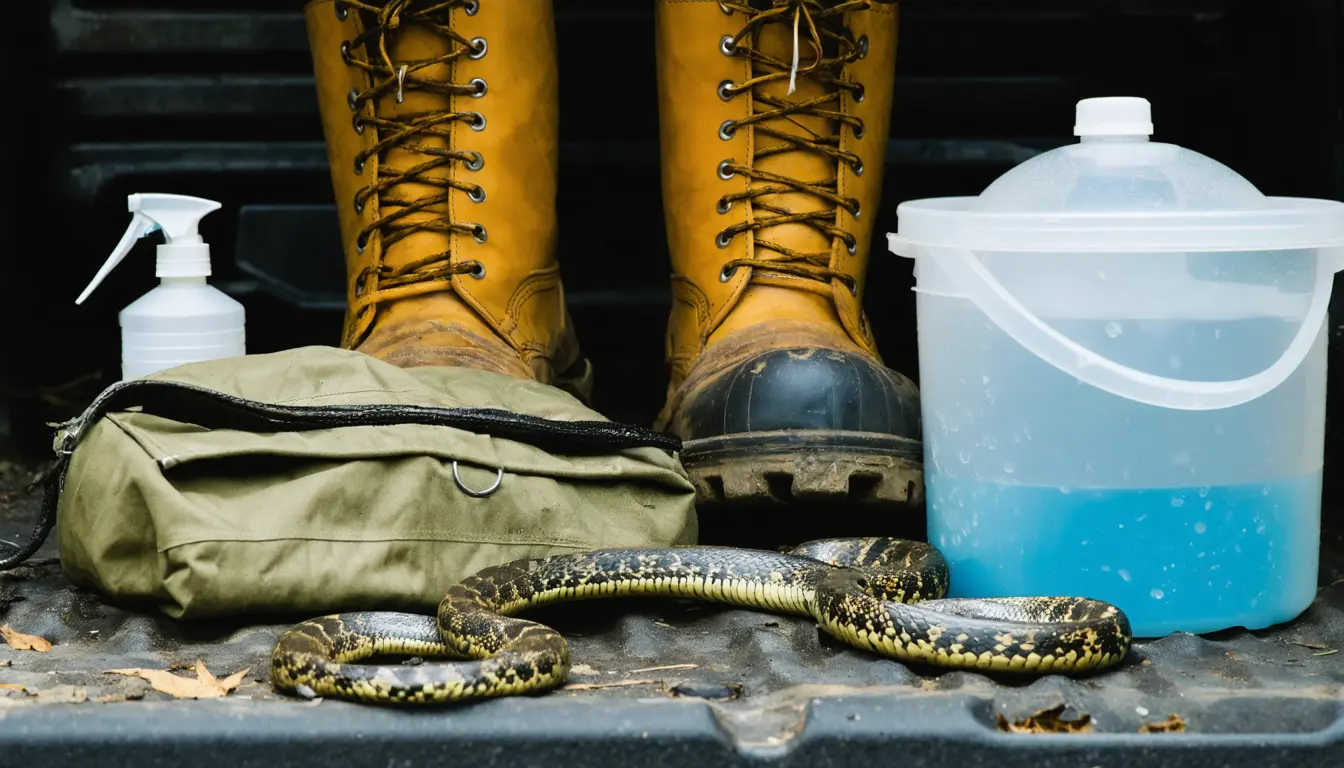
Handlers are told to leave disinfectant such as 70% ethanol on tools 2 to 10 minutes. They often move between sites with gear; the pet trade is a likely source; Brisbane water dragons were infected more from habitat; disinfection is not routine outside specialized programs.
- cost Reptile handlers Clean tools, then leave 70% ethanol, diluted bleach or veterinary disinfectant on for 2 to 10 minutes, claim 1
- exposure Handlers moving between sites Often move between locations in a short period of time, taking equipment with them, claim 14
- exposure Pet trade A likely source into wild populations, authors say, as the diseases were found in captive reptiles, claim 13
- exposure Brisbane's water dragons More often infected from contaminated habitat than from direct contact, research found, claim 4
- contradiction Outside specialized programs Guidelines recommend routine disinfection of equipment; authors say it is not routine here, claim 6
| Who | How | Kind | Claim |
|---|---|---|---|
| Reptile handlers | Clean tools, then leave 70% ethanol, diluted bleach or veterinary disinfectant on for 2 to 10 minutes | cost | 1 |
| Handlers moving between sites | Often move between locations in a short period of time, taking equipment with them | exposure | 14 |
| Pet trade | A likely source into wild populations, authors say, as the diseases were found in captive reptiles | exposure | 13 |
| Brisbane's water dragons | More often infected from contaminated habitat than from direct contact, research found | exposure | 4 |
| Outside specialized programs | Guidelines recommend routine disinfection of equipment; authors say it is not routine here | contradiction | 6 |
What happened
- Two fungi are known to infect wild Australian reptiles: Ophidiomyces ophidiicola, which causes snake fungal disease, and Nannizziopsis barbatae, which affects eastern water dragons and carpet pythons.
- Infected reptiles can carry and shed the pathogens without obvious signs of disease, so the authors say that leaving sick-looking animals alone is not enough.
- Biosecurity guidelines already recommend routine disinfection of equipment and clothing, but the authors say this is not routine outside specialized programs.
- The other steps are cleaning hands between animals, one washed bag per animal, disinfected boots between sites, and separate equipment for captive and wild reptiles.
- Worldwide, snake fungal disease has been linked to a fall in wild snake populations.
Why it matters
- constraint The advice rests on plausible pathways, so no handler or agency can yet point to a measured drop in infections from following it.
- cost The supplies are cheap, but the contact time is a real delay for people who move between sites in a short period and carry their gear with them.
- decision Rescue groups, consultancies and tour operators that do not run a specialized biosecurity program now have to decide whether to make disinfection standard practice.
- exposure Because little is known about which Australian species are most vulnerable, prevention cannot yet be aimed at particular animals and has to apply to every handling.
The nearest thing to evidence on the route is not about handlers. Research on Brisbane's water dragons found that contaminated habitat was a likelier source of infection for the animals than contact with other dragons carrying the infection [4]. The fungi persist in soil or decaying matter [5]. If habitat is the reservoir, a boot or hook that touches it is a plausible carrier. That step is our inference from the dragon work, not a finding the authors report.
The authors are direct about the gap. "We don't yet have evidence that people are spreading reptile fungal pathogens between wild Australian reptile populations," they wrote [2]. The cleaning steps are recommendations, and the article does not report a trial of whether they lower infection.
The case for acting rests on plausibility and on precedent. Amphibian chytrid fungus has been spread to remote refuges through human activities, including tourism [7]. That is a different fungus in a different animal group. It shows a human-borne pathway can exist and does not show that one exists here.
The captive trade is a second route. In Australia, snake fungal disease turned up in captive snakes years ahead of its first detection in wild populations [8], and the authors say the pet trade is a likely source of introduction [13]. They add that people who keep pet reptiles and also handle wild ones should take particular care [15].
In our view the steps are worth adopting. The kit is cheap [16], and the loss from doing it unnecessarily is a few minutes per call. The condition is that nobody should quote "reduces risk" as a measured effect. The thing this doesn't tell you is how much transmission, if any, runs through handlers' equipment rather than through the soil under their boots.
What to watch
- A field study comparing infection rates at sites visited by handlers who disinfect with rates at sites visited by handlers who do not.
- Any detection of Ophidiomyces or Nannizziopsis in a new wild population that is traced to handler equipment.
- Whether wildlife agencies add disinfection to the routine expectations for licensed handlers outside specialized programs.
Clarity's read
What the record supports and how the coverage leans. The claims behind it follow.
Reality
- Evidence40
- Adoption
- Insufficient
- Hype gap−10
- Incentives
- Insufficient
- Confidence45
Claim ledger
Ranked by verification strength, evidence, and original report placement.
- [1]
The authors recommend cleaning hooks and tools, then disinfecting them with 70% ethanol, diluted bleach or veterinary disinfectant and leaving it on for 2 to 10 minutes.
- [2]
"We don't yet have evidence that people are spreading reptile fungal pathogens between wild Australian reptile populations," the authors wrote.
- [3]
Reptiles can carry and shed fungal pathogens without obvious signs of disease; an animal may be newly infected, tolerate the infection without becoming visibly sick, or have recently recovered.
- [4]
Research on Brisbane's water dragons found they were more likely to become infected from contaminated habitat than from direct contact with infected dragons.
- [5]
The fungi persist in the environment, in soil or decaying matter.
- [6]
Wildlife biosecurity guidelines recommend routine disinfection of equipment and clothing to prevent pathogen spread, but the authors say this is not routine outside specialized programs.
- [7]
Amphibian chytrid fungus, which has devastated frog populations worldwide, has been spread to remote refuges through human activities, including tourism.
- [8]
Snake fungal disease was detected in captive Australian snakes years before it was found in the wild.
- [9]
Several fungal pathogens infect wild Australian reptiles, including Ophidiomyces ophidiicola, the cause of snake fungal disease, and Nannizziopsis barbatae, which affects eastern water dragons and carpet pythons.
- [10]
Worldwide, snake fungal disease has been linked to a fall in wild snake populations.
- [11]
The other recommended steps include cleaning hands between animals, using one bag per animal and washing bags before reuse, cleaning and disinfecting boots between sites, and keeping captive and wild reptiles and their equipment separate.
- [12]
Relatively little is known about which Australian reptile species are the most vulnerable to these fungal diseases.
- [13]
Because these diseases were found in captive Australian reptiles in the past, the pet trade is a likely source of introduction into wild populations.
- [14]
People who handle reptiles often move between locations in a short period of time, taking equipment with them.
- [15]
People who keep pet reptiles and also handle wild reptiles should take particular care.
- [16]
The authors describe the fixes as simple, inexpensive and easy to use in the field.
Get this ledger inside ChatGPT. Ask about any of our stories and the answer brings its figure, each claim’s verdict and the sources. Free, no account.
Sources
1 independent publisher whose own reporting we read for this story.
- phys.orgSimple cleaning steps could curb deadly fungal disease risks for Australia's wild reptiles
1 article · October 13, 2026
Topics and entities
Follow any of these and your For You feed starts watching them — no settings page required.
Topics
- Australian reptilesFollow
- BiosecurityFollow
- Wildlife diseaseFollow