BuildNot yet confirmed elsewhere1 publisher3 min readPublished Updated
SemiAnalysis's facility census puts China's AI-ready datacenter capacity at 24GW
SemiAnalysis counted more than 1,000 Chinese datacenters and puts China's AI-ready capacity at 24GW, against about 56GW in the US. The figure counts halls and power, so how much compute it means depends on whether export-controlled accelerators arrive to fill them.
The Engineer · Build desk
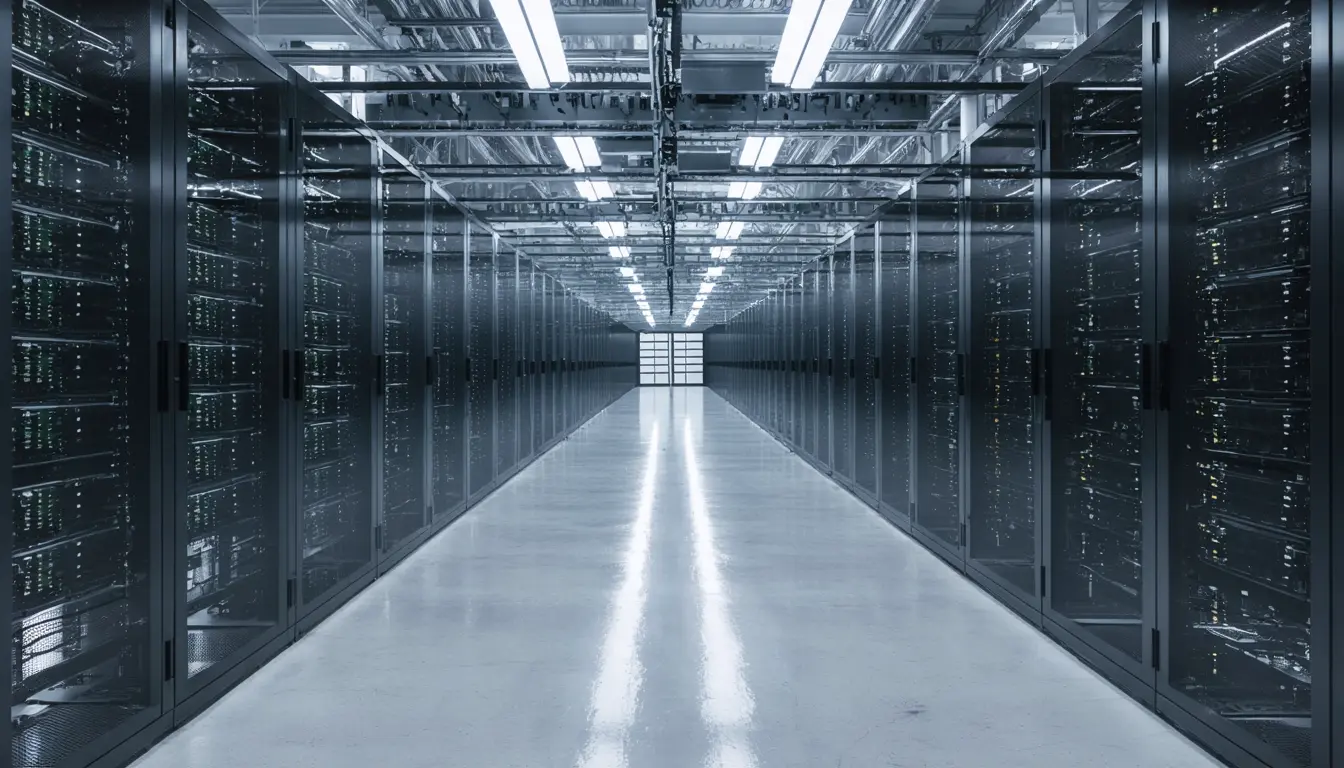
Ranked bars of AI datacenter capacity by region: China 24GW, Asia-Pacific excluding China about 15GW, Europe, the Middle East and Africa about 14GW, and Latin America about 2GW.
AI datacenter capacity by region, SemiAnalysis estimates
| Rank | Item | Value | Claim |
|---|---|---|---|
| 1 | China | 24 GW | 3 |
| 2 | Asia-Pacific excluding China | 15 GW | 4 |
| 3 | Europe, Middle East and Africa | 14 GW | 4 |
| 4 | Latin America | 2 GW | 4 |
What happened
- China has roughly 50GW more AI datacenter capacity planned or under construction, about 20GW of it committed and 30GW only announced.
- China's fleet is larger than the rest of Asia-Pacific at about 15GW, with Europe, the Middle East and Africa near 14GW and Latin America near 2GW.
- Some Chinese markets are oversupplied, and power-exclusive rates there have been cut in half from about $80 per kW per month.
Why it matters
- constraint Forecasts of Chinese AI compute have to start from accelerator supply, because the 24GW and the pipeline behind it count halls and power that export controls may leave partly empty.
- decision Any model that has China overtaking the US has to count on the 30GW of announced projects, since committed work alone leaves China near 44GW, below today's US figure.
- cost Chinese datacenter landlords absorb the oversupply for the roughly 18 months the reset is expected to take, while renters such as ByteDance stand to pay less.
- capability Because the power and shells are built first, compute in Inner Mongolia and Shanxi could come online quickly if domestic chip supply catches up, without waiting on grid or construction.
The 24GW comes from a facility-level count of more than 1,000 sites run by more than 60 operators, according to a dev.to write-up of SemiAnalysis's new China Datacenter Model [2]. Published estimates of this figure had differed by as much as fifteenfold, and counting site by site is the right way to settle it [6].
In this census, a gigawatt measures power and floor space. The write-up says plainly that capacity is not compute. Output depends on the accelerators installed, and US export controls limit those [10]. It calls the expansion "chip-gated", with chips coming from domestic suppliers such as Huawei or through gray-market channels [10]. The same account says headline comparisons likely overstate China's effective compute today, because some facilities may be running below their intended accelerator density [11].
For the 24GW to mean 24GW of compute, the racks have to be filled. Until installed accelerator counts are published, we treat the figure as a ceiling on Chinese AI compute.
The gap figures need the same discount. The US leads by about 32GW today [15]. If every committed Chinese project is delivered, China reaches about 44GW [16], still below the current US figure [1]. To pass the US, China needs the 30GW of announced projects as well, for roughly 74GW [17]. The write-up does not include a US pipeline, so that 74GW is being compared with a US number dated to the end of 2026 [1].
The two countries are short of different inputs. In China, power is available. Grid companies finished the 14th Five-Year Plan with capital spending 24% over the original blueprint. The 15th plan, covering 2026 to 2030, adds another 40% and takes grid investment past $746 billion [12]. In the US, the write-up points to interconnection queues and to local opposition that has already blocked about $130 billion of planned AI datacenters [19].
ByteDance shows who fills the halls. It holds about a fifth of China's delivered capacity and rents nearly all of it [7]. Alibaba, Tencent and Baidu spent a combined $20 billion in the second quarter of 2026 alone [8]. ByteDance is also in talks for another 5 to 6GW in Ulanqab, an Inner Mongolia city the write-up says was once better known for potatoes and yogurt snacks [9].
The pricing evidence is local. Oversupply in some Chinese markets cut power-exclusive rates in half from about $80/kW/month [13], to roughly $40 [18]. The write-up expects pricing to take about 18 months to absorb the reset [13]. That is a rate for datacenter power in China. We think it is too early to build it into assumptions about global accelerator pricing. A kilowatt of Chinese datacenter power adds compute to the world's supply only once chips are installed against it [10].
What to watch
- Published accelerator counts or installed-density figures for Chinese facilities, which would turn the gigawatt census into a compute estimate.
- How much of the 20GW of committed Chinese projects is delivered on schedule, and how much of the 30GW of announced projects becomes committed.
- Whether power-exclusive rates in oversupplied Chinese markets recover within the roughly 18 months the reset is expected to take.
Clarity's read
What the record supports and how the coverage leans. The claims behind it follow.
Reality
- Evidence35
- Adoption
- Insufficient
- Hype gap+35
- Incentives
- Insufficient
- Confidence35
Claim ledger
Ranked by verification strength, evidence, and original report placement.
- [1]
The United States has approximately 56GW of AI data center capacity as of the end of 2026.
ReportedSupportedSource: SemiAnalysis via dev.to2 sources— create a free account to open themView cited source - [2]
SemiAnalysis introduced its China Datacenter Model, tracking more than 1,000 data center facilities across over 60 operators in China.
- [3]
China currently has an operational fleet of more than 24 gigawatts of AI-ready data center capacity, according to SemiAnalysis.
- [4]
China's 24GW is more than the rest of Asia combined; SemiAnalysis puts Asia-Pacific excluding China at roughly 15GW, Europe, the Middle East and Africa at about 14GW, and Latin America at around 2GW.
- [5]
China has approximately 50GW of additional AI data center capacity planned or under development: roughly 20GW of committed projects and another 30GW of announced facilities.
- [6]
Published estimates of China's AI compute capacity have varied by as much as fifteenfold because hard data on Chinese facilities rarely left the country.
- [7]
ByteDance accounts for roughly one-fifth of China's delivered data center capacity, making it the country's largest tenant, and rents nearly all of its data center footprint rather than owning it.
- [8]
Alibaba, Tencent and Baidu spent a combined $20 billion in the second quarter of 2026.
- [9]
ByteDance was reported to be in talks with local providers to add five to six gigawatts of compute in Ulanqab, a city in Inner Mongolia once better known for potatoes and yogurt snacks that is now one of China's biggest AI data center hubs.
- [10]
Capacity is not the same as compute: performance depends on installing advanced AI accelerators, where US export controls bite; China's expansion is 'chip-gated', dependent on semiconductors from domestic suppliers like Huawei or gray-market channels.
- [11]
Headline gigawatt comparisons likely overstate China's effective AI compute today, since some facilities may be running below their intended accelerator density.
- [12]
China's national grid companies ended the 14th Five-Year Plan with combined capital expenditure 24% above the original blueprint; the 15th Five-Year Plan (2026-2030) adds another 40%, pushing grid investment beyond $746 billion.
- [13]
Some Chinese markets experienced oversupply, with power-exclusive market rates cut in half from around $80/kW/month, and it could take another 18 months for pricing to fully digest the reset.
ReportedSupportedSource: SemiAnalysis via dev.to; 18-month estimate attributed to analystsView cited source - [14]
China's power-first strategy is a bet that domestic chip manufacturing will catch up; if it does, shells being built in Inner Mongolia and Shanxi could be filled very quickly.
- [15]
The US lead over China in AI-ready capacity is about 32GW.
- [16]
China's capacity with all committed projects delivered would be about 44GW.
- [17]
China's capacity with the full planned pipeline delivered would be about 74GW.
- [18]
Halved power-exclusive rates come to roughly $40/kW/month.
- [19]
The US faces interconnection queues, community opposition and local resistance that has already blocked roughly $130 billion worth of planned AI data centers.
Sources
1 independent publisher whose own reporting we read for this story.
- dev.toChina's 24GW AI Compute Surge: Closing the Gap With 50GW More on the Way
1 article · October 9, 2026
Topics and entities
Follow any of these and your For You feed starts watching them — no settings page required.
Topics
- AI Data Centre CapacityFollow
- US AI chip export controlsFollow
- China power grid investmentFollow