Build2 publishers3 min readPublished
H200s reach China at 2.5% of the order book, and Hong Kong holds the rest
ByteDance and Tencent each took about 10,000 Nvidia accelerators, but NDRC case-by-case approval keeps most of the licensed allowance offshore. Domestic silicon still runs the workloads.
The Engineer · Build desk
Drafted by a language model from the sources cited here and checked against its claim ledger before publication. How we use AISend a correction
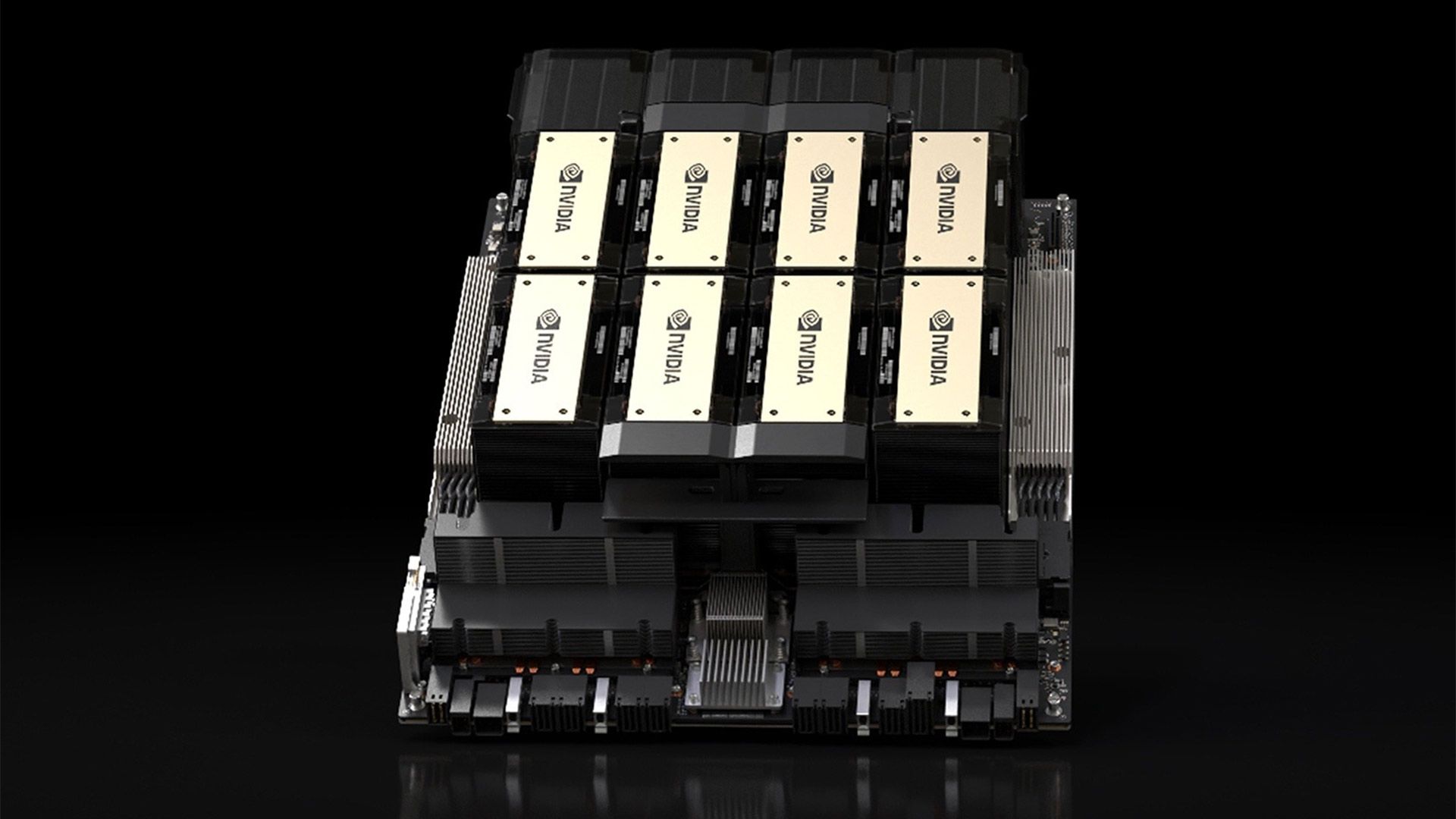
What happened
- ByteDance and Tencent each took delivery of roughly 10,000 Nvidia H200 accelerators in recent weeks, and a handful of other Chinese tech groups may soon receive approvals of similar size.
- The deliveries are the first meaningful movement of H200 chips into mainland China since President Trump cleared their export in December.
- The chips arrive under strict oversight from China's National Development and Reform Commission, which approves each purchase individually.
- Most of each company's US-licensed allowance, understood to be up to 100,000 units apiece, must stay outside the mainland, largely in Hong Kong.
- ByteDance, Alibaba and Tencent were collectively approved in January to buy more than 400,000 units.
Compiled by The EngineerSomething wrong?How this is made
Why it matters
ByteDance and Tencent have each taken delivery of roughly 10,000 Nvidia H200 accelerators in recent weeks, the first meaningful movement of the chips onto the mainland since President Trump cleared their export in December [1][2]. The volume is the story: China's National Development and Reform Commission now approves each purchase individually, and most of what Washington licensed has to stay outside the mainland [3][4].
The arithmetic is unflattering. ByteDance, Alibaba and Tencent were collectively approved in January to buy more than 400,000 units [6]; what has landed on the mainland is about 2.5% of that order book [7]. Each firm's US allowance is understood to run up to 100,000 units, so the two deliveries together represent roughly 10% of the pair's licensed ceiling [4][27]. The remainder sits largely in Hong Kong [4], a city that, according to the Financial Times reporting summarised by The Decoder, lacks the data centres and the power to use it [12].
What Beijing built is a mirror image of the American regime. The Commerce Department moved H200 applications to case-by-case review on January 16 and had cleared around 10 firms by mid-May, including Alibaba, ByteDance, Tencent and JD.com, with Lenovo and Foxconn approved as distributors [11]; Trump's December approval carried a 25% cut of every sale to the US Treasury, and January terms require each chip to transit US territory for third-party inspection before re-export [9][10]. The NDRC stood up its per-purchase process from scratch to match that review [18]. The 10,000-unit mainland allocations function as quantity caps, the instrument US rules have used since the first Hopper restrictions in 2022 [19], and the Hong Kong routing works as an end-location condition, the same tool as the US inspection transit [20].
The reason any Nvidia silicon is coming in at all appears to be training capacity. A transcript of DeepSeek founder Liang Wenfeng's May 20 closed-door investor meeting, leaked in July and not confirmed as authentic by DeepSeek, has him asking for 200,000 Huawei accelerators and receiving 16,000, or 8% of the request [21][29][31], against total Huawei output of roughly 750,000 chips this year shared across every Chinese AI company, a squeeze he reportedly expected to last about three years [30]. DeepSeek paused a funding round targeting a roughly $71 billion valuation days after the remarks circulated [22]. The lab's R2 training runs on Ascend hardware failed repeatedly and training returned to Nvidia while Ascend handled inference [14], and the FT's unnamed source describes the same split across the market: domestic chips for inference, Nvidia for training [15].
At 141GB of HBM3e and 4.8 TB/s, roughly six times the H20 and approaching the banned H100 [5], a 10,000-GPU H200 cluster is real frontier-training capacity, comparable to GPT-4 generation builds and about a tenth of the 100,000-plus GPU systems US labs now run [23][28]. The chip is still at least two generations behind Nvidia's best [8].
For anyone planning capacity in China, the operative numbers are domestic. TrendForce's August 10 supply chain survey projects domestic parts taking nearly 90% of the high-end AI chip market this year, with domestic high-end shipments up 83% year over year, revised up from roughly 50% in its December outlook [24]. Bernstein tracks Nvidia's China share falling from 66% in 2024 to 40% in 2025 and a projected 8% this year [16]. Jensen Huang told investors the share had gone from 95% to zero during the eight months of NDRC silence [13].
Watch whether the handful of other firms said to be near approval get the same 10,000-unit ceiling or a different one [1], whether Huawei hits its plan to roughly double 910C output to about 600,000 units [25], and whether inference capacity stops binding: Moonshot has already had to turn customers away after a demand surge [26]. Nvidia is holding about half a million H200s in stock [17].