InvestIndependently confirmed3 publishers2 min readPublished
Samsung and AMD demonstrate AI servers borrowing memory from a shared CXL pool
Samsung and AMD demonstrated CXL memory pooling at the 2026 OCP Global Summit, letting AI servers borrow idle capacity from a shared pool. Pooling would move memory sizing from each server to the pool, so orders would follow combined cluster load.
The Investor · Invest desk
What happened
- Samsung said the demonstration matters because the technology was validated in an actual system with a global computing platform company.
- Yonhap's Oct. 13 report said Samsung planned to demonstrate a CXL memory expansion solution with AMD, aimed at capacity limits in existing systems.
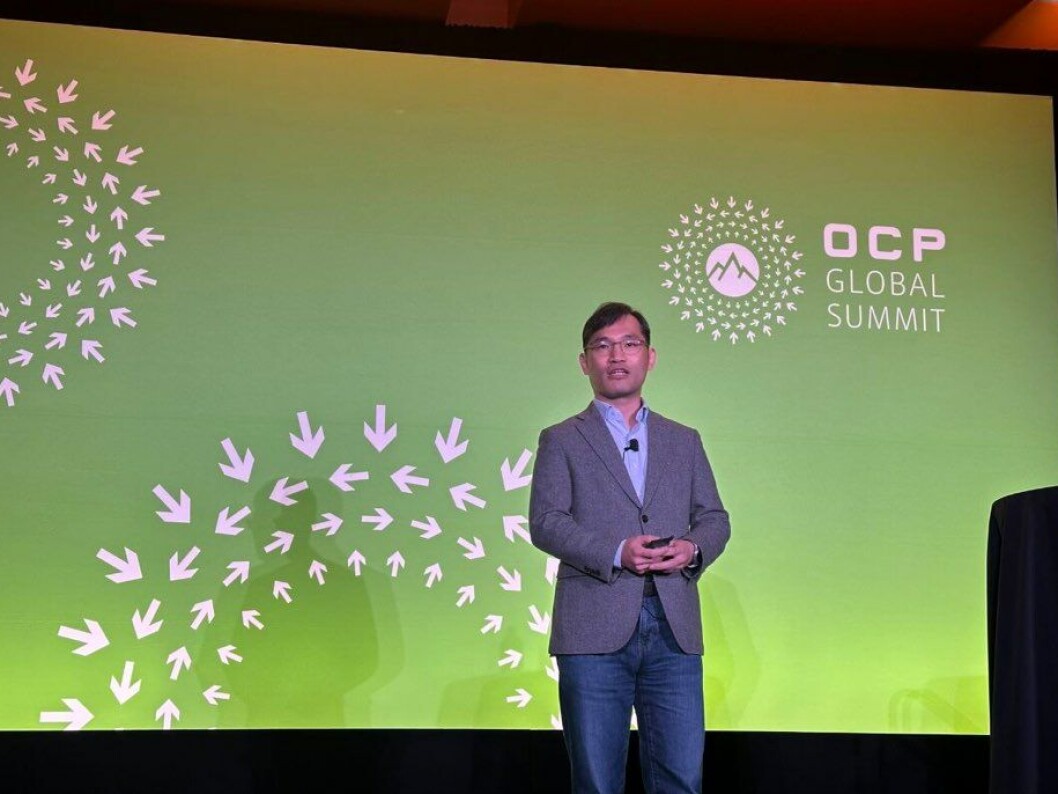
- Shim Ho-jun, a vice president on Samsung's application engineering team, said memory speed alone is no longer enough and named speed, memory expansion and data persistence as the directions.
- A separate Samsung zone showed HBM4E, HBM5 and custom HBM concept mock-ups beside LPDDR5X-PIM, a low-power chip that does some computation itself.
Why it matters
- decision A team specifying an inference cluster would get a second place to put memory, in each box or in the pool, and would have to decide the split.
- contradiction Samsung describes its CMM-D modules as both expanding server memory and letting systems share a pool, two aims that pull in opposite directions on how much DRAM a buyer ends up with.
- capability Samsung's MAX Lab gives customers a route to test memory designs against realistic AI workloads before products ship, so any buying change could show up in trials first.
We think the demonstration shows that a design works and tells a buyer little about what to order. The logic of the pitch is simple. A server can use only the memory installed inside it, so one machine can run short while another has memory sitting idle [7], and CXL lets a server running a heavy AI job borrow from a shared pool and return the capacity afterward [8]. We'd expect that to save money only when the heavy jobs land at different times. If they peak together, the pool has to be as large as the boxes it replaces.
That leaves three ways it can go. Buyers trim in-box memory and buy a smaller pool; buyers keep in-box memory and add a pool on top; or latency confines the pool to data that does not need speed. We'd expect the first, the one that would change how memory is bought, to need a pool that performs close to local memory. Samsung's exhibit leans toward the second: its KV-cache zone centered on CXL memory and enterprise SSDs [3], and KV cache is the temporary data a model keeps while generating a response [6].
The validation claim is Samsung's own [12], and the companies did not disclose pool size, latency or cost. Samsung is presenting pooling as one of three directions [4], so the demonstration does not signal a move away from HBM.
We'd be wrong if a server maker or cloud buyer published a configuration that cut per-server memory and added a pool.
What to watch
- Latency, throughput and cost figures from the Samsung and AMD system, whether in an OCP session or a published paper.
- Whether the unnamed global computing platform company in Samsung's validation claim is identified, and whether AMD confirms it.
- Whether any MAX Lab customer reports pooled-memory results before the modules are commercial.
Clarity's read
What the record supports and how the coverage leans. The claims behind it follow.
Reality
- Evidence35
- Adoption
- Insufficient
- Hype gap+20
- Incentives70
- Confidence65
Perspective Coverage
3 publishers- Builder
- Builder 40%
- Operator
- Operator 32%
- Investor
- Investor 28%
Claim ledger
Ranked by verification strength, evidence, and original report placement.
- [1]
Samsung Electronics and AMD jointly demonstrated a technology that lets multiple servers share a common pool of memory to meet the growing memory demands of AI inference.
ReportedSupportedSource: Korea JoongAng Daily3 sources— create a free account to open themView cited source - [2]
In an Oct. 13 report, Yonhap said Samsung plans to jointly demonstrate a CXL-based memory expansion solution with AMD at the event, presenting a way to address memory capacity limitations in existing systems.
- [3]
Samsung's KV-Cache Solutions zone centered on CXL memory, enterprise SSDs, and technologies for storing KV cache.
ReportedSupportedSource: Korea JoongAng Daily2 sources— create a free account to open themView cited source - [4]
Shim Ho-jun, a vice president on Samsung's application engineering team, said at a summit session that memory speed alone is no longer enough as AI systems grow more complex, and proposed three directions: speed, memory expansion and data persistence.
ReportedSupportedSource: Korea JoongAng Daily2 sources— create a free account to open themView cited source - [5]
Samsung's Tokenization Solutions zone showed HBM4E, HBM5 and custom HBM concept mock-ups, along with LPDDR5X-PIM, a low-power memory chip that performs some computation itself.
ReportedSupportedSource: Korea JoongAng Daily2 sources— create a free account to open themView cited source - [6]
KV cache is the temporary data an AI model keeps while generating a response.
ReportedSupportedSource: Korea JoongAng Daily2 sources— create a free account to open themView cited source - [7]
Normally a server can use only the memory installed inside it, so one machine can run short while another has memory sitting idle.
- [8]
CXL connects servers to a shared pool of memory so that a server running a heavy AI job can borrow extra capacity from the pool and return it when the job is done.
- [9]
The demonstration took place at the 2026 OCP Global Summit, where Samsung took part as a Diamond sponsor, the top tier.
- [10]
Samsung said its CXL-based CMM-D modules can expand server memory capacity and allow multiple systems to share pooled memory resources.
- [11]
Samsung's MAX Lab lets customers test precommercial memory and storage products under realistic AI workloads, allowing system requirements to be reflected earlier in development.
- [12]
Samsung said the demonstration is significant because the technology was validated in an actual system with a global computing platform company.
Sources
3 independent publishers whose own reporting we read for this story.
- en.yna.co.krSamsung expands AI memory, storage strategies
1 article · October 12, 2026
- koreaherald.comSamsung unveils next-gen memory strategy for AI data centers at OCP
1 article · October 12, 2026
- koreajoongangdaily.comSamsung, AMD showcase CXL memory sharing for AI servers at OCP Summit
1 article · October 12, 2026
Topics and entities
Follow any of these and your For You feed starts watching them — no settings page required.
Topics
- Data center memory and storageFollow
- CXL memory poolingFollow
- High-Bandwidth MemoryFollow
- AI Inference InfrastructureFollow
Entities
- Shim Ho-junFollow
- Samsung ElectronicsFollow
- Open Compute ProjectFollow
- AMDFollow
- Compute Express LinkFollow