Invest5 publishers3 min readPublished Updated
TSMC's possible Texas campus hinges on a tax credit worth $7 billion a fab
TSMC is weighing a Texas campus of up to six $20 billion fabs that reportedly hinges on a 35% CHIPS Act tax credit expiring at the end of 2026. At $7 billion a fab, the credit lets Congress set about a third of the price before TSMC's board has voted.
The Investor · Invest desk
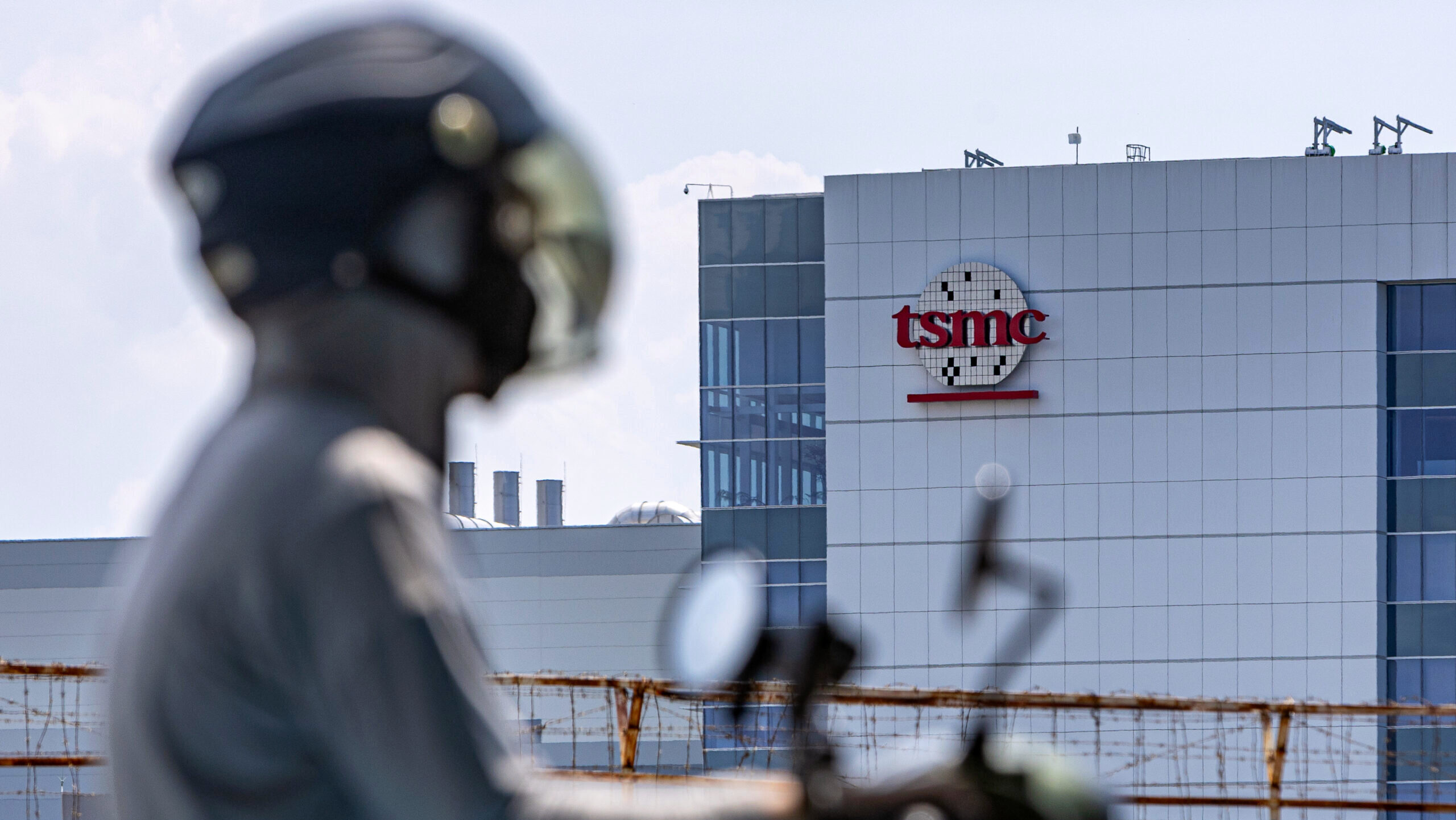
What happened
- The Texas talks are preliminary: TSMC's board has not approved the plan and suppliers have reportedly not been told.
- TSMC's Arizona commitment stands at $265 billion, including $100 billion added in July 2026, for up to 12 facilities and an R&D centre.
- TSMC's production capacity has grown only by mid-single digits a year since 2024, despite booming AI demand.
- Most Arizona-made chips still go back to Taiwan for CoWoS packaging, and TSMC aims to have that capacity in Arizona by 2029.
Compiled by The InvestorSomething wrong?How this is made
Why it matters
- cost Without the extension, the US Treasury stops covering 35% of each Texas fab, and TSMC, or the chip designers it bills, carries the full cost.
- decision TSMC's board has to choose between approving Texas before Congress acts on the credit and waiting into a year-end expiry with suppliers still uninformed.
- constraint Texas money would also need clearance in Taipei, where the economy ministry approves TSMC's US investment one application at a time.
A 35% credit on a $20 billion fab is worth $7 billion [1]. Across the six fabs the campus could hold [10], the gross bill comes to $120 billion and the credit to $42 billion [2][3]. Without an extension, TSMC's net cost per fab rises from $13 billion to $20 billion, about 54% more for the same building [4]. Congress controls that $7 billion through one decision: whether to extend a credit that expires at the end of 2026 [5].
The base figure is unsettled. The Daily Upside, relaying Bloomberg's sources, put each fab at "as much as" $20 billion [3]. Crypto Briefing, also citing Bloomberg, wrote "at least" $20 billion [4]. If $20 billion is a ceiling, $7 billion is the most the credit can be worth per fab. If it is a floor, $7 billion is the least, and the six-fab total runs above $120 billion [2].
Arizona shows how much a TSMC plan in the US can grow after the first announcement. An initial $12 billion there has become a $265 billion commitment [6], about 22 times the starting figure [5]. So far the site has one fab in high-volume 4-nanometer production and three more under construction [9]. The cash I'd follow is the money Taipei lets leave, or rather the money it has formally cleared to leave: Taiwan's Ministry of Economic Affairs has approved $44 billion of TSMC investment in the US since December 2020 [8], about a sixth of the Arizona headline [6].
What Congress does splits the outcomes. An extension lets the second US hub [1] proceed on the outline Bloomberg reported, near Dallas [10], with more advanced processes than TSMC's current US plants [18]. A lapse leaves TSMC room to put the next fabs into Arizona, where the plan [7] extends well past the four fabs started [9]. It could also put them in Taiwan, where it has roughly 10 more plants under construction, along with sites in Japan and Germany [14]. Or the talks stay preliminary [2].
I think the credit decides where TSMC's next US fabs go and what they cost net, and has less say over whether TSMC adds capacity at all. Revenue reached $122 billion last year and the company expects 40% growth in 2026 [11], far ahead of its capacity growth [12]. One executive said at a conference last month that TSMC had roughly doubled this year's planned equipment orders [13]. The counter-case is that $7 billion a fab changes the return on a US site enough to send the next fabs to Taiwan, where the construction pipeline already exists [14]. Against that, US customers supplied about 75.64% of TSMC's wafer revenue in the first half of 2026 [15].
If TSMC cuts total capex guidance when the credit lapses, instead of shifting the money to Arizona or Taiwan, then Washington is setting the size of the budget as well as its location, and this view is wrong.
What to watch
- TSMC's October 15, 2026 earnings call, where the company is expected to discuss its overseas investment strategy and could say whether Texas depends on the credit.
- Whether Congress extends the 35% advanced-manufacturing credit before it expires at the end of 2026.
- A TSMC board vote on Texas or notice to suppliers, either of which would move the plan past the preliminary stage.