Replanted soils show fungal function still recovering after six years while the whole community moves little
Flinders University researchers resampled replanted sites over six years and found different parts of the soil fungal community recover at different rates. Vegetation, the usual yardstick of replanting, does not automatically show soil recovery, the Flinders researchers warn.
The Scientist · Science desk
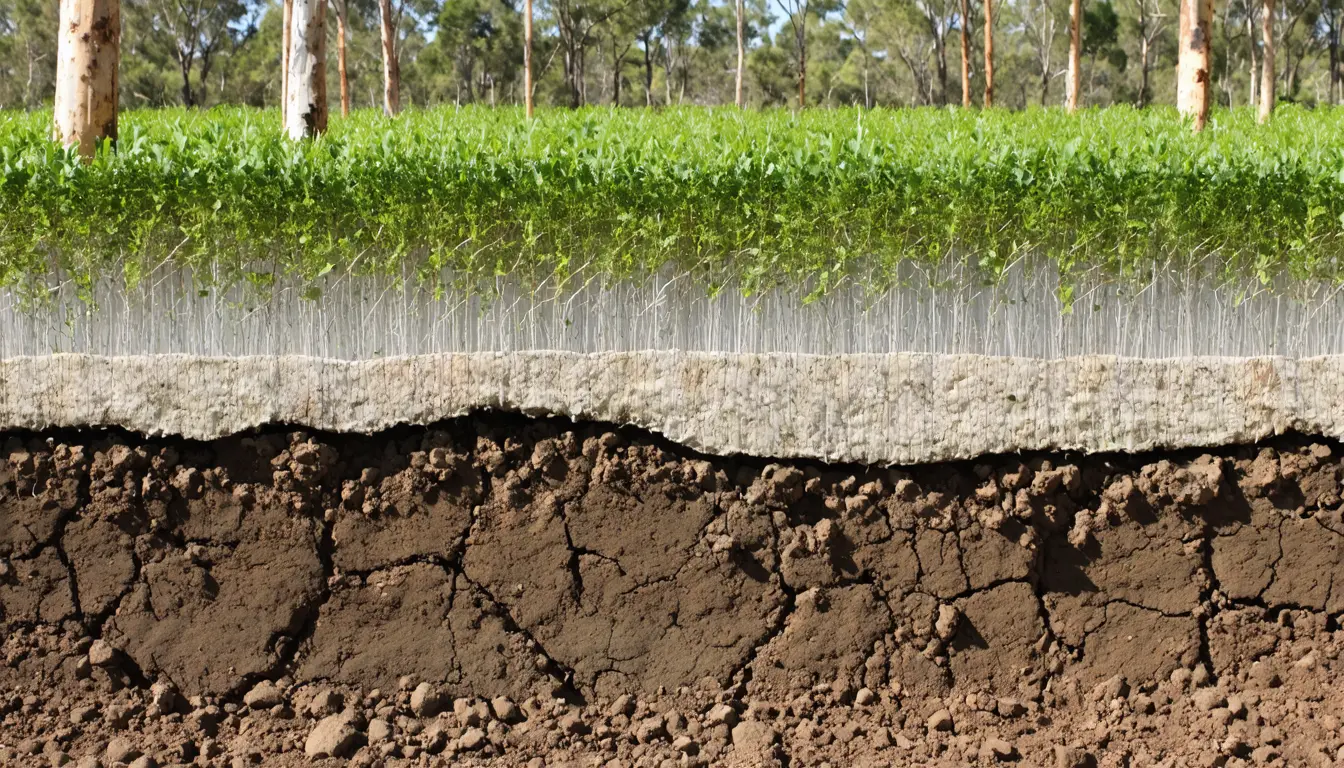
Supported: six-year resampling showed continued fungal functional recovery but little whole-community progress; revegetation results do not automatically mean soil recovery; sites need ongoing monitoring. Insufficient: the view that land-use history and soil nutrients are a barrier.
- Supported "Our longitudinal resampling study identified changes consistent with continued functional recovery over six years, despite little additional progress in whole fungal community recovery," said Martin Breed., claim 6
- Supported Aboveground results from native revegetation efforts do not automatically mean improvements in the web of fungi, other microbes, nutrients and decomposers needed to restore soil health., claim 5
- Supported "Ecologically degraded sites need ongoing monitoring and management to check for the long-term recovery of the whole community of fungi and other important soil properties," said Martin Breed., claim 7
- Insufficient evidence "This could be attributed to the land-use history and elevated soil nutrient levels in the post-agricultural sites, which can act as a barrier to full fungal and microbial recovery," said Martin Breed., claim 14
| Claim | State | Claim number |
|---|---|---|
| "Our longitudinal resampling study identified changes consistent with continued functional recovery over six years, despite little additional progress in whole fungal community recovery," said Martin Breed. | Supported | 6 |
| Aboveground results from native revegetation efforts do not automatically mean improvements in the web of fungi, other microbes, nutrients and decomposers needed to restore soil health. | Supported | 5 |
| "Ecologically degraded sites need ongoing monitoring and management to check for the long-term recovery of the whole community of fungi and other important soil properties," said Martin Breed. | Supported | 7 |
| "This could be attributed to the land-use history and elevated soil nutrient levels in the post-agricultural sites, which can act as a barrier to full fungal and microbial recovery," said Martin Breed. | Insufficient evidence | 14 |
What happened
- Carl D. Watson and colleagues published the work in Molecular Ecology in 2026.
- Phys.org's report puts the share of the world's degraded soils at up to 75%, the problem that restoration plantings are meant to address.
- In a separate Biology Letters paper, Amy Annells said a low-cost recording system picked out six common surface-dwelling invertebrates by their movement sounds.
Why it matters
- Who has to decide decision A project that closes out on vegetation results scores the part of the site that is easiest to measure and leaves the fungal community unchecked.
- What doesn't add up contradiction Phys.org's headline says soil fungi lag behind, while the paper's own title says plantings promote functional recovery. Both fit the same result, so the result is progress with a gap.
- What it limits constraint Checking below ground is hard: monitoring soil and leaf-litter biodiversity is still a major barrier, and the Flinders acoustic tool has so far been shown only under controlled conditions.
Martin Breed, the lead researcher, split the result in two. "Our longitudinal resampling study identified changes consistent with continued functional recovery over six years, despite little additional progress in whole fungal community recovery," he said [6]. Resampling suits the question, because it measures change across the six-year interval directly [1].
Phys.org's account of the paper does not give the number of sites, how function was measured, or whether intact reference sites served as a comparison. Without those, "little additional progress" could mean flat or merely slow.
Breed offered a candidate explanation. "This could be attributed to the land-use history and elevated soil nutrient levels in the post-agricultural sites, which can act as a barrier to full fungal and microbial recovery," he said [14]. The wording is conditional. As described, it is a hypothesis.
Breed's recommendation is continued attention after planting. "Ecologically degraded sites need ongoing monitoring and management to check for the long-term recovery of the whole community of fungi and other important soil properties," he said [7].
In our view the safe reading is the narrow one: a replanted site needs soil sampling before anyone calls it restored. That holds for what was measured, which is six years on post-agricultural land [14]. Whether it holds elsewhere is open. The Phys.org account says future studies could look at different restoration approaches and ecosystems to assess barriers and solutions [8].
What to watch
- Studies of other restoration approaches and ecosystems, which the Phys.org account says future work could cover, would show whether the fungal lag is specific to post-agricultural land.
- A direct test of the nutrient explanation, since Breed's wording is conditional and the account describes no experiment behind it.
- Whether the Flinders acoustic method is demonstrated outside controlled conditions.
Clarity's read
What the record supports and how the coverage leans. The claims behind it follow.
Reality
- Evidence58
- Adoption
- Not scored
- Hype gap−5
- Incentives
- Not scored
- Confidence55
Claim ledger
Ranked by verification strength, evidence, and original report placement.
- [1]
New research in Molecular Ecology examines changes in soil fungal communities over a six-year interval, finding that different aspects of soil fungal communities may recover at different rates following restoration plantings.
- [2]
The paper is by Carl D. Watson et al., published in Molecular Ecology in 2026.
- [3]
The paper's title is 'Restoration Plantings Promote Functional Recovery of Soil Fungi'.
- [4]
Restoration of degraded landscapes usually focuses on vegetation, which yields positive and measurable outcomes, but this may not translate to recovery across the whole ecosystem, says lead researcher Martin Breed.
- [5]
Aboveground results from native revegetation efforts do not automatically mean improvements in the web of fungi, other microbes, nutrients and decomposers needed to restore soil health.
- [6]
"Our longitudinal resampling study identified changes consistent with continued functional recovery over six years, despite little additional progress in whole fungal community recovery," said Martin Breed.
- [7]
"Ecologically degraded sites need ongoing monitoring and management to check for the long-term recovery of the whole community of fungi and other important soil properties," said Martin Breed.
- [8]
Future studies could look at different restoration approaches and ecosystems to assess barriers and solutions.
- [9]
Monitoring soil and leaf-litter biodiversity remains a major barrier to tracking restoration success, particularly for invertebrates that underpin nutrient cycling and soil aggregation.
- [10]
In a separate Biology Letters article, Flinders University researchers used a form of soil eco-acoustics to measure invertebrate activity in soil profiles to assess soil and ecosystem health.
- [11]
Corresponding author Amy Annells says the low-cost, sound-attenuated recording system identified distinct acoustic signatures from the movements of six common surface-dwelling invertebrates, including house crickets, red wiggler worms, mealworms and huntsman spiders.
- [12]
The Biology Letters paper is titled 'Acoustic differentiation of soil-surface-dwelling invertebrates under controlled conditions'.
- [13]
With up to 75% of the world's soils degraded, restoration projects try to reestablish functional and biodiverse environments to secure food production, biodiversity, climate regulation and human well-being.
- [14]
"This could be attributed to the land-use history and elevated soil nutrient levels in the post-agricultural sites, which can act as a barrier to full fungal and microbial recovery," said Martin Breed.
Get this ledger inside ChatGPT. Ask about any of our stories and the answer brings its figure, each claim’s verdict and the sources. Free, no account.
Sources
1 independent publisher whose own reporting we read for this story.
- phys.orgReplanted landscapes can look restored while soil fungi still lag behind
1 article · October 16, 2026
Topics and entities
Follow any of these and your For You feed starts watching them — no settings page required.
Topics
- Ecological restorationFollow
- Soil ecologyFollow
- Soil eco-acousticsFollow
Entities
- Biology LettersFollow
- Flinders UniversityFollow
- Molecular EcologyFollow
- Phys.orgFollow
- Martin BreedFollow