DREAM protein complex switches on a crossover gene in thale cress meiosis
Thale cress missing parts of the DREAM complex made too little of the gene MER3 and had severely reduced fertility, a Science Advances study found. The findings may point to a conserved fertility mechanism, Phys.org reported, but the work covers one plant.
The Scientist · Science desk
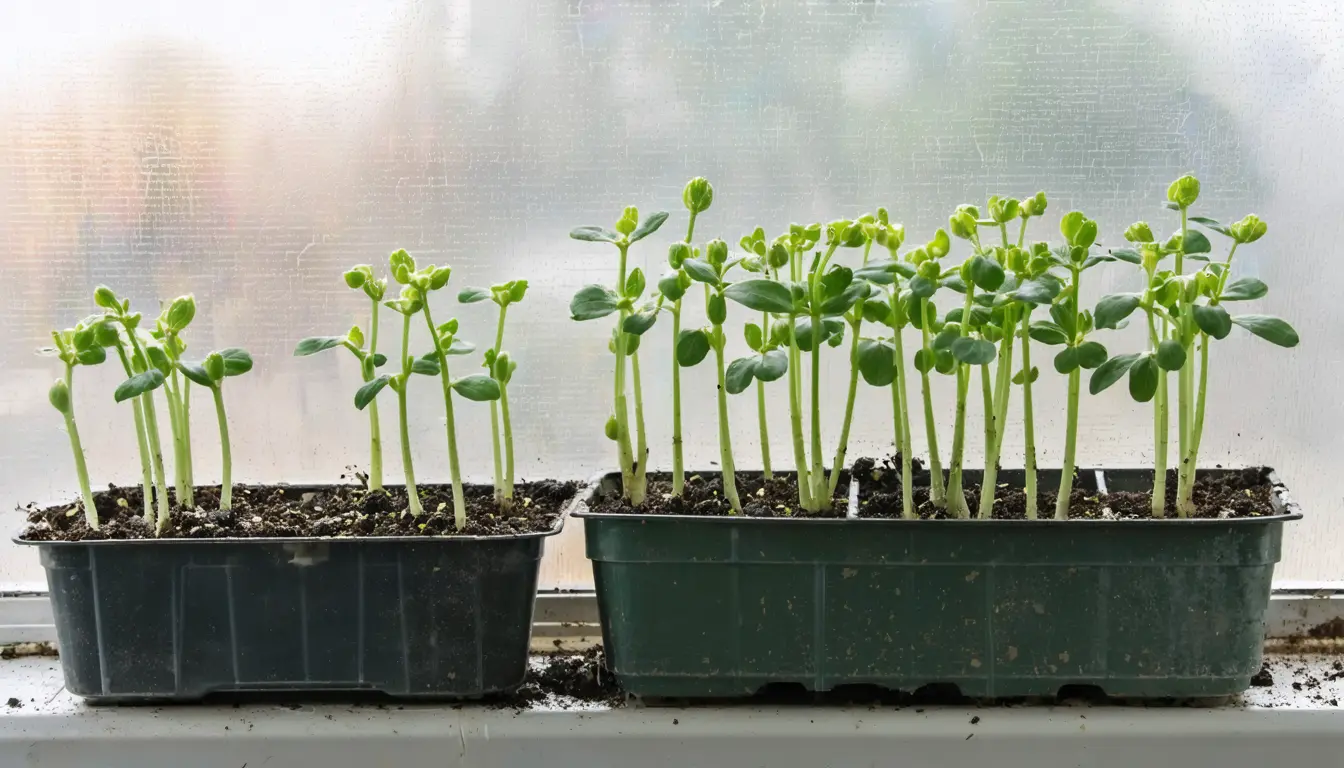
What happened
- MER3, the gene DREAM activates, yields a protein with an important role in crossover formation, a step essential for meiosis.
- With too little MER3, crossovers were impaired and chromosomes did not stay connected long enough, appearing instead as individual univalent chromosomes.
- Tunçay said univalents can be handed to daughter cells incorrectly or randomly, producing reproductive cells with unbalanced chromosome numbers.
- The work grew out of Hasibe Tunçay's PhD at the University of Hamburg; she is now a postdoctoral researcher at the Institute of Science and Technology Austria.
Why it matters
- What's now possible capability Transcriptional control of plant meiosis is still not fully understood, so a named regulator with a named target gives later work a specific place to start.
- What doesn't add up contradiction DREAM represses genes in ordinary dividing cells and activates MER3 in meiosis, so its role in one cell type is a poor guide to its role in another.
- What it limits constraint The available text describes the fertility loss as severe without counts of seeds, pollen or plants, so its size cannot yet be compared with other meiosis regulators.
The tissue made this hard to study. Meiotic cells sit deep inside a plant's reproductive organs and can be isolated only in small quantities [4]. Tunçay's route in was mutants, plants in which parts of the DREAM complex are missing [13]. In those plants, she said, "pollen and seed production did not function properly" [6]. Her wording on mechanism is hedged: DREAM matters for plant reproduction, she said, "apparently by regulating gene expression during meiosis" [12].
Crossovers are where one maternal and one paternal chromosome exchange genetic material [14]. Tunçay said the mechanism "does not just generate genetic diversity" and "also keeps chromosomes physically connected, allowing them to be distributed correctly to daughter cells during the first meiotic division" [10].
A mutant comparison shows that losing parts of DREAM goes with trouble in reproduction. The report ties the fertility loss to DREAM in general [2] and to MER3 through the crossover defect [8]. The portion we reviewed does not say whether restoring MER3 in the mutants brings fertility back. That experiment would show whether MER3 accounts for the loss or only accompanies it.
In our view the mutant work supports a narrow claim: DREAM helps switch on MER3 in thale cress meiosis. The wider claim about animals rests on related DREAM complexes that also affect reproduction there [15], and this study investigated meiosis in thale cress only [3].
What to watch
- A rescue experiment that restores MER3 in DREAM mutants and shows whether fertility returns.
- Seed, pollen and crossover counts, with plant numbers, that put a size on the fertility loss.
- Tests of whether DREAM switches on meiosis genes in animal germ cells, not just affects reproduction there.
Clarity's read
What the record supports and how the coverage leans. The claims behind it follow.
Reality
- Evidence55
- Adoption
- Not scored
- Hype gap+20
- Incentives
- Not scored
- Confidence50
Claim ledger
Ranked by verification strength, evidence, and original report placement.
- [1]
Research published in Science Advances reports that the DREAM protein complex, which normally puts the brakes on genes, may be crucial for reproduction in plants.
- [2]
In thale cress, DREAM appears to switch on genes during meiosis that are important for the exchange of genetic material; when the complex is missing, reproductive development becomes defective and fertility is severely reduced.
- [3]
As part of her Ph.D. project at the University of Hamburg, Hasibe Tunçay, now a postdoctoral researcher at the Institute of Science and Technology Austria, investigated which molecular regulators control meiosis in thale cress (Arabidopsis thaliana).
- [4]
Meiotic cells are located deep inside the plant's reproductive tissues and can only be isolated in small quantities.
- [5]
DREAM is a transcription factor complex that also exists in humans; in somatic cells it usually represses gene expression, for example by helping stop the cell cycle when errors occur and damage needs repair.
- [6]
Tunçay said that in mutants they found that "pollen and seed production did not function properly".
- [7]
Tunçay identified the gene MER3, which is activated by the DREAM complex; the resulting MER3 protein plays an important role in crossover formation, a process essential for meiosis.
- [8]
In mutants in which the DREAM complex does not function properly, MER3 is not transcribed sufficiently, so crossover formation is impaired and chromosomes do not remain connected for long enough and instead occur as individual (univalent) chromosomes.
- [9]
Tunçay said univalent chromosomes can be distributed incorrectly or randomly among daughter cells, producing reproductive cells with an unbalanced number of chromosomes and ultimately leading to fertility problems.
- [10]
Tunçay said the crossover mechanism "does not just generate genetic diversity" and "also keeps chromosomes physically connected, allowing them to be distributed correctly to daughter cells during the first meiotic division."
- [11]
How meiosis is transcriptionally regulated in plants is still not fully understood, and the transcription factors that act as its molecular switches first need to be identified.
- [12]
Tunçay said: "That made it clear to me that DREAM is also important for plant reproduction, apparently by regulating gene expression during meiosis."
- [13]
Tunçay studied mutants, which are plants in which parts of the DREAM complex are missing.
- [14]
During a crossover, homologous chromosomes, one inherited from the maternal and one from the paternal side, exchange genetic material.
- [15]
Since related DREAM complexes also affect reproduction in animals, the findings may point to an evolutionarily conserved mechanism underlying fertility across many organisms.
Get this ledger inside ChatGPT. Ask about any of our stories and the answer brings its figure, each claim’s verdict and the sources. Free, no account.
Sources
1 independent publisher whose own reporting we read for this story.
- phys.orgNo DREAM, fewer offspring: Protein complex may play key role in plant fertility
1 article · October 16, 2026
Topics and entities
Follow any of these and your For You feed starts watching them — no settings page required.
Topics
- Gene regulationFollow
- MeiosisFollow
- Plant biologyFollow