ScienceNot yet confirmed elsewhere1 publisher3 min readPublished
Trump orders a presidential commission to design the first U.S. Space Academy
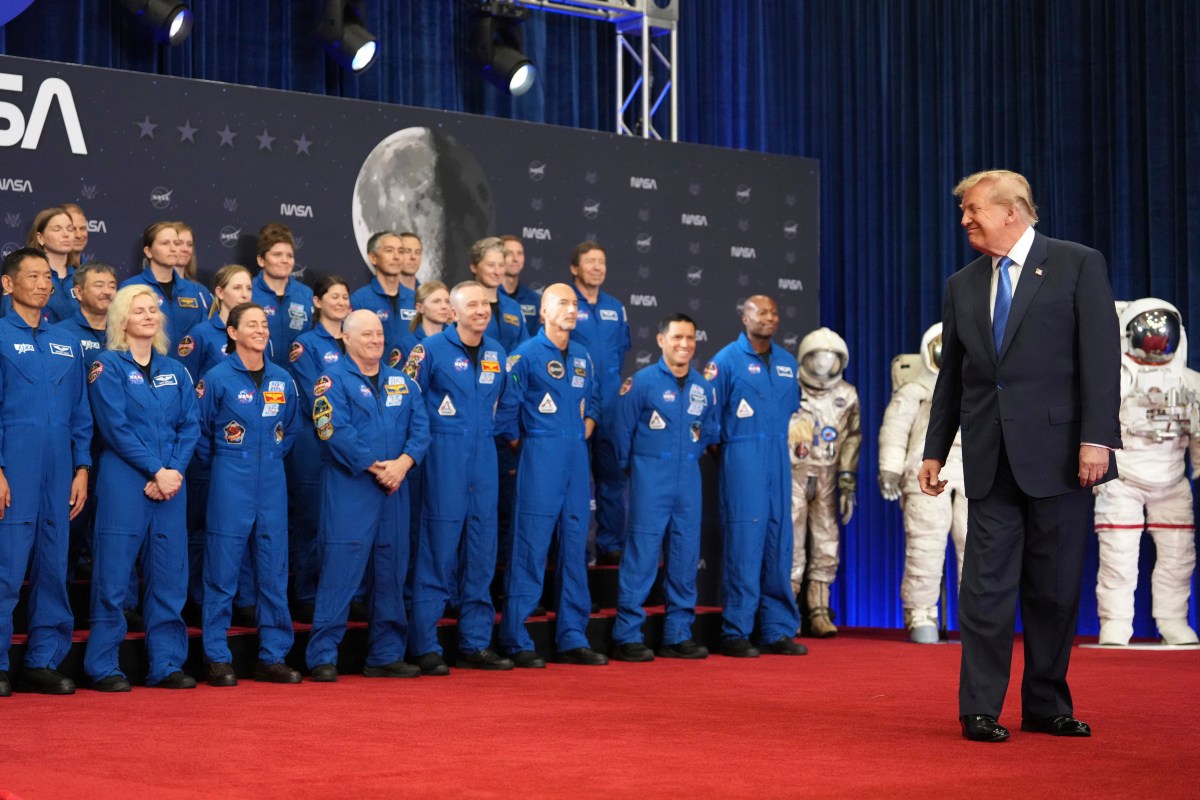
Space Force growth and lunar ambition are the stated rationale, and NASA's own leadership drew the design work on a four-month clock. The announcement puts no size on the workforce gap the school would close.
The Scientist · Science desk
What happened
- President Trump signed an executive order at NASA's Johnson Space Center in Houston to begin creating the country's first U.S. Space Academy, an institution the agency's own release still calls proposed.
- NASA Administrator Jared Isaacman will chair the new Presidential Commission on the United States Space Academy, and Deputy Administrator Matt Anderson will serve as its executive director.
- The vice chairs are Michael Kratsios, the President's science and technology assistant, and Kevin Hassett, his economic policy assistant, joined by unnamed White House and interagency representatives.
- The commission owes the President a report within 120 days covering the academy's governance framework, the service obligations of its graduates, and where the school would physically sit.
Why it matters
- constraint Nothing signed on Friday charters a school or pays for one, so if the recommendations are never taken up on Capitol Hill, the commission is the only thing this order will have built.
- decision Whoever drafts the graduate obligation settles the institution's character, either an accession route into uniformed service or a bonded civil-service track, and that drafting starts now rather than after a debate.
- cost With no shortfall figure or class size in circulation, the first credible cost estimate will surface inside a report authored by the academy's own advocates, which leaves outside reviewers nothing to check it against.
- precedent Putting a civil agency's administrator over a pipeline justified partly by military space growth normalizes a shared civil-military talent stream, and the governance recommendation will have to name a department willing to own it.
Of the things the commission owes the President, the one that marks the limits of the exercise is the request for legislative requirements [7]. An order that has to ask which statutes would be needed is an order that cannot write them, which fits a release that calls the academy proposed and quotes the President describing the order as beginning a process [3]. The tasking names four topics and then says "and more," so the list is open by design [16]. A 120-day deadline is about four months [15], which means the design questions arrive quickly even if the school does not.
Two of those questions matter more than the address. Governance means naming a host department. Service obligation means saying what a graduate owes in return for the schooling. The announcement leaves both answers open, which makes them the commission's homework [14]. Between them they decide whether this is an accession pipeline into a uniformed service or a federally chartered technical college with a civil-service bond, and the officials teeing up that choice hold civil space jobs: Isaacman as chair, Anderson as executive director [4][5], with the President's science and technology assistant and his economic policy assistant as vice chairs [6].
The order's own framing lists national security first among the domains at stake, ahead of economic growth, scientific discovery, and technological innovation [8], and the stated need is drawn from the growth of the Space Force alongside the commercial industry [9]. No defense or Space Force official appears among the leaders the release names, although it does say other White House and interagency representatives will join [13]. Until that roster is published, the civil-military balance of a pipeline justified by both remains inference.
What the announcement leaves open is the size of the gap. Trump's case is generational: a cohort of service members, engineers, and civil operators [9]. Isaacman's is programmatic, a list of lunar return, a Moon Base, nuclear power, an orbital economy, and science missions [10]. Both are descriptions, not numbers. The release carries no shortfall estimate, no target class size, no admissions criteria, and no cost [12]. Sizing an academy requires the shortage it is meant to close, and on present evidence the first published number will appear inside the commission's own report, written by the people who asked for the institution.
Context is doing some work here. The signing took place at Johnson Space Center, where the Artemis II crew received the Congressional Space Medal of Honor the same day [2], and it follows a December 2025 order titled Ensuring American Space Superiority and an Aug. 20 memorandum on national space transportation policy [11]. What lands in four months is a document containing a governance model and a service obligation. Those two lines will say what kind of institution was actually being proposed.
What to watch
- The published interagency roster, and whether any Defense or Space Force officials sit on the commission alongside its civil chairs.
- A bill carrying both authorization and appropriation for the academy; absent one, the recommendations stay recommendations.
- Any shortfall estimate or target class size released outside the commission, which would let others check the sizing independently.
Clarity's read
What the record supports and how the coverage leans. The claims behind it follow.
Reality
- Evidence40
- Adoption15
- Hype gap+38
- Incentives80
- Confidence45
Claim ledger
Ranked by verification strength, evidence, and original report placement.
- [1]
President Donald J. Trump signed an Executive Order on Friday to establish the nation's first U.S. Space Academy, according to a NASA news release.
ReportedSupportedSource: NASA news release2 sources— create a free account to open themView cited source - [2]
The signing of the "Establishing the United States Space Academy Executive Order" took place at NASA's Johnson Space Center in Houston, where the President also presented the Artemis II crew members with the Congressional Space Medal of Honor.
- [3]
The NASA release refers to "the proposed academy" and quotes Trump saying he will sign an executive order "to begin the process of creating a new national academy called the U.S. Space Academy."
- [4]
The order calls on NASA Administrator Jared Isaacman to serve as chair of a new Presidential Commission on the United States Space Academy.
- [5]
The order calls on NASA Deputy Administrator Matt Anderson to serve as executive director of the commission.
- [6]
The commission's vice chairs are Michael Kratsios, Assistant to the President for Science and Technology, and Kevin Hassett, Assistant to the President for Economic Policy, who will work with other representatives from the White House and the interagency.
- [7]
A report from the commission to the President is due within 120 days of the signing, with recommendations on governance framework, service obligations for graduates, physical location of the academy, legislative requirements, and more.
- [8]
The order highlights space as a critical domain for American national security, economic growth, scientific discovery, and technological innovation.
- [9]
Trump cited the rapid growth of the U.S. Space Force and the commercial space industry, and the expansion of ambitions to the Moon and beyond, as reasons the country will need to educate and train an entire generation of skilled service members, engineers, and civil operators.
- [10]
Isaacman said the academy would educate engineers, scientists, technicians, operators and astronauts, and listed returning NASA astronauts to the lunar surface, building the Moon Base, getting underway on nuclear power, igniting the orbital economy, and launching more science missions.
- [11]
NASA describes the order as the latest in a series, following an order titled Ensuring American Space Superiority signed in December 2025 and a National Space Transportation Policy memorandum on Aug. 20.
- [12]
The NASA release states no estimate of the space workforce shortfall, no target class size, no admissions criteria, and no cost figure for the proposed academy.
- [13]
The release names no Department of Defense or U.S. Space Force official among the commission leaders it identifies, while stating that other representatives from the White House and the interagency will serve on the commission.
- [14]
The release does not say which federal department would host the academy or what service obligation graduates would incur; both governance framework and service obligations are listed among the commission's tasked recommendations.
- [15]
The 120-day reporting deadline is approximately four months.
- [16]
The tasking for the commission's report names four specific topics and is explicitly open-ended, ending with "and more."
Sources
1 independent publisher whose own reporting we read for this story.
- nasa.govPresident Trump Signs Executive Order to Create US Space Academy
1 article · August 28, 2026
Topics and entities
Follow any of these and your For You feed starts watching them — no settings page required.
Topics
Entities
- NASA Johnson Space CenterFollow
- Kevin HassettFollow
- United States Space AcademyFollow
- Matt AndersonFollow
- Donald TrumpFollow
- Artemis IIFollow
- US Space ForceFollow
- Presidential Commission on the United States Space AcademyFollow
- NASAFollow
- Jared IsaacmanFollow
- Michael KratsiosFollow