ScienceNot yet confirmed elsewhere1 publisher2 min readPublished Updated
Most preschool boys in a Norwegian experiment chose a character from the bigger cartoon group
University of Oslo researchers found about 65% of preschool boys chose a cartoon character from the larger of two groups, against 43% of girls. In white US adults, a similar choice tracked acceptance of group dominance, though only weakly.
The Scientist · Science desk
Bar chart comparing boys and girls. About 65% of boys chose the member of the larger cartoon group, against about 43% of girls. Only the boys' preference was beyond chance; girls did not clearly favor either group.
Share of Norwegian preschoolers choosing the larger group's member
| Item | Value | Claim |
|---|---|---|
| Boys | 65% | 5 |
| Girls | 43% | 5 |
What happened
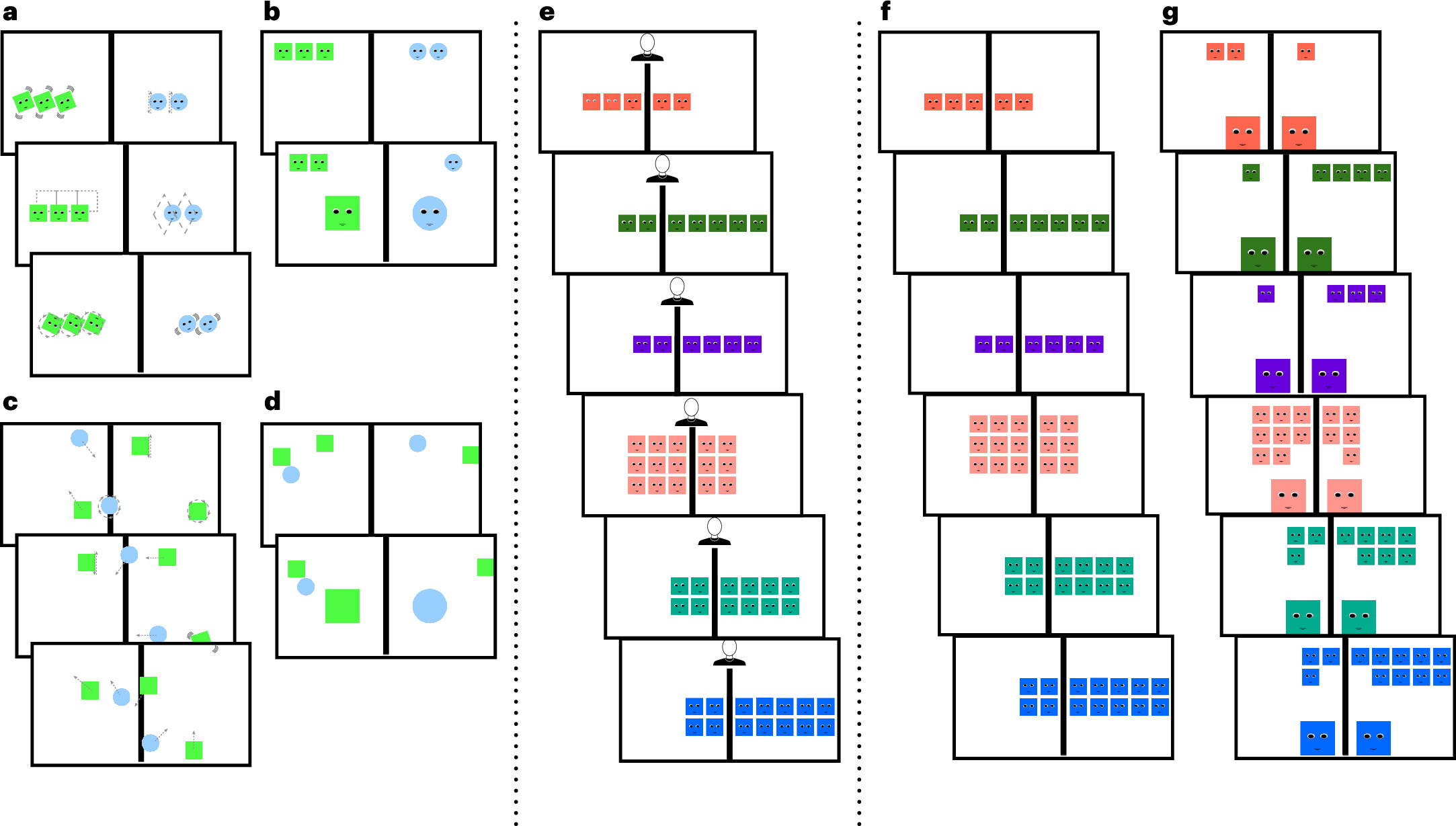
- The first experiment showed 153 children in Norway, aged 3 to 6, two animated groups of characters with faces and had them pick one member to like, play with or befriend.
- Infants aged 6 to 13 months, tested by reaching for puppets that matched the characters, showed no preference for the larger group's member.
- In three studies of white US adults, men and women both preferred the smaller cartoon groups, and women preferred them more strongly than men did.
- Adults in a separate study judged larger groups as more dominant and smaller groups as richer and more refined.
Why it matters
- contradiction In the final adult study the choice had no relation to left or right leaning. It tracks attitudes about dominance and force, so calling it an early form of general political leaning goes beyond the data.
- constraint Until a study follows the same children for years, any claim that a preschooler's cartoon pick foreshadows that person's adult views on hierarchy remains untested.
- constraint Associations this weak can describe tendencies across many adults, but they make the cartoon task a poor guide to any one person's attitudes.
A 22-point gap between boys and girls [19], with only the boys' rate clearly above chance [5], could mean nothing more social than a taste for whatever appears most often on screen. The Oslo team [3] checked that with another 164 preschoolers, who saw faceless shapes scattered across the screen and moving without group coordination [6]. Boys and girls both picked the more numerous shape about half the time [6]. That suggests the cues making the original characters look like a social group mattered [7]. The control removed faces and coordinated movement at the same time, though, and the experiment did not establish which cue the children were responding to [7].
The infants showed no such preference. Beyond the reaching task, a looking-time analysis of 220 infants found attention split roughly evenly between the two groups [9]. None of the reported samples covers the span from 13 months to 3 years [20].
The adults were all white Americans, recruited so the team could study preferences among members of a dominant social group [11]. The thing this doesn't tell you is how Norwegian adults, or Americans outside that group, would choose. So the switch from the boys' preference for big groups to the adults' preference for small ones cannot be put down to age alone. The country and the population changed along with the age [10][17].
None of the cartoons carried a national, religious or party label [18]. Adults who were relatively more drawn to the bigger groups were still more accepting of some groups dominating others [14]. They were also more likely to favor using the military abroad and severe punishment for crime, and less likely to support welfare or policies that help minorities [14]. According to phys.org's report on the paper, those relationships were weak and do not show that group preference causes political belief [15]. In the final adult study, choices were unrelated to whether participants leaned left or right in general [16].
The authors suggest that being drawn to the stronger alliance could lay early groundwork for attitudes about one group dominating another [1]. On their evolutionary account, the preference lets children practice joining forces, behavior that may have helped ancestors compete for resources [1]. They also say biological maturation and social experience could contribute [2]. In our view the evidence supports two narrower findings. One is a sex difference in a preschool preference that depends on group-like cues. The other is a faint adult association with attitudes toward dominance. The children were tested in Norway and the adults in the United States, and none of the children was followed into adulthood [17].
What to watch
- A follow-up that separates faces from coordinated movement, showing which cue moves boys toward the larger group.
- Tests of children between 13 months and 3 years, the ages no reported sample covered, to find when the boys' preference first appears.
- Adult samples from Norway, or from Americans outside the dominant group the study chose, to check whether the smaller-group preference and its link to dominance attitudes hold.
Clarity's read
What the record supports and how the coverage leans. The claims behind it follow.
Reality
- Evidence55
- Adoption
- Insufficient
- Hype gap+10
- Incentives
- Insufficient
- Confidence50
Claim ledger
Ranked by verification strength, evidence, and original report placement.
- [1]
The authors propose that an attraction to stronger alliances could be an early building block of attitudes toward group dominance; in their evolutionary interpretation, a preference for larger groups could help children practice joining forces, behavior that could have helped ancestors compete for resources.
ReportedSupportedSource: study authors, via phys.org2 sources— create a free account to open themView cited source - [2]
Biological maturation and social experience could also contribute to the phenomenon.
- [3]
Researchers at the University of Oslo ran the studies, which were published in a paper in Nature Human Behaviour.
- [4]
The team recruited 153 children aged 3 to 6 in Norway and showed them animations of two groups of colored characters with faces, each moving together on its own side of the screen without interacting; one member from each group came forward and children selected the character they liked most, wanted to play with or wanted to befriend.
- [5]
About 65% of boys and 43% of girls chose the member of the larger group; boys showed a preference beyond chance, while girls did not clearly favor either group.
- [6]
To test whether boys simply preferred whichever type of character appeared more often, researchers tested another 164 preschoolers using shapes without faces that were scattered and moved without group coordination; boys and girls chose the more numerous type of shape about half the time.
- [7]
The shapes result suggested that cues making the characters seem like a social group mattered, although the experiment did not establish which cues influenced the children's decisions.
- [8]
Among 180 infants aged 6 to 13 months, a similar experiment involving reaching for puppets that matched the animated characters revealed no preference for characters in the larger group.
- [9]
An additional looking-time analysis involving 220 infants found attention roughly evenly divided between the groups.
- [10]
The researchers ran three studies involving 3,467 white adults living in the U.S., asking which cartoon groups they would rather join; one study also asked which individual members they preferred to associate with.
- [11]
The researchers focused on white Americans to examine preferences among members of a dominant social group.
- [12]
Both men and women favored smaller groups overall; the preference for smaller groups was stronger among women, producing a relative gender difference in the same direction as the preschool comparison.
- [13]
A separate study found that adults perceived larger groups as more dominant, while smaller groups were perceived as richer and more refined.
- [14]
Adults who were relatively more attracted to larger groups were more accepting of some groups dominating others, tended to support military force in international affairs and harsh criminal punishment, and tended to oppose social welfare and policies benefiting minorities.
- [15]
The relationships uncovered were weak and do not indicate that group preferences cause political beliefs.
- [16]
In the final adult study, choices were unrelated to participants' general left or right political inclinations.
- [17]
The studies compared different people in Norway and the United States without following children into adulthood; whether an early preference persists and relates to that person's later beliefs remains unclear.
- [18]
The cartoons carried no nationality-related, religious or party labels.
- [19]
The share of boys choosing the larger group's member exceeded the share of girls by 22 percentage points.
- [20]
None of the reported samples covers ages between 13 months and 3 years.
Sources
1 independent publisher whose own reporting we read for this story.
- phys.orgPreschool boys favor bigger groups while adults' choices hint at political attitudes
1 article · October 10, 2026
Topics and entities
Follow any of these and your For You feed starts watching them — no settings page required.
Topics
- Political psychologyFollow
- Developmental PsychologyFollow