Science1 publisherNot yet confirmed elsewhere3 min readPublished
Aerosol pollution in 46 cities rose about a third after U.S. embassies stopped publishing air readings
Columbia researchers found aerosol pollution rose about 33% across 46 cities after U.S. embassies stopped publishing air-quality readings in 2025. The result is evidence that public monitoring data helps hold pollution down, though the published summary does not say whose behavior changed.
The Scientist · Science desk
Drafted by a language model from the sources cited here and checked against its claim ledger before publication. How we use AISend a correction
What happened
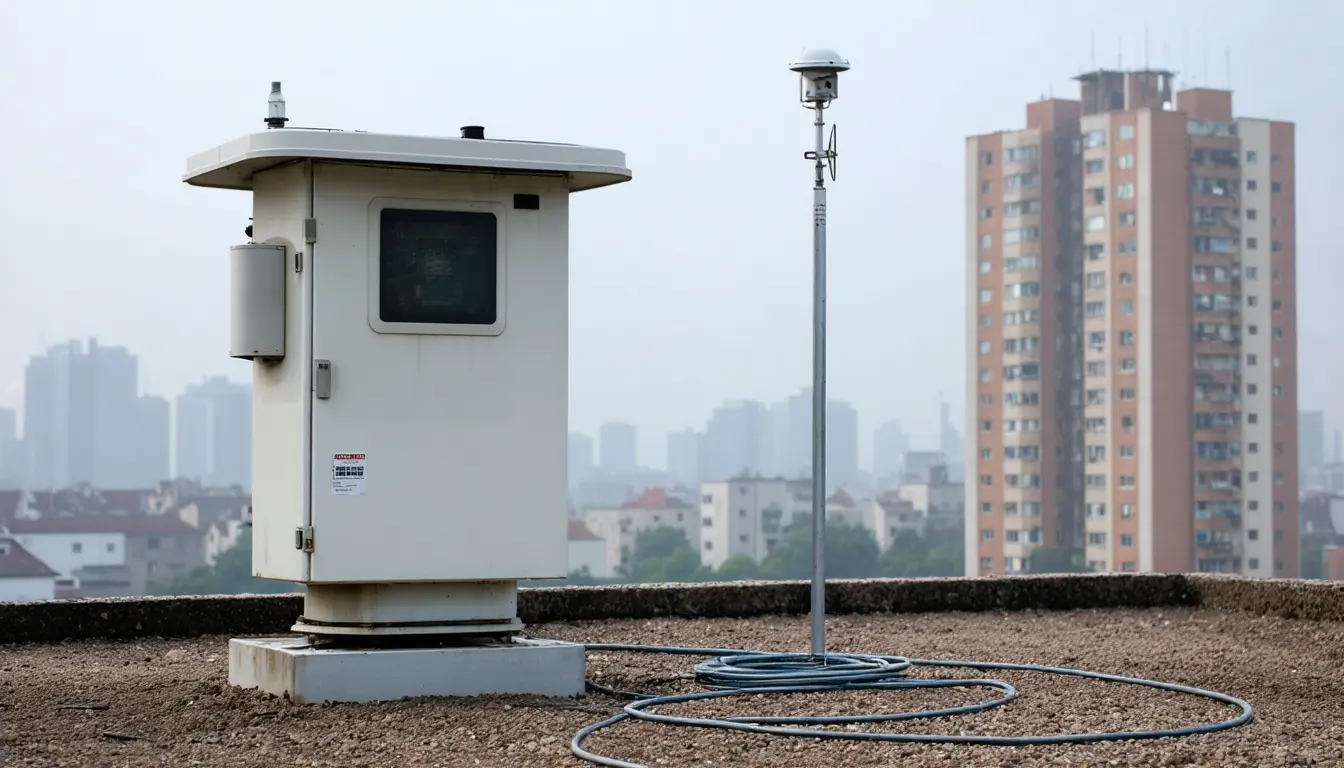
- U.S. embassies and consulates had published independent, public air-quality readings in cities around the world for more than a decade before the program was suspended.
- Pollution rose most, and stayed elevated longest, in cities with no other publicly available national air-quality monitoring system.
- The authors tested alternative explanations and found little evidence that pollution in these cities was already climbing before the reporting stopped.
Compiled by The ScientistSomething wrong?How this is made
Why it matters
- cost If the estimate holds, residents of the covered cities paid for the suspension in the air they breathe, about 1.9 micrograms per cubic meter of added PM2.5.
- exposure Cities that relied on a foreign embassy as their only public source of readings are left most exposed when that source is withdrawn.
- decision Agencies weighing cuts to environmental data programs, a trend Zhou says now reaches the U.S., have a pollution estimate to set against the savings.
- constraint Until it is clear whether regulators or emitters responded to the lost scrutiny, nobody can say whether a substitute data source would recover the effect.
Measuring what happens after a monitor goes silent is awkward, because the monitor is the thing that went silent. The Columbia team got around it with satellites, which kept observing aerosols over the 46 cities whether or not anyone on the ground published a number [5]. They then used embassy readings collected before the shutdown to translate the satellite signal into an estimate of fine particles, and arrived at an increase of about 1.9 micrograms per cubic meter of PM2.5 [7]. Those are the particles small enough to reach deep into the lungs [10].
The 33% and the 1.9 are different quantities. One is a satellite measure of aerosol pollution, and the other is a converted estimate of PM2.5 [5][7]. The second depends on the pre-shutdown relationship between the satellite record and the embassy record carrying over into the period after the readings stopped [7].
On controls, the authors report testing alternative explanations and finding little evidence that pollution was already rising in those cities before reporting stopped [8]. That rules out the simplest confound. The more persuasive result is the split within the sample. The increase was largest and most persistent in cities with no other publicly available national monitoring system [6]. A dusty year or a regional weather pattern would have no reason to hit hardest where the embassy was the only public source of readings; a loss of scrutiny would.
Cities without a national monitoring network may also differ in enforcement capacity or in how fast they are growing, and that is the comparison a careful reader would most want broken down. The phys.org summary of the work does not describe a group of comparison cities that never hosted an embassy monitor, and it does not list the 46 cities.
Zoey Zhou, the lead author and an assistant professor at the Columbia Climate School, hedges her own claim [9]. "Public access to trusted environmental data appears to be part of what creates accountability for pollution," she said [1]. Accountability can run through regulators who face less public pressure once the numbers vanish. It can also run through plants and vehicle fleets that expect nobody to notice. Which channel dominated decides whether a substitute data source, one without the embassy readings' reputation, would restore the effect.
In my view the result is strong enough to treat as an estimate of what ending a monitoring program costs in air quality, on the condition that the full paper's comparisons hold up. The authors frame it the same way, as evidence that environmental transparency can work as a form of environmental governance, and that some gains tied to public disclosure may weaken when credible real-time data disappears [2]. Zhou also pointed past the 46 cities. "Data is evidence, and we're seeing a trend not just internationally but in the U.S. of ending programs that gather climate and environmental data," she said [11].
What to watch
- Whether the full paper lists the 46 cities and includes comparison cities that never hosted an embassy monitor.
- Whether embassy air-quality reporting resumes, and whether satellite-measured aerosols over those cities fall back if it does.
- Whether cities that lost the embassy feed set up their own public monitoring, and whether their pollution trend then diverges from cities that did not.