BuildAlso reported elsewhere2 publishers2 min readPublished
Brampton engineer's homemade plate reader for police cars brings two officers to his door
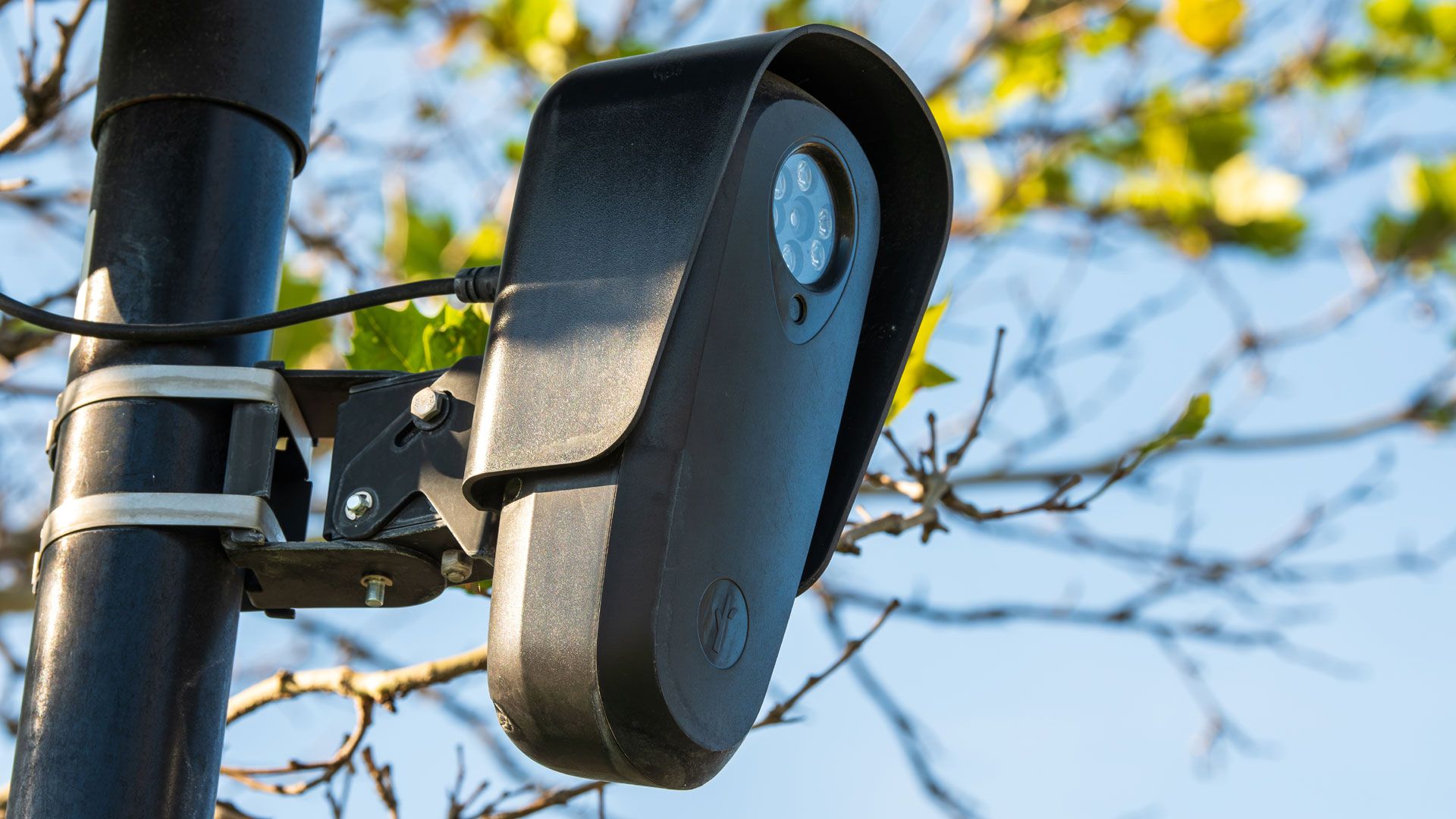
Two Peel Regional Police officers visited Anthony Sistilli on September 20 over a plate-recognition camera he built to log only police vehicles. Their fear of being tracked matches drivers' fear of Flock, though his build, as reported, is one camera without Flock's shared search.
The Engineer · Build desk
Two bars comparing counts of Flock cameras. Flock Safety says its network has more than 120,000 cameras operating across 49 states. Security researchers found 335,701 Flock cameras and mapped their locations.
Flock cameras in the network, as counted by each source In cameras
| Item | Value | Claim |
|---|---|---|
| Flock Safety's figure (more than) | 120,000 cameras | 7 |
| Security researchers' count | 335,701 cameras | 15 |
What happened
- Sistilli documented the build in several TikTok videos, calling it "a personal Flock surveillance camera to Flock the Flockers," then posted footage of it in use.
- The officers reportedly said there was probably no effective way to regulate such networks without giving away details of active investigations to criminals.
- Investigative reports have documented officers misusing Flock's database, including stalking former partners and their acquaintances.
- Several municipalities, including Los Angeles and Fullerton, have suspended or canceled their Flock contracts over constituent privacy concerns.
Why it matters
- exposure Anyone who mounts a camera on a route patrol cars use can now log police vehicles the way police plate readers log drivers' cars.
- constraint The officers argued that access rules would leak active investigations. That same reasoning works against public audits of police plate searches.
- contradiction Flock describes brief on-device storage, yet a stolen unit reportedly gave up 21 days of images. Physical theft belongs in the threat model for any plate reader, homemade or commercial.
- decision A city weighing a Flock contract cannot size the network it is joining from the vendor's own figure, because the independent count is far larger.
Sistilli said one officer spoke of "how scary it would be for them, because people would be able to find out where they lived, when they got on their shift and what they were doing throughout the day" [5]. Sistilli replied that ordinary citizens have exactly these concerns about constant surveillance, and he argued for more policies around such networks [11].
In our view, those three items need very different coverage. One fixed camera logs the vehicles that pass one point. It could show when patrol cars leave a station. Where an officer lives and what they do all day are questions about many points. Answering them takes many cameras feeding one index that can be searched.
That index is Flock's product. According to Tom's Hardware, any police department on Flock's network can search across state lines [8]. Flock says it runs more than 120,000 cameras in 49 states, capturing billions of vehicle scans a month [7]. Security researchers counted 335,701 Flock cameras and published their locations as a map [15]. Their count is about 2.8 times the company's [16].
Tom's Hardware's account does not describe Sistilli's hardware, his recognition software or what the build cost [1]. On this evidence, a software engineer can build a plate reader and point it at police cars [1]. Whether it is cheap or easy enough for anyone to copy is not shown. We think the camera itself is now within reach of an individual engineer, while the pooled cross-agency search that turns plate logs into movement histories still sits with Flock and the departments on its network [8].
The camera is also where the data sits. Flock says its cameras encrypt images on the device and keep them only briefly before forwarding them to its servers [12]. Hackers reportedly extracted more than 27,000 clips and 1.6 million images, captured over 21 days, from one stolen Flock camera [13]. That works out to roughly 76,000 images a day held on a single unit [14].
What to watch
- Whether Peel Regional Police or Ontario authorities take any step against the device beyond the September 20 questioning.
- Whether Sistilli publishes parts, software and cost for the build, which would show whether others can actually replicate it.
- Whether Flock reconciles its figure of more than 120,000 cameras with the researchers' count of 335,701.
Clarity's read
What the record supports and how the coverage leans. The claims behind it follow.
Reality
- Evidence35
- Adoption
- Insufficient
- Hype gap+25
- Incentives50
- Confidence40
Claim ledger
Ranked by verification strength, evidence, and original report placement.
- [1]
Anthony Sistilli, a Canadian software engineer and YouTuber, built an automatic license plate recognition camera encoded to exclusively track police cars.
- [2]
In a video posted October 7, Sistilli said two police officers came to his door on September 20 to ask about the device and what his intentions were.
- [3]
The officers were from Peel Regional Police, which serves Sistilli's city of Brampton, Ontario; they arrived about two weeks after he posted a video of himself using the device.
- [4]
Sistilli detailed the build in several TikTok videos, describing it as "a personal Flock surveillance camera to Flock the Flockers," and then posted a video of himself using the device.
- [5]
"One of them [the officers] took the time to specifically mention how scary it would be for them, because people would be able to find out where they lived, when they got on their shift and what they were doing throughout the day, and that that type of powerful information could put them personally at risk for any bad apples that might want to track them down," Sistilli narrated.
- [6]
The officers reportedly responded that there was probably no effective way to implement policies around such networks without giving away details of active investigations to criminals.
- [7]
Flock Safety says its centralized national surveillance network has more than 120,000 cameras operating across 49 states, capturing billions of vehicle scans every month.
- [8]
Any police department on Flock's network can search across state lines.
- [9]
Several municipalities, including Los Angeles and Fullerton, have suspended or canceled their Flock contracts due to constituent privacy concerns.
- [10]
Investigative reports exposed incidents where officers misused Flock's database, including stalking of exes and their acquaintances.
- [11]
Sistilli pointed out that the officers' concerns were the exact concerns ordinary citizens had about constant surveillance, and suggested there should be more policies and systems around such networks.
- [12]
Flock says its cameras are protected by on-device encryption and only briefly store images before forwarding them to its servers.
ReportedContestedSource: Flock Safety, as reported by Tom's Hardware2 sources— create a free account to open themView cited source - [13]
Hackers reportedly extracted over 27,000 clips and 1.6 million images, captured over a span of 21 days, from a stolen Flock camera.
ReportedContestedSource: Tom's Hardware (reportedly)2 sources— create a free account to open themView cited source - [14]
The images recovered from the stolen camera average roughly 76,000 per day of capture.
- [15]
Security researchers found the network included 335,701 Flock cameras and created a 'Flock Surveillance Map' exposing their locations.
ReportedInsufficientSource: Security researchers, as reported by Tom's Hardware2 sources— create a free account to open themView cited source - [16]
The researchers' count of Flock cameras is about 2.8 times the figure Flock gives.
Sources
2 independent publishers whose own reporting we read for this story.
- gizmodo.comYouTuber Says Cops Paid Him a Visit After He Built Flock-Style Camera to Track Cops
1 article · October 9, 2026
- tomshardware.comCanadian YouTuber builds 'Flock-like' camera to exclusively track police vehicles
1 article · October 11, 2026
Topics and entities
Follow any of these and your For You feed starts watching them — no settings page required.
Topics
- Automatic License Plate RecognitionFollow
- Surveillance and privacyFollow
Entities
- Anthony SistilliFollow
- Flock SafetyFollow
- Peel Regional PoliceFollow