Arabidopsis protein SRF3 ends an iron-draining immune response by moving into the cell
Salk researchers report that the protein SRF3 both restores iron balance after a microbial attack and keeps a plant's immune response calibrated. The experiments started in Arabidopsis, a laboratory stand-in for crops such as wheat or corn, so the breeding payoff its authors describe is still a prospect.
The Scientist · Science desk
What happened
- SRF3 detects an invading microbe and promotes reactive oxygen species, and making those molecules uses up the cell's iron stores.
- When cellular iron falls, SRF3 reorganizes, picks up a ubiquitin tag and is pulled into the cell.
- The team tracked iron in cells, imaged SRF3 moving, and removed the protein completely to see what changed.
- A 2022 Salk study had already shown that SRF3 senses iron levels and directs root growth.
- The new work appeared in Science Advances on Oct. 14, 2026.
Why it matters
- constraint Microbes compete with the plant for iron, so stronger defence is paid for in iron the plant would otherwise keep. In our view that cost limits any breeding aimed at disease resistance alone.
- decision Anyone tuning SRF3 in a crop would need to score disease resistance, iron content and root growth together, since the protein is now tied to all three.
- capability The ubiquitin tag, the internalisation and the drop in iron that triggers it give researchers a specific event to look for in other species.
The sequence is a feedback loop, in our view. The response SRF3 starts consumes iron [2]. Falling iron is what sends SRF3 into the cell [3]. Once it is inside, new reactive oxygen species stop being made and balance is restored [4].
The design matters for what it can rule out. Tracking iron in cells shows whether the drain is real, and imaging shows where SRF3 goes. Deleting the protein tests whether it is needed for the recovery or only present while it happens [6]. The summary we have does not give the size of the deletion's effect.
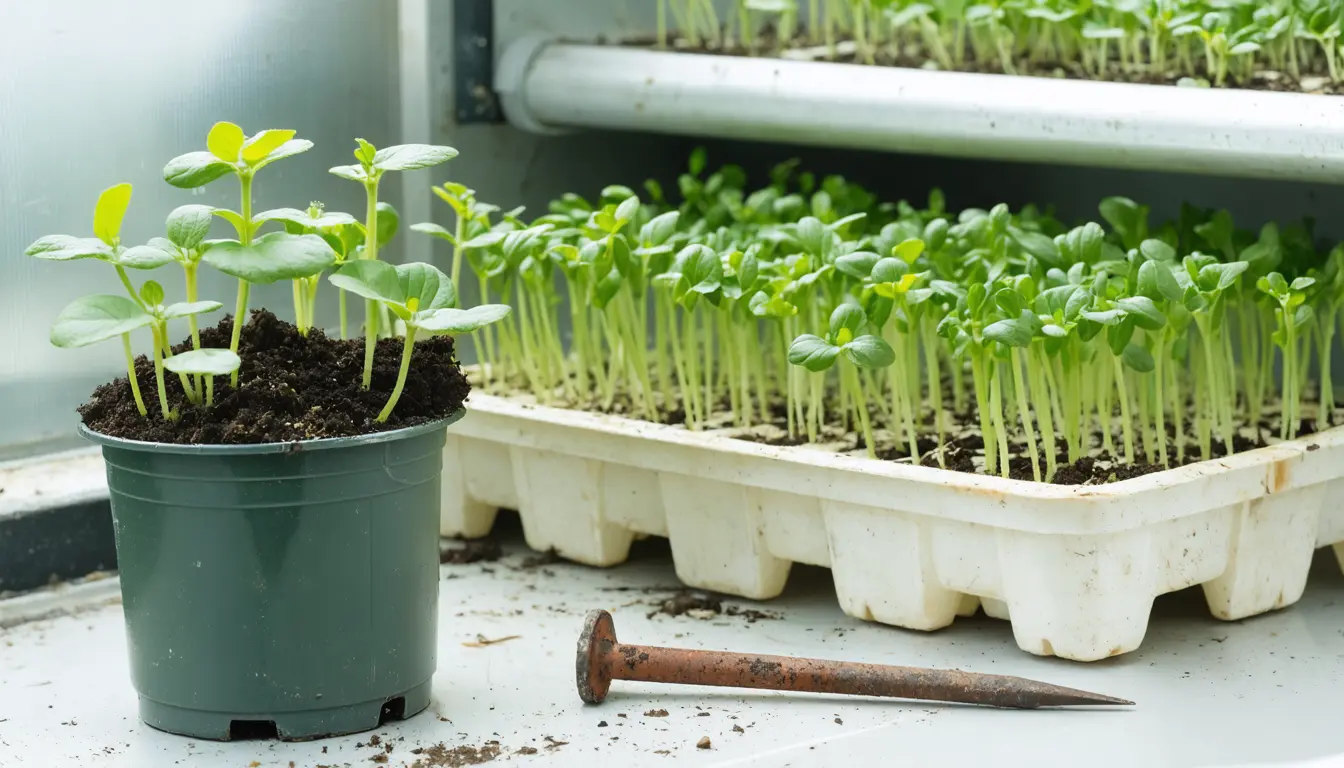
All of this started in Arabidopsis thaliana, which the source describes as a popular laboratory stand-in for crops such as wheat or corn [5].
Matthieu Pierre Platre, now a research associate at the Institute for Plant Sciences of Montpellier [11], said: "What makes this study special is that we explain the mechanism from the single-molecule scale to the full organism, providing a level of mechanistic integration that is rarely achievable in other biological systems." [12]
In our view the conditional verb is the right one for the farming claim, because the evidence so far is a mechanism in a lab plant. Wolfgang Busch, who holds the Hess Chair in Plant Science at Salk and is a co-corresponding author [10], said: "In the future, this knowledge could help guide the development of crops that resist disease, grow well and provide nutritious food." [13]
What to watch
- Whether the same SRF3 internalisation step turns up in wheat or corn, and whether altering it shifts disease resistance and grain iron together.
- The paper's data on plants lacking SRF3: how far the immune response overshoots and how much iron is lost without it.
- Replication of the ubiquitin-tagging and internalisation result by a lab outside Salk.
Clarity's read
What the record supports and how the coverage leans. The claims behind it follow.
Reality
- Evidence55
- Adoption
- Insufficient
- Hype gap+20
- Incentives
- Insufficient
- Confidence50
Claim ledger
Ranked by verification strength, evidence, and original report placement.
- [1]
The Salk study on SRF3 was published in Science Advances on Oct. 14, 2026.
- [2]
SRF3 detects an invading microbe and promotes the generation of reactive oxygen species, molecules that can be used to fight the microbe; creating them eats up cellular iron stores.
- [3]
As iron levels fall in the cell, SRF3 reorganizes itself, receives the molecular tag ubiquitin and is pulled into the cell.
- [4]
Once SRF3 is inside the cell, the creation of new reactive oxygen species that depletes iron and fights microbes stops, and balance is restored.
- [5]
The researchers started with Arabidopsis thaliana, a small flowering plant that is easy to grow and is a popular laboratory stand-in for other plants, including crops like wheat or corn.
- [6]
The experiments included flagging and tracking iron levels in cells, visualizing the movement of SRF3, and removing SRF3 completely and observing the consequences.
- [7]
Wolfgang Busch and Matthieu Pierre Platre published a 2022 Nature Communications paper in which they first identified SRF3 as mediating plant responses to microbes.
- [8]
The 2022 Salk study revealed that SRF3 could sense iron levels and direct root growth accordingly, and suggested SRF3 is also involved in nutritional immunity responses.
- [9]
Microbes that live on and around plants also need iron, so plants must balance using iron to defend themselves against microbes with retaining it to maintain health.
- [10]
Wolfgang Busch is a co-corresponding author and a professor and holder of the Hess Chair in Plant Science at Salk.
- [11]
Platre is a former staff scientist in Busch's lab and a current research associate at the Institute for Plant Sciences of Montpellier.
- [12]
"What makes this study special is that we explain the mechanism from the single-molecule scale to the full organism, providing a level of mechanistic integration that is rarely achievable in other biological systems."
- [13]
"In the future, this knowledge could help guide the development of crops that resist disease, grow well and provide nutritious food."
Get this ledger inside ChatGPT. Ask about any of our stories and the answer brings its figure, each claim’s verdict and the sources. Free, no account.
Sources
1 independent publisher whose own reporting we read for this story.
- phys.orgFighting off microbial invasions drains plants' iron stores, but one protein helps restore balance
1 article · October 14, 2026
Topics and entities
Follow any of these and your For You feed starts watching them — no settings page required.
Entities
- Salk InstituteFollow
- SRF3Follow
- Wolfgang BuschFollow
- Matthieu Pierre PlatreFollow
- Science AdvancesFollow
- Arabidopsis thalianaFollow
- Phys.orgFollow