ScienceNot yet confirmed elsewhere1 publisher2 min readPublished
Orange cats get their coat from a DNA deletion just ahead of the Arhgap36 gene
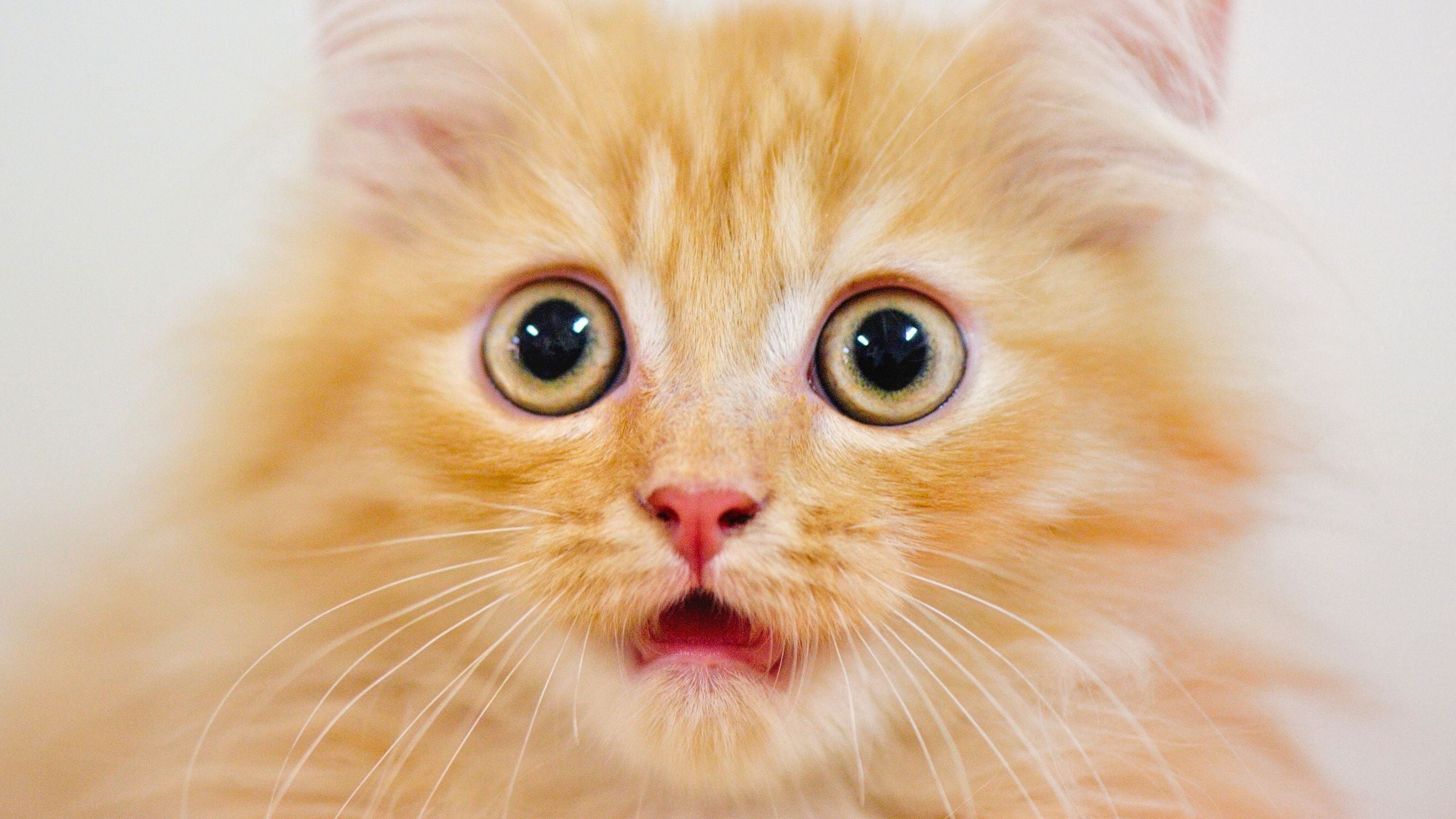
Stanford geneticist Greg Barsh and colleagues traced orange fur in cats to a 5-kilobase deletion in non-coding DNA just ahead of the Arhgap36 gene. The gap turned up in every orange cat they examined, evidence that the DNA controlling how strongly a gene is expressed can set a long-studied sex-linked trait.
The Scientist · Science desk
What happened
- Skin cells that sprout orange fur make 13 times as much RNA from the Arhgap36 gene as skin cells from cats with no orange hair, the Stanford team found.
- A second team, led by Kyushu University geneticist Hidehiro Toh, independently identified Arhgap36 as the gene behind orange fur.
- The mutation sits on the X chromosome, so most orange cats are male and most females with orange fur show patchworks of colors.
- On the rare occasions that a female carries the mutation on both X chromosomes, she grows as fully orange as any male.
Compiled by The ScientistSomething wrong?How this is made
Why it matters
- decision Gene hunts that begin with a change in a gene's activity have a documented case for sequencing the DNA around the gene, since the coding section Barsh's team checked first did not hold the cause.
- capability A deletion in a gene's control region can raise its output in one cell type and spare the rest: Arhgap36 harms development in other animals when over- or under-active, yet orange cats overexpress it only in melanocytes.
- constraint The causal case rests on who carries the deletion, RNA levels and the inheritance pattern, so the step by which the missing 5 kilobases raise Arhgap36 output is still described as presumed.
Barsh's group expected the cause to sit inside the gene. With Arhgap36 overactive in orange skin, the obvious suspect was a mutation in its protein-coding section. The change turned up instead as a deletion in the sequence immediately preceding the gene [8]. A trait whose gene had stayed hidden for more than 60 years [6] traced back to a part of the genome that codes for no protein [4]. "It's been a genetic mystery, a conundrum," Barsh told Science in 2024, when the findings first appeared as preprints [5].
The question I ask first is about the denominator. The database behind the result held 188 cats: 145 orange, 6 calico or tortoiseshell and 37 with no orange [2]. The deletion was in every orange cat examined [1]. Showing that it is missing from cats without orange is the job of those 37, about a fifth of the sample [17]. The ScienceAlert account does not report how many of them carried it.
I think the regulatory explanation holds on what is reported. A second team reached the same gene independently [14] and supplied the step between gene and color. Hidehiro Toh's group found that higher Arhgap36 expression suppresses pigment genes, shifting cells from dark brown-to-black eumelanin toward reddish-to-yellow pheomelanin [15]. Barsh's team is direct about its own conclusion. "Taken together, these observations provide strong genetic and genomic evidence that the 5 kb deletion causes sex-linked orange," they write in their paper [3].
The X chromosome accounts for the patchwork. Each female cell silences one of its two X chromosomes at random, so skin where the deletion-carrying X stays active grows orange beside skin where that X has been switched off [10]. Calico cats differ from tortoiseshells by carrying, in the words of Barsh and colleagues, "an additional white spotting mutation in calico that affects the ability of developing melanocytes to survive as they migrate away from the neural crest" [16].
ScienceAlert reports no obvious harm to health or mental wellbeing from the mutation, and no scientific support for the folk idea that orange cats are dimmer than others [13].
What to watch
- Whether the published Stanford paper reports how often the 5-kilobase deletion appears among the 37 cats without orange fur.
- An experiment that removes or restores the segment in cat pigment cells and measures Arhgap36 output directly.
- Whether the Kyushu team's deletion has the same boundaries as the Stanford group's 5-kilobase gap.
Clarity's read
What the record supports and how the coverage leans. The claims behind it follow.
Reality
- Evidence62
- Adoption
- Insufficient
- Hype gap+15
- Incentives
- Insufficient
- Confidence58
Claim ledger
Ranked by verification strength, evidence, and original report placement.
- [1]
The 5 kilobase deletion was present in every orange cat the researchers examined.
ReportedSupportedSource: Barsh team, via ScienceAlert2 sources— create a free account to open themView cited source - [2]
The database examined held 188 cats: 145 orange, 6 calico/tortoiseshell and 37 nonorange.
ReportedSupportedSource: Barsh team, via ScienceAlert2 sources— create a free account to open themView cited source - [3]
"Taken together, these observations provide strong genetic and genomic evidence that the 5 kb deletion causes sex-linked orange," Barsh and team write in their paper.
ReportedSupportedSource: Barsh and colleagues, via ScienceAlert2 sources— create a free account to open themView cited source - [4]
Two independent teams of researchers found that orange fur in cats is likely the result of a missing segment of DNA in a non-protein-coding part of the cat's genome.
- [5]
"It's been a genetic mystery, a conundrum," Stanford University geneticist Greg Barsh told Sara Reardon at Science in 2024, when the findings were first shared in preprint studies.
- [6]
For more than 60 years, the exact gene responsible for orange fur in cats stayed hidden.
- [7]
Cat skin cells from which orange fur sprouts express 13 times as much RNA from the Arhgap36 gene as skin cells from cats with no orange hair, Barsh and colleagues found.
- [8]
Expecting to find that the protein-coding section of Arhgap36 had mutated, the researchers found instead that the sequence preceding it contained a deletion, presumably affecting the gene's expression.
- [9]
The mutation is on the cat's X chromosome, explaining why orange appears differently between the sexes: most orange cats are male, while most female cats with some orange fur have patchworks of different colors.
- [10]
Mammals randomly inactivate one of the two X chromosomes in each cell, leaving female cats with the orange mutation active in some developing skin tissue next to cells where the X carrying it is deactivated.
- [11]
On rare occasions that both X chromosomes carry the mutation, a female cat grows as orange as any male.
- [12]
Arhgap36 is known to cause developmental problems in other animals when over- or under-functioning, but in orange cats the gene appears to be overexpressed only in developing and mature melanocytes.
- [13]
Links between cat coloration and cognition are scientifically unsupported, and the mutation has no obvious negative consequences for health or mental wellbeing.
- [14]
A second study, led by Kyushu University geneticist Hidehiro Toh, also identified Arhgap36 as the orange fur gene.
- [15]
Toh's team found that greater Arhgap36 expression suppresses color pigment genes, shifting dark brown to black eumelanin pigments to reddish to yellow pheomelanin pigments.
- [16]
"The difference between tortoiseshell and calico cats is the presence of an additional white spotting mutation in calico that affects the ability of developing melanocytes to survive as they migrate away from the neural crest, allowing melanocyte clones that do survive to expand in a larger body region," Barsh and colleagues explain.
- [17]
The 37 nonorange cats were about a fifth of the 188-cat sample.
Sources
1 independent publisher whose own reporting we read for this story.
- sciencealert.comSecret of Orange Cats Finally Revealed After 60-Year Search
1 article · October 9, 2026
Topics and entities
Follow any of these and your For You feed starts watching them — no settings page required.
Topics
- Pigmentation biologyFollow
- Gene regulationFollow
- Feline geneticsFollow
- X-linked inheritanceFollow
Entities
- Greg BarshFollow
- Hidehiro TohFollow
- Stanford UniversityFollow
- Kyushu UniversityFollow
- Arhgap36Follow
- Current BiologyFollow
- ScienceAlertFollow