Science2 publishersIndependently confirmed2 min readPublished Updated
British Antarctic Survey counts 63% fewer chinstrap nests on Zavodovski Island than in 2011
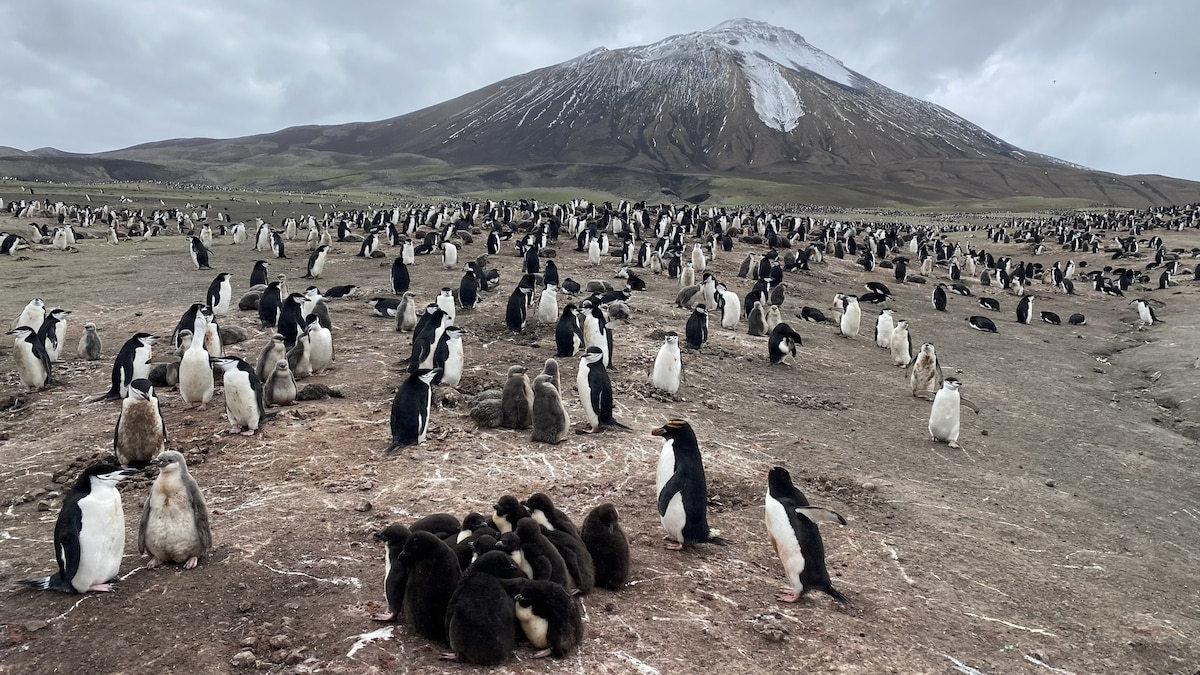
British Antarctic Survey aerial surveys found 63% fewer occupied chinstrap penguin nests on Zavodovski Island in 2025 than in 2011. The researchers blame krill moving south as the sea warms and say the birds may now count as endangered.
The Scientist · Science desk
What happened
- In 2011 the British Antarctic Survey estimated 600,000 chinstrap and 90,000 macaroni penguins on the island, then billed as the world's largest penguin colony.
- The BAS team sailed 15 days to reach Zavodovski, surveyed it with drones and aerial photography, drew on satellite imagery and fitted trackers to 20 birds.
- Macaroni penguins on the same island increased sharply over the same period; scientists link their success to a broader, more flexible diet.
- The team ruled out the island's active volcano because its last major eruption came in 2016, while the chinstrap decline had run steadily since 2011.
- The title of world's largest penguin colony has passed to Cape Adare in the Ross Sea, more than 5,000km away on the far side of Antarctica.
Compiled by The ScientistSomething wrong?How this is made
Why it matters
- exposure On one shared island, diet breadth separated the species that shrank from the one that grew, so krill specialists are the penguins most exposed as warming water moves their prey.
- constraint Chinstraps on Zavodovski cannot relocate toward the krill, with sea ice to the south and few nesting islands, so any recovery there depends on the food coming back.
- decision A move to list chinstraps as endangered, as the team suggests, would need this single-colony decline to be matched by counts at other colonies.
The 63% counts occupied nests [1]. The 2011 baseline that made Zavodovski famous was given in birds: about 600,000 chinstraps [2]. If birds fell in step with nests, roughly 222,000 chinstraps would be left [17]. That figure holds only if the two measures moved together.
Spread over 14 years, a 63% loss works out to about 7% a year, compounded [16]. The team describes the decline as steady and ongoing since 2011 [6]. Steady losses clear the obvious suspect. Mount Curry, the active volcano the birds nest beneath, last erupted in a major way in 2016 [7][6]. By then the decline had been running for five years.
Humpback whales were the second suspect. They eat large quantities of krill, but their dung fertilises the marine plants krill feed on, so they add to the chinstraps' food supply as well as taking from it [8].
The best evidence comes from the neighbours. Macaroni penguins nest on the same island, and their numbers rose sharply while the chinstraps fell [9]. The two species share the volcano and the whales but eat different things. That makes the comparison a rough natural control for anything happening locally. Tracked macaronis foraged in warmer water to the northeast, where the scientists think they were likely adding fish and other crustaceans to their diet [10]. Chinstraps eat a specialist diet and prefer cooler water, according to Norman Ratcliffe, who led the research [11].
Ratcliffe said that with the waters warming, the krill the chinstraps eat have moved southwards [12]. "Sea-ice cover to the south and a lack of suitable islands for nesting prevents chinstraps from following the food," he said [13].
The thing this doesn't tell you is how far the krill have moved. The BBC account of the study does not describe direct krill measurements, and the tracking sample was 20 birds [5]. The warming explanation fits the pattern, and the case against both local alternatives is strong. Still, the step from warm water to empty nests is the team's interpretation of that pattern.
The team says chinstraps may now be officially endangered [3]. One colony is a narrow base for a species-wide status, and trends at other colonies would have to point the same way. Ratcliffe called the Zavodovski shift the "biggest change in community composition ever observed at a single location in Antarctica" [14]. The study is published in Current Biology [15].
What to watch
- Whether chinstraps are formally reclassified as endangered, as the BAS team suggests they may now be.
- Nest counts from other chinstrap colonies, which would show whether Zavodovski's 63% loss is local or species-wide.
- Krill distribution data around the South Sandwich Islands that tests the southward-shift explanation directly.
Clarity's read
What the record supports and how the coverage leans. The claims behind it follow.
Reality
- Evidence68
- Adoption
- Insufficient
- Hype gap+15
- Incentives
- Insufficient
- Confidence62
Claim ledger
Ranked by verification strength, evidence, and original report placement.
- [1]
According to the study, there were 63% fewer occupied nests of chinstrap penguins on Zavodovski Island in 2025 than at the same time in 2011.
ReportedSupportedSource: BAS-led study, reported by BBC2 sources— create a free account to open themView cited source - [2]
In 2011 the British Antarctic Survey hailed Zavodovski as home to the largest penguin colony in the world, with an estimated 600,000 chinstrap penguins and 90,000 macaroni penguins.
ReportedSupportedSource: BBC, citing BAS2 sources— create a free account to open themView cited source - [3]
The research team says climate change is affecting the birds' food supply and survival, and the penguins may now be officially endangered.
ReportedSupportedSource: Research team, via BBC2 sources— create a free account to open themView cited source - [4]
Scientists say the title of world's largest penguin colony is now held by Cape Adare in the Ross Sea, more than 5,000km away on the other side of the Antarctic continent.
- [5]
A BAS team sailed for 15 days to reach the island, using drones, aerial photography and fitting tracking devices to 20 birds; this research and satellite imagery suggested the number of occupied chinstrap nests declined by 63% between 2011 and 2025.
- [6]
Mount Curry's last major eruption was in 2016, but the penguin declines the study analysed have been steady and ongoing since 2011, suggesting something else was happening.
ReportedSupportedSource: BBC, describing the study2 sources— create a free account to open themView cited source - [7]
Birds on Zavodovski nest in the shadow of an active volcano, Mount Curry.
- [8]
Competition for krill from migrating humpback whales was examined; humpbacks eat huge quantities of krill but also help boost krill production by fertilising the marine plants krill feed on.
- [9]
While the chinstrap population declined, the number of macaroni penguins on the island increased dramatically; scientists believe this is linked to their broader, more flexible diet.
ReportedSupportedSource: Scientists, via BBC2 sources— create a free account to open themView cited source - [10]
Tracking data showed macaronis foraged in warmer waters to the northeast of the island, where scientists say they were likely supplementing their diets with fish and other crustaceans.
ReportedSupportedSource: Study tracking data, via BBC2 sources— create a free account to open themView cited source - [11]
Prof Norman Ratcliffe, who led the research, said the chinstraps' 'specialist diet' and preference for cooler waters appear to have left them vulnerable.
ReportedSupportedSource: Norman Ratcliffe, BAS2 sources— create a free account to open themView cited source - [12]
"With waters warming, the krill [that the chinstrap penguins eat] have moved southwards."
ReportedSupportedSource: Norman Ratcliffe, quoted by BBC2 sources— create a free account to open themView cited source - [13]
"Sea-ice cover to the south and a lack of suitable islands for nesting prevents chinstraps from following the food," he said.
ReportedSupportedSource: Norman Ratcliffe, quoted by BBC2 sources— create a free account to open themView cited source - [14]
Ratcliffe said the shift was "biggest change in community composition ever observed at a single location in Antarctica".
- [15]
The research is published in the journal Current Biology.
- [16]
A 63% decline over the 14 years from 2011 to 2025 is equivalent to about 7% a year, compounded.
- [17]
If chinstrap numbers fell in proportion to occupied nests, roughly 222,000 of the estimated 600,000 chinstraps would remain.
Sources
2 independent publishers whose own reporting we read for this story.
- bbc.co.ukWorld's largest penguin colony hit by 'alarming' decline in numbers
1 article · October 7, 2026
- interestingengineering.com‘Enormous population crash’: World’s largest penguin colony shrinks by two-thirds
1 article · October 8, 2026
Topics and entities
Follow any of these and your For You feed starts watching them — no settings page required.
Entities
- Macaroni penguinFollow
- Norman RatcliffeFollow
- Mount CurryFollow
- Chinstrap penguinFollow
- British Antarctic SurveyFollow
- Current BiologyFollow
- Zavodovski IslandFollow
- Cape AdareFollow