ProductReports disagree2 publishers3 min readPublished
Nikon will redraw its AI rules after disqualifying its microscopy video winner
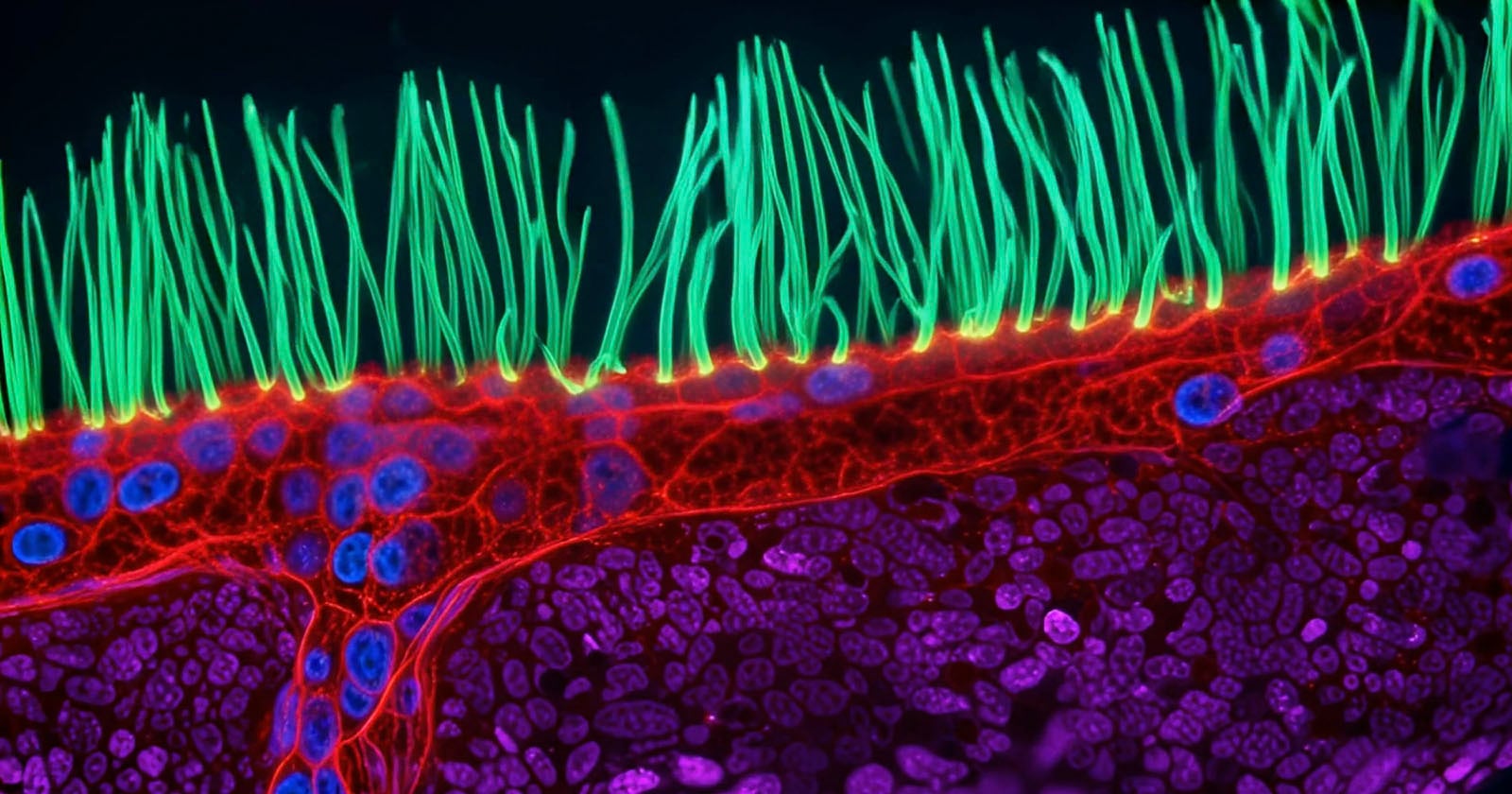
Nikon disqualified Dr Ning Xu's first-place Small World in Motion video for breaking its generative AI rules. Xu believed he had followed those rules, the BBC reported, so the line on AI processing is being drawn after the prize was awarded.
The Product Desk
What happened
- Scientists, including former competition judges, complained on Nikon's LinkedIn page that the winning video of cilia in a child's airway did not appear to be real.
- Xu acknowledged on LinkedIn that an unsupervised neural-network method was used for AI-assisted post-processing of his super-resolution microscopy images.
- A video from Nguyen Nam Nhat now holds first place, and Xu's entry appears to have been removed from Nikon's website.
- Small World in Motion is an annual Nikon contest for microscope-made photos and video that has been running for 15 years.
Compiled by The Product DeskSomething wrong?How this is made
Why it matters
- contradiction Xu calls the step post-processing to visualize features, Nikon calls it a generative AI breach and Hirst calls it fabrication; the disqualification settles eligibility without saying which description is accurate.
- exposure Scientists who run neural-network post-processing can follow a contest's rules as they read them and still lose a prize once outside experts object in public.
- decision Programs that accept processed images now have to choose whether a subject specialist checks entries against raw captures before the award, because Nikon's check came only after the result was public.
Robert Hirst did not need software to see that something was wrong with the winning video of cilia in a child's airway [2]. "I have been diagnosing PCD for 20 years by examining their cilia waveform, length, cell size and shape," the University of Leicester scientist said [13]. He said he "knew immediately that the video was fabricated" [12]. Hirst is lead scientist for the NHS centre for PCD diagnosis at the university. He said the cells and cilia "look nothing like those from PCD patients" [14].
The same processing step now has three names. Xu described it as AI-assisted post-processing "to distinguish and visualize features in the reconstructed grayscale images from the super-resolution optical imaging" [4]. Nikon ruled that the entry "did not comply with the competition rules regarding generative AI" [1]. Hirst's word was fabricated [12]. According to the BBC, Xu believed he had acted within the rules and cooperated with Nikon's investigation [5]. Neither report quotes the wording of the rule.
The expert check that decided the outcome happened after the result was public. Nikon said it began reviewing the video following skepticism online about its authenticity [3]. It reached its decision "after thoroughly re-evaluating the video and supporting materials and consulting with members of our judging panel" [6].
Nikon's promised fix covers "rules and evaluation procedures for future competition entries" [9]. I think the second item matters more. A sharper rule would have told Xu where the line sat before he entered. A different procedure would have put someone with Hirst's training in front of the winner before it was announced. Nikon also said the decision "should not be interpreted as a judgment of the entrant's professional reputation, scientific contributions, or intent" [10]. So Nikon has ruled on eligibility only. Hirst's question, whether these cilia look like PCD cilia at all, is outside its verdict.
Two groups use a rule like this: entrants deciding what to declare, and judges deciding what to check. Hirst named the people downstream of both. "This controversy has impacted a lot of patients, scientists, doctors and PCD support networks around the world," he said [15].
Anyone running a program that accepts processed images can place it on two axes. The first is how the rule is written. It can name a tool category, such as generative AI, or it can name an effect: any step that adds or infers structure the instrument did not record has to be declared, with the raw capture attached. The second axis is timing. A specialist in the subject either checks the entry before the award or sees it after it is public. Nikon's microscopy contest, now 15 years old [11], ended up in the box with a tool-label rule and an after-publication check.
The box to aim for is an effect-based rule with a pre-award check. It has a cost. Judges need a specialist for each subject, and entrants have to hand over raw files and a step-by-step processing log, which some will not want to share. One test settles it. If a program cannot name the specialist who checked last year's winner against its raw capture before the announcement, it is in the same box Nikon was in.
What to watch
- The text of Nikon's revised rules and evaluation procedures, and whether they define permitted AI processing by its effect on the image or by tool category.
- Whether Xu publishes raw captures or answers Hirst's objection that the cells and cilia do not resemble those of PCD patients.
Clarity's read
What the record supports and how the coverage leans. The claims behind it follow.
Reality
- Evidence68
- Adoption
- Insufficient
- Hype gap+25
- Incentives
- Insufficient
- Confidence66
Perspective Coverage
3 publishers- Builder
- Builder 28%
- Operator
- Operator 63%
- Investor
- Investor 9%
Claim ledger
Ranked by verification strength, evidence, and original report placement.
- [1]
Nikon said the video that originally won first place in its Small World in Motion contest "did not comply with the competition rules regarding generative AI" and disqualified it.
ReportedSupportedSource: Nikon statement, reported by The Verge and the BBC3 sources— create a free account to open themView cited source - [2]
The winning entry came from Dr Ning Xu of Tsinghua University, a short video showing cilia moving in the airway of a child with the respiratory condition PCD.
- [3]
Nikon said last week that it was reviewing the video following skepticism online about its authenticity.
ReportedSupportedSource: The Verge, citing Nikon3 sources— create a free account to open themView cited source - [4]
Xu wrote on LinkedIn: "An unsupervised neural-network method was subsequently used for AI-assisted post-processing to distinguish and visualize features in the reconstructed grayscale images from the super-resolution optical imaging."
ReportedSupportedSource: Dr Ning Xu, LinkedIn comment, quoted by The Verge3 sources— create a free account to open themView cited source - [5]
Xu acknowledged using AI but said he believed he had acted within the rules, and had cooperated with Nikon's investigation.
- [6]
Nikon said it came to the decision "after thoroughly re-evaluating the video and supporting materials and consulting with members of our judging panel".
ReportedSupportedSource: Nikon, quoted by the BBC3 sources— create a free account to open themView cited source - [7]
A number of scientists, including former competition judges, complained to Nikon on its LinkedIn page that the video did not appear to be real.
- [8]
Xu's video has been disqualified and appears to have been removed from Nikon's website; a video from Nguyen Nam Nhat now holds first place in the updated rankings.
- [9]
Nikon says it plans to "revisit rules and evaluation procedures for future competition entries."
ReportedSupportedSource: Nikon statement, quoted by The Verge2 sources— create a free account to open themView cited source - [10]
Nikon said the decision to disqualify Xu's video "should not be interpreted as a judgment of the entrant's professional reputation, scientific contributions, or intent."
ReportedSupportedSource: Nikon statement, quoted by The Verge2 sources— create a free account to open themView cited source - [11]
Small World in Motion is an annual contest that has been running for 15 years, is specifically for microscopic images, and accepts photos and video taken using powerful microscopes.
- [12]
Dr Robert Hirst said he was "not surprised" and he "knew immediately that the video was fabricated".
ReportedContestedSource: Robert Hirst, University of Leicester, quoted by the BBC2 sources— create a free account to open themView cited source - [13]
"I have been diagnosing PCD for 20 years by examining their cilia waveform, length, cell size and shape," Hirst said.
ReportedContestedSource: Robert Hirst, quoted by the BBC2 sources— create a free account to open themView cited source - [14]
Hirst, lead scientist for the NHS centre for PCD diagnosis at the University of Leicester, said the cells and cilia "look nothing like those from PCD patients".
ReportedContestedSource: Robert Hirst, quoted by the BBC2 sources— create a free account to open themView cited source - [15]
"This controversy has impacted a lot of patients, scientists, doctors and PCD support networks around the world," Hirst said.
ReportedContestedSource: Robert Hirst, quoted by the BBC2 sources— create a free account to open themView cited source
Sources
2 independent publishers whose own reporting we read for this story.
- arstechnica.comWinning Nikon Small World in Motion video disqualified for AI use
1 article · October 9, 2026
- bbc.co.ukPrize-winning image which sparked backlash was AI-generated, Nikon rules
1 article · October 9, 2026
- theverge.comNikon microscopic video competition winner disqualified for using generative AI
1 article · October 9, 2026
Topics and entities
Follow any of these and your For You feed starts watching them — no settings page required.