Product3 publishers3 min readPublished
Nikon re-reviews its winning microscope video after scientists flag impossible cell structures
Nikon is re-reviewing its Small World in Motion winner after scientists said the microscope video shows structures that do not occur in biology. Its ruling on whether neural-network coloring counts as banned generative AI rests on documents the entrant supplied after he won.
The Product Desk · Product desk
What happened
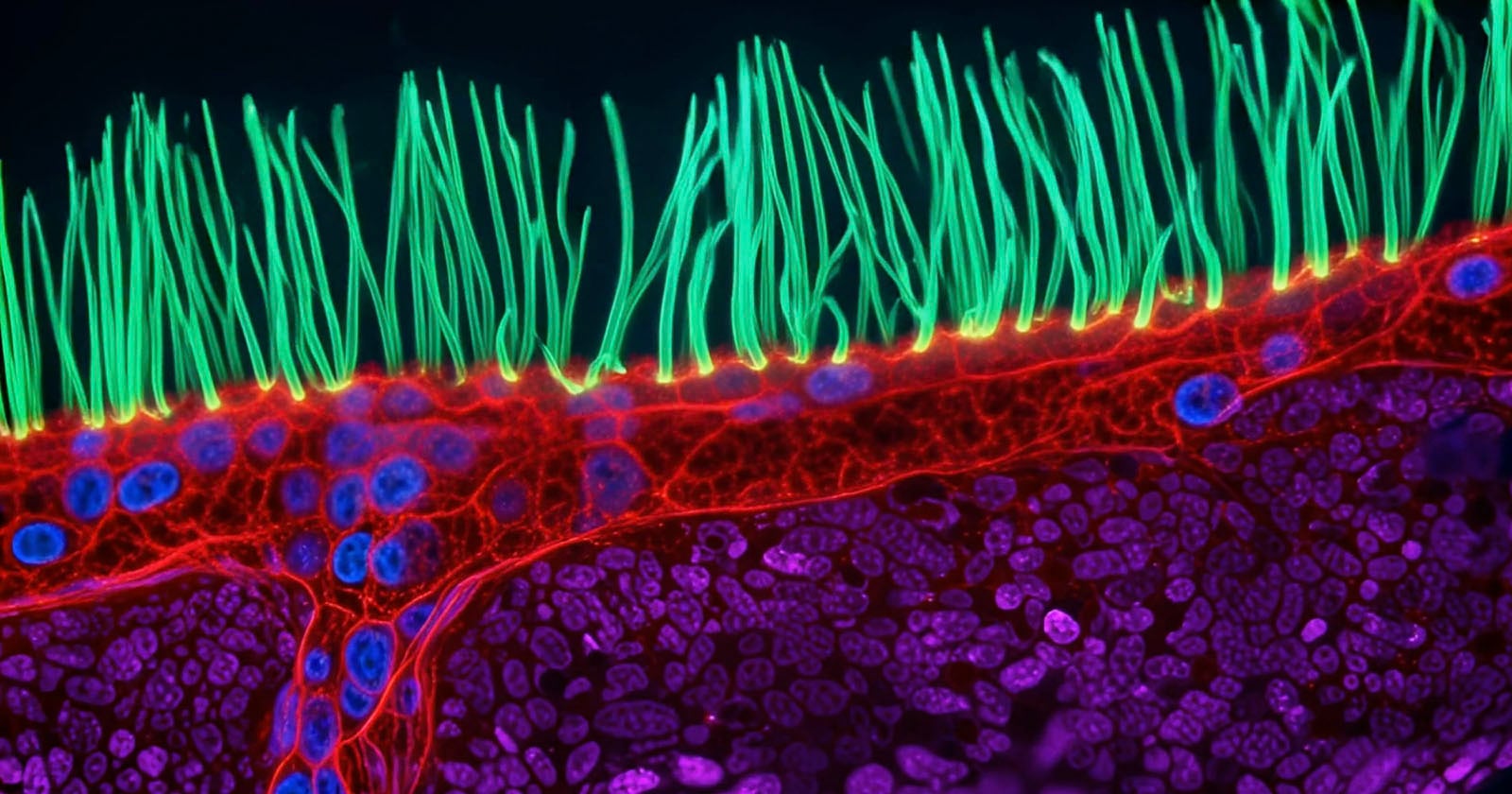
- Xu says the cilia footage and its motion are real and that AI only separated and colored similar-looking structures in reconstructed grayscale data.
- Two former judges of the contest have said they also had doubts about whether the winning image was real.
- Nikon said it does not currently see any rule violation and promised an update soon.
Compiled by The Product DeskSomething wrong?How this is made
Why it matters
- constraint Because most AI detectors perform poorly, organizers who judge only finished videos have little to check when a tool leaves no watermark.
- decision Contests that ban generative AI but allow coloring now have to say whether a neural network that separates and colors features counts, a case the 2010 disclosure guidelines were not written for.
- cost Requiring raw captures and declared processing steps at entry would add work for entrants and judges in a contest valued partly for its artistic images.
Edward Phelps looked at the purple shapes under the cilia, in footage of lung tissue from a child with primary ciliary dyskinesia, and saw what looked like mitochondria at the size of cell nuclei [27]. "The purple structures resemble mitochondria but such a sub-epithelial structure composed of extracellular mitochondria of the same size as cell nuclei does not occur in biology," the University of Florida bioengineering researcher wrote on LinkedIn [4]. He also said some structures "pop in and out of existence" and the cilia "appear from nowhere" [5]. Other critics said the cilia looked too big [6]. The objections came after Nikon Instruments announced the winner in mid-September and reposted it to LinkedIn [7]. Two former contest judges have since said they had doubts about whether the image was real [8]. Andrew Moore, a former judge, told The Telegraph it made him think of "old photographs restored with AI" [9]. Nikon says it is "carefully re-reviewing" what Xu submitted [1], and that he "has provided detailed technical documentation outlining the microscopy equipment, imaging methods, and processing techniques used to create the source video" [10]. Patrick Hickey, who placed fifth this year [26], described a two-part rule. "There's a specific set of rules in the contest, and one of them was quite clearly that you couldn't use generative AI to produce things, and the other was obviously that it has to be taken under a microscope," he told the BBC [11]. He said it would be unfair on other entrants if the winner turned out to be unfairly altered by AI [24]. Xu says he stayed inside both rules. "AI was not used to generate the experimental movie, the cilia, or their motion," he said [12]. Nikon agrees for now: "At this time, we don't see that any rules were violated" [13]. The rule as Hickey describes it treats an entry as either captured or generated. Xu's own account has a step in between: real footage, then AI applied to "reconstructed grayscale data to distinguish and color structures with similar morphology" [14]. Nikon's updated blog post says "an unsupervised neural-network method" did that work, "creating a more vivid and visually engaging video" [15]. Xu says the team rendered those features "without making anatomical claims about what those rendered features represent" [16]. A vivid, visually engaging video is a goal set for an audience. Melanie White, a University of Queensland developmental biologist, told Nature that scientists "need to be able to trust that what we are seeing is grounded in the underlying measurement" [17]. The widely cited guidelines that allow colorized images when the changes are disclosed and described date from 2010, before generative AI [18]. Coloring is permitted in the contest and is usually done with stains and dyes on the sample itself [19]. The hardest evidence so far is a watermark. Ian Donovan, a UT Southwestern PhD student, pointed out a SynthID mark in the video, CNN reported [20]. The BBC described it as a watermark indicating AI generation [21]. SynthID came out of Google DeepMind and has been adopted by many AI firms [22]. Most detectors that try other methods fare poorly, and without such a mark an image's provenance can be difficult or impossible to establish with certainty [23]. Reports differ even on where Xu works. Gizmodo identifies him as a National University of Singapore optical engineer [2], the BBC as a Tsinghua University researcher [3]. I think the fix belongs in the entry form. The contest would ask for the raw capture and a declared list of every processing step at submission, and judges would compare the finished video with the raw file. The cost falls on entrants in a contest prized for work with, in Hickey's words, "very abstract and artistic qualities" [25], and on judges who now have to read source data as well as look at the art.
What to watch
- Nikon's promised update, and whether it rules that Xu's unsupervised neural-network step falls inside or outside the contest's generative AI ban.
- Whether Small World in Motion changes its entry rules to require raw captures or a declared list of processing steps at submission.
- Whether Xu's technical documentation or raw grayscale footage is released so outside scientists can check the rendered structures.