ProductNot yet confirmed elsewhere1 publisher3 min readPublished
Textron's CJ4 bet: the upgrade that matters is in the panel, not the performance sheet
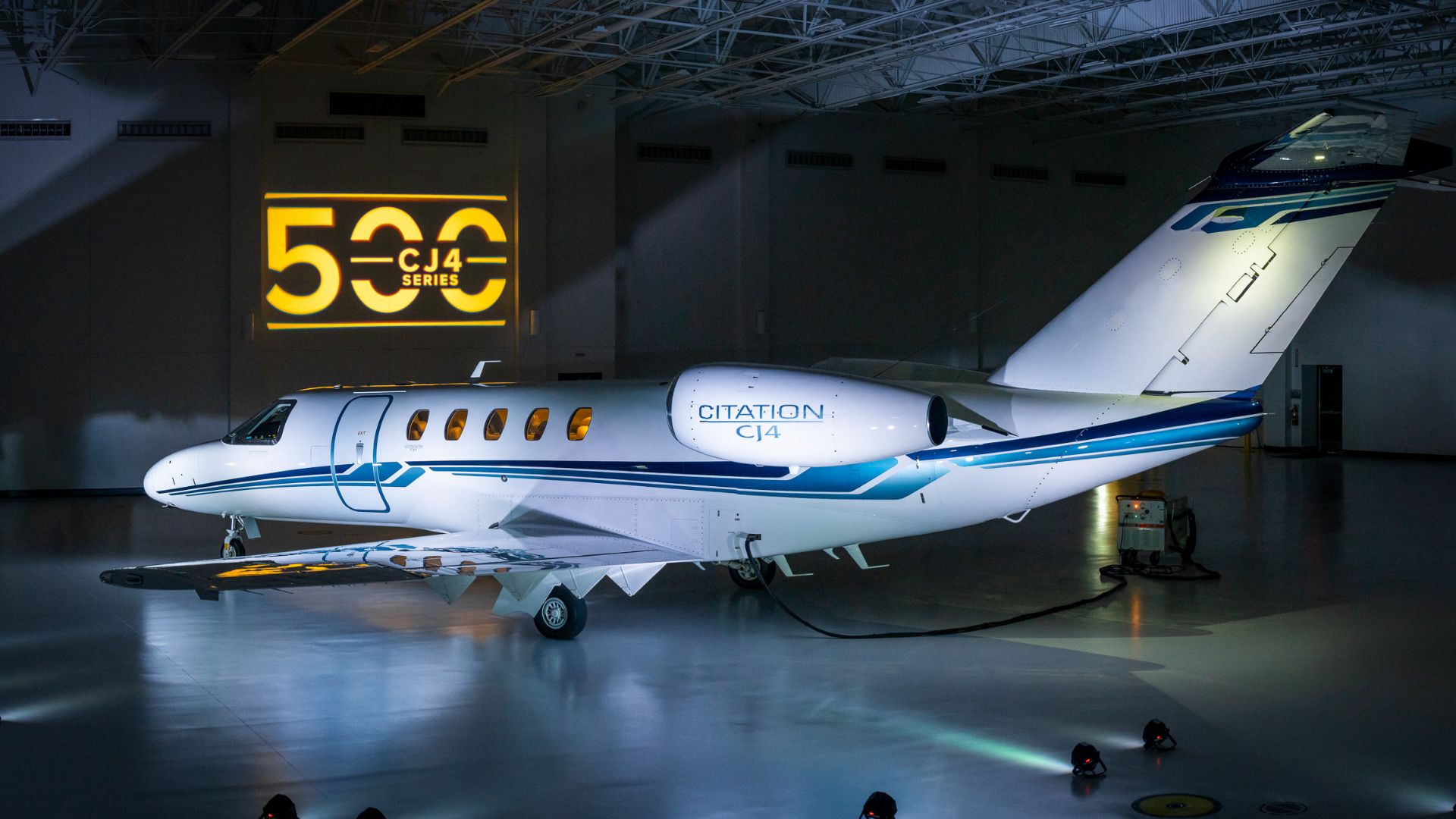
Textron delivered its 500th CJ4-series jet, and the Gen3 behind it sells a cockpit: Garmin Emergency Autoland on an aircraft already certified to fly with one pilot.
The Product Desk
What happened
- Textron Aviation handed over the 500th CJ4-series jet, a Gen2, to a customer in the Philippines.
- The forthcoming Gen3 adds Garmin G3000 PRIME avionics and Garmin Emergency Autoland, which can fly the aircraft to a landing if the pilot is incapacitated.
- Textron quotes 2,165 nautical miles on full fuel, 2,200 pounds of payload and seating for up to 11.
Why it matters
- capability The one risk a second crew member covers on a single-pilot jet now has a systems answer, which is a hedge sold to the owner in the left seat rather than a performance gain.
- decision Textron has spent this revision on the cockpit rather than the airframe, so anyone comparing light jets on range or payload will find nothing new to weigh.
- precedent Once autoland is normal at this end of the light-jet market, rivals selling single-pilot aircraft without it are answering a question they did not previously have to.
- contradiction The same account gives two certification windows, so buyers cannot pin an entry-into-service date from it and neither can anyone planning a delivery slot.
The specification sheet is the tell. Textron has kept updating the CJ4 in place rather than designing a replacement [11], and the Gen3 numbers are the sort a buyer could already price: 2,165 nautical miles on a full-fuel mission, 2,200 pounds of maximum payload, seating for as many as 11 occupants, and 1,040 pounds of baggage [9][10]. The change customers are being asked to pay for sits in front of the pilot, in the form of Garmin G3000 PRIME avionics and Garmin Emergency Autoland [6].
That choice is coherent once you look at who buys the airplane. The Gen3 stays certified for single-pilot operations [8], which is the CJ4's commercial argument and also its one structural gap: the thing a second pilot mostly provides is cover for the first one stopping. Emergency Autoland addresses that specific failure, taking control and guiding the aircraft to a landing when it detects an incapacitated pilot or is activated [7]. The source does not say who can activate it, which matters, because a system a passenger can trigger is a different product from one only the aircraft can trigger.
The delivery arithmetic explains why the pitch is aimed at an individual rather than a flight department. Five hundred CJ4-series aircraft [1] over a platform the source dates only as more than a decade in service [12] works out to an average of no more than about 50 a year [16]. This is a program sold one owner at a time, and the buyer is often the person in the left seat. Automation that reduces the consequence of that person's bad day is a purchase argument in a way that another 100 nautical miles is not.
The test programme is heavier than an avionics refresh implies. More than 880 hours have been flown on two Gen3 aircraft [5], an average of about 440 hours per airframe [15]. Certification credit for an autonomous landing function is where hours go.
The dates in the same account do not agree. Textron expects FAA certification later this year [3], and, a few paragraphs on, expects the flight test work to support certification before the end of 2026 [4]. Anyone building a delivery slot into a 2026 budget is choosing between two numbers from one report.
What the material does not settle is whether the automation reads the same way to the rest of the customer base. The CJ4 also flies air ambulance, maritime patrol, search and rescue and aerial survey missions [13], and those operators buy on utilisation and crewing rules, which this account does not address. Lannie O'Bannion, Textron's senior vice president of sales and marketing, said the CJ4 "has set the standard in its class for more than a decade" [14]. That is a statement about the 500 already delivered. The Gen3 is the argument for the next 500, and it is being made in the cockpit.
What to watch
- Whether FAA certification actually lands in the calendar year Textron first cited, or slips to the end-of-2026 window the same report gives.
Clarity's read
What the record supports and how the coverage leans. The claims behind it follow.
Reality
- Evidence38
- Adoption55
- Hype gap+28
- Incentives68
- Confidence42
Claim ledger
Ranked by verification strength, evidence, and original report placement.
- [1]
Textron Aviation has delivered its 500th Citation CJ4-series business jet.
- [2]
The 500th aircraft was a Citation CJ4 Gen2 delivered to a customer in the Philippines.
- [3]
Textron expects the Citation CJ4 Gen3 to receive Federal Aviation Administration certification later this year.
- [4]
Textron expects the Gen3 flight test work to support certification before the end of 2026.
- [5]
Gen3 flight testing has logged more than 880 hours across two Gen3 test aircraft.
- [6]
The Gen3 will add Garmin G3000 PRIME avionics and Garmin Emergency Autoland.
- [7]
If Emergency Autoland detects an incapacitated pilot or receives activation, it can take control and guide the aircraft to a landing.
- [8]
The CJ4 Gen3 will remain certified for single-pilot operations.
- [9]
Textron expects the Gen3 to reach 2,165 nautical miles on a full-fuel mission.
- [10]
The Gen3 will carry a maximum payload of 2,200 pounds, seat up to 11 occupants, and offer 1,040 pounds of baggage capacity.
- [11]
Textron has steadily updated the CJ4 platform instead of replacing it with an entirely new design; the current Gen2 introduced changes to the cabin and flight deck.
- [13]
The CJ4 sits at the larger end of the light-jet market and serves owner-pilots, corporate operators and specialized missions including air ambulance work, maritime patrol, search and rescue, and aerial surveys.
- [14]
Lannie O'Bannion, Textron Aviation's senior vice president of sales and marketing, said: "The Citation CJ4 has set the standard in its class for more than a decade."
- [15]
The Gen3 test fleet has averaged about 440 flight hours per airframe.
- [16]
Five hundred CJ4-series deliveries spread across at least ten years in service implies an average of no more than about 50 deliveries a year.
- [17]
Emergency Autoland adds a safety feature previously associated with more advanced aircraft systems.
Sources
1 independent publisher whose own reporting we read for this story.
Topics and entities
Follow any of these and your For You feed starts watching them — no settings page required.