Product2 publishers3 min readPublished
Joby supervised a 3,199-mile autonomous crossing from as far as 2,323 miles away
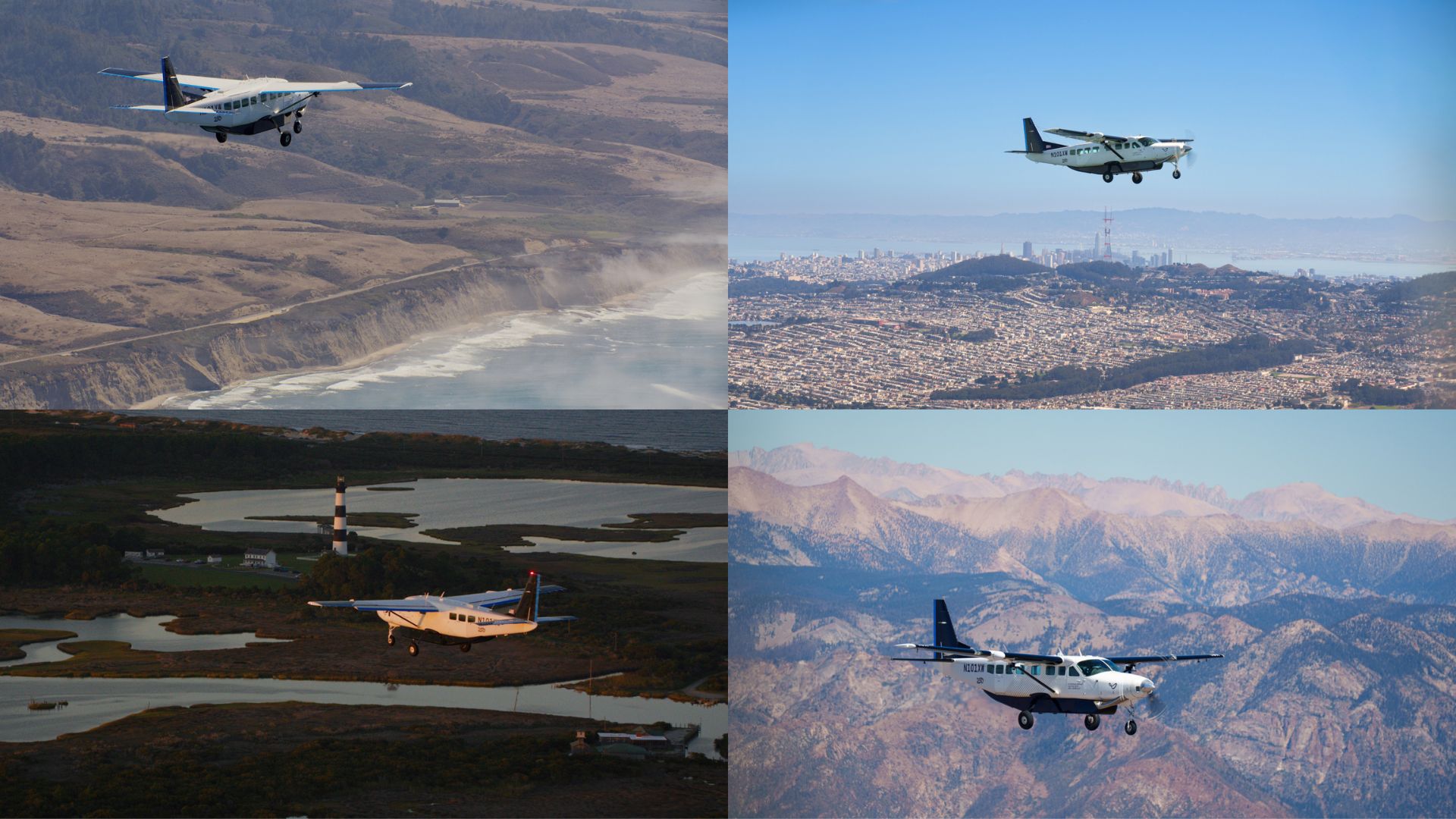
A converted Cessna Caravan taxied, took off, navigated and landed on its own across the country, ending near North Carolina's Outer Banks. The pilot in the seat was there for compliance and never operated the controls.
The Product Desk · Product desk
What happened
- Joby said a modified Cessna Caravan flew 3,199 miles eastbound across the United States, handling taxiing, takeoff, navigation and landing itself, and finished near North Carolina's Outer Banks.
- Remote operators ran the flight from Joby's headquarters in California and from Shaw Air Force Base in South Carolina, where the aircraft also took part in a military operations demonstration.
- The route took the aircraft into Phoenix Deer Valley, a busy general aviation airport, and into Fort Worth Alliance in Texas, where Joby showed how autonomy could support freight at a logistics hub.
- Joby said that during an Air Force Agile Flag exercise its system delivered replacement parts 24 hours faster than conventional logistics.
- The aircraft will fly back to the West Coast over the next two weeks, Joby said, with stops including Raleigh, Louisville, Wichita, Oklahoma City, Salt Lake City and Portland.
Compiled by The Product DeskSomething wrong?How this is made
Why it matters
- cost Remote supervision is a new fixed cost. Staffed rooms in California and South Carolina have to be paid for across every flight hour they cover, and that lands on the operator before any crew saving exists.
- capability Because the stack is built to retrofit onto conventional airframes, the candidate fleet is aircraft operators already own, and Joby's first product for sale is a regional airframe with the stack installed.
- decision A freight or defense buyer now has to price two items separately: the autonomy stack Joby will sell, and regulatory permission to leave the seat empty. Only the first is Joby's to deliver.
The person with the least to do on the crossing was the pilot. A crew member who is legally required to sit there and monitor costs a cargo operator the same as one who flies, and Joby's account has the safety pilot aboard the whole way with hands off the controls [3]. TechCrunch reported the seat was filled for compliance [19].
Joby did put a number on supervision distance. Remote operators worked from as far as 2,323 miles from the aircraft [4], about 73 percent of the 3,199 miles flown [1]. The company has stretched that link further before, in a demonstration of remote operation between Hawaii and Guam, nearly 4,000 miles apart [25]. Joby did not disclose how many aircraft one operator supervises at a time [4]. The ratio decides whether the stack removes a crew cost from a flight or moves it into a building in California.
The claims that bear on real operations come from the company. Joby said the aircraft met severe weather and thunderstorms, and that the system rerouted without previous familiarity with the destination airport [6]. TechCrunch put the trip at more than 3,100 miles and quoted Joby describing it as the "first-ever autonomous flight across the United States" [17][18].
The program behind the flight has more than 400 flights and 800 automated flight hours on record, in controlled and uncontrolled airspace [8]. It came out of a division Joby bought from Xwing in 2024 [9]. Divide the hours by the flights and the average runs under two hours [2]. A multi-day crossing with stops in Arizona, Texas, South Carolina and North Carolina is a longer mission than most of that history. It ended with a low pass near Kitty Hawk's First Flight Monument and a landing at Dare County Regional Airport [11].
The customers in view are defense and freight. The autonomy stack is designed to be retrofitted onto a wide range of conventional aircraft [20]. Joby plans to bring a regional airframe with the stack installed to market first, for defense missions and commercial freight [21]. AFWERX has backed that work with a $17 million Air Force contract [22]. In August the company paid $500 million in cash and stock for Resonant Sciences [23], roughly 29 times the size of the disclosed Air Force contract [3].
North Carolina supplied the civil use case. The flights there supported NCDOT's eLIFT-NC initiative, which examines statewide transportation of medical supplies [14]. JoeBen Bevirt, Joby's founder and chief executive, said autonomy could expand aviation access while reducing risks to pilots [26].
For an operator weighing a retrofit, two questions separate a demonstration from a roster. One is how many aircraft a regulator and an insurer will permit one supervisor to watch. The other is whether the person in the seat is still required on the day of delivery. Joby is still seeking FAA type certification for the passenger eVTOL it is best known for [27].
What to watch
- Whether Joby publishes an operator-to-aircraft supervision ratio, or an FAA path to flying the retrofit with the seat empty.
- The westbound legs through Wichita, Oklahoma City and Salt Lake City, and whether any leg requires the onboard pilot to take control.
- Follow-on defense awards after the $17 million AFWERX contract, and what the Resonant Sciences business books.