Product1 publisherNot yet confirmed elsewhere2 min readPublished
NASA stops trying to save Swift, and gamma-ray burst alerts get a hard deadline
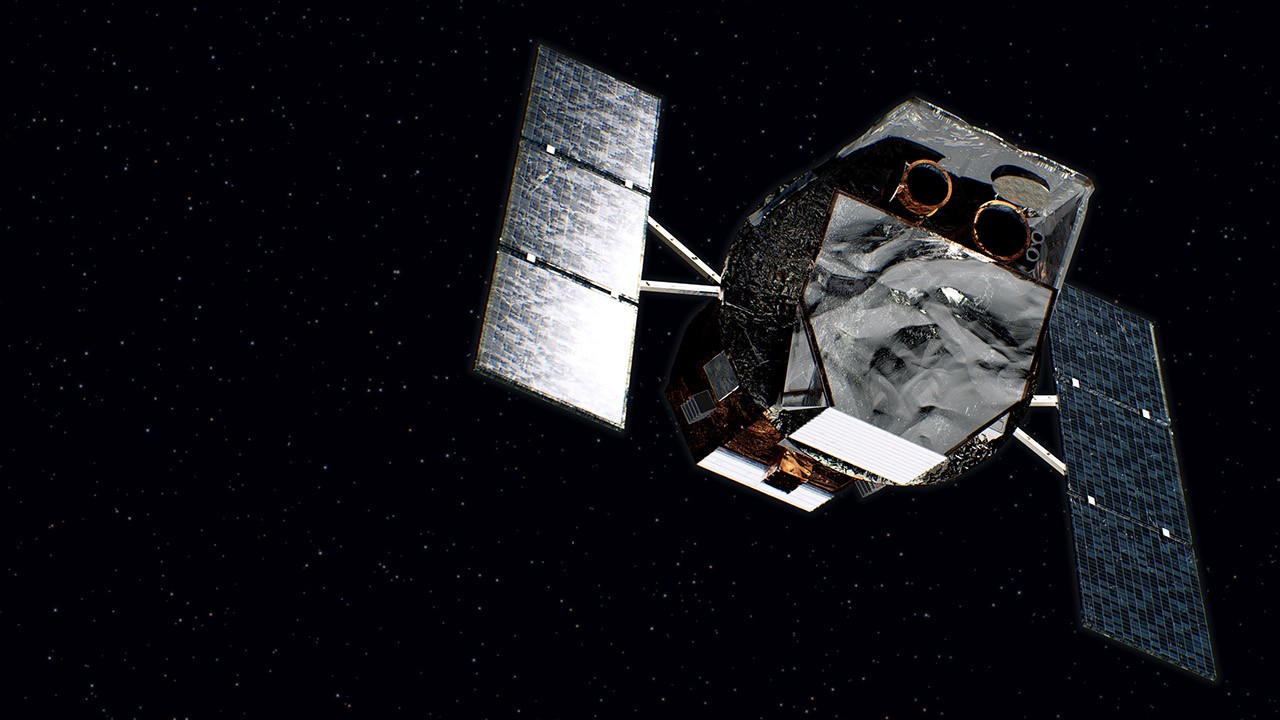
The LINK rescue spacecraft lost dependable attitude control, so the 22-year-old observatory keeps falling. NASA now expects reentry before the end of 2026.
The Product Desk
What happened
- Swift has been watching gamma-ray bursts since 2004, on a mission originally meant to run for two years.
- NASA cancelled the rescue on Wednesday, with administrator Jared Isaacman citing the spacecraft's control system problems.
- LINK will still close on Swift to demonstrate rendezvous, navigation and close-proximity operations for future servicing missions.
Compiled by The Product DeskSomething wrong?How this is made
Why it matters
- constraint Observing programmes that trigger on Swift alerts are now planning against a window measured in months, not the 2030s horizon the older orbit models allowed.
- cost The LINK build and launch are already paid for, and what the money returns is proximity-operations data for later missions rather than extra observing time on a working telescope.
- decision Committing LINK's remaining approach to demonstrations settles that this vehicle will not try again, so any further attempt to save Swift would need a different spacecraft on a shorter clock.
- precedent The first attempt to grab a science satellite that was never designed to be grabbed is now the reference case any future servicing pitch gets measured against.
The mechanism here is dull and well understood. Swift carries no propulsion able to raise its orbit meaningfully, so the thin atmosphere at its altitude takes a little energy out of every pass, and without intervention the end point is reentry [3]. What changed was the air, not the spacecraft: solar activity during 2024 heated and expanded the upper layers, drag went up, and the descent outran models that had the observatory flying into the 2030s [4]. Measured against the earliest year in that old projection, the retirement date moved in by at least four years [15].
That is the number to schedule against. A telescope built for a two-year mission has flown roughly 22 years, about eleven times its design life [14], and the burst alerts that follow-up programmes subscribe to stop when the spacecraft does, which NASA now puts before the end of this year [16][13].
The rescue was assembled the way rescues get assembled. NASA hired Katalyst Space Technologies, whose LINK spacecraft was to catch Swift with mechanical arms and lift it with its own thrusters [5]. LINK launched on July 3, 2026, then suffered failures in the attitude control system that keeps it oriented and stable, and weeks of engineering did not recover it [6]. On Wednesday the agency stopped, with administrator Jared Isaacman attributing the decision to the control system [7].
What survives is the flight, not its objective. LINK keeps closing on Swift to demonstrate rendezvous, navigation and close-proximity operations, and NASA wants that data for later missions that would repair, relocate or extend the life of satellites [8]. Isaacman's framing is that the attempt still made sense, that the team "moved with extraordinary speed to give Swift a chance to carry out more science while advancing capabilities America will need for satellite servicing in the future" [9]. Set that beside what the agency said going in, that Swift was never built to be captured or repaired in orbit and LINK was developed and launched against the clock [11], and the ledger reads plainly enough: the programme bought servicing experience, not telescope-years.
Two things the material does not settle. It does not say whether another capture attempt was ever on the table, or what carries the alert function afterwards. And it does not fix the ending: much of the observatory will be destroyed by heating and aerodynamic forces, and NASA says it is too early to determine exactly when or where [12].
What to watch
- Whether NASA publishes a reentry window and predicted ground track for Swift, which it says is still undetermined.
- Whether LINK's rendezvous and close-proximity demonstrations succeed, since that data is the only remaining return on the mission.
- Whether NASA or Katalyst discloses a root cause for the attitude control failure, which shapes the next servicing proposal.
Clarity's read
What the record supports and how the coverage leans. The claims behind it follow.
Reality
- Evidence58
- Adoption26
- Hype gap+18
- Incentives62
- Confidence57
Claim ledger
Ranked by verification strength, evidence, and original report placement.
- [1]
The Swift space observatory has been in operation since 2004 and specialises in gamma-ray bursts, the most energetic electromagnetic explosions known in the universe.
- [2]
Swift's original mission was supposed to last just two years; more than two decades later it continues to operate.
- [3]
Swift has no propulsion system capable of significantly raising its orbit; atmospheric particles at its altitude exert constant drag, so it loses a little altitude each orbit and will eventually reenter if the process continues without intervention.
- [4]
Some models indicated Swift could remain in orbit until the 2030s, but increased solar activity during 2024 heated and expanded the upper atmosphere, increasing drag and accelerating the descent; estimates eventually placed likely reentry before the end of 2026.
- [5]
NASA's plan was for a robotic mission to catch up to Swift, capture it with mechanical arms and use its own thrusters to raise the observatory to a safer orbit; the agency turned to Katalyst Space Technologies and its LINK spacecraft.
- [6]
LINK launched on July 3, 2026 and soon suffered failures in its attitude control system, which keeps it properly oriented and stable; engineers worked for weeks to regain control.
- [7]
On Wednesday NASA cancelled the rescue mission, and agency administrator Jared Isaacman said in a statement that the decision was due to problems with the spacecraft's control system.
- [8]
LINK will no longer capture Swift or raise its orbit, but will continue approaching the observatory to demonstrate rendezvous, navigation and close-proximity operations; NASA hopes to apply the information to future missions aimed at repairing, relocating or extending the lifespan of satellites in orbit.
- [9]
Isaacman said: "This is not the outcome we were working toward, but it does not change why this mission was worth attempting. The team moved with extraordinary speed to give Swift a chance to carry out more science while advancing capabilities America will need for satellite servicing in the future."
- [10]
Isaacman also said: "NASA should be willing to move quickly and take smart risks when the potential return is worth it, and that is exactly what we did with this mission."
- [11]
NASA warned from the outset that the mission was high-risk: Swift was not built to be captured or repaired in orbit, and LINK was developed and launched against the clock in response to the observatory's rapid descent.
- [12]
Without an orbit-raising intervention Swift will keep losing altitude until it reaches denser atmosphere; much of the observatory will be destroyed by intense heating and aerodynamic forces during reentry, and it is still too early to determine exactly when and where this will occur.
- [13]
NASA estimates that Swift will likely reenter the atmosphere before the end of the year.
- [14]
Swift has flown roughly 22 years, about eleven times the two-year mission it was designed for.
- [15]
Compared with the earliest year of the previous 2030s projection, Swift's expected end of life moved forward by at least four years.
- [16]
Swift's gamma-ray burst alert stream ends no later than reentry, which NASA currently projects before the end of 2026.
Sources
1 independent publisher whose own reporting we read for this story.
- wired.comNASA Cancels Its Rescue Mission for the Aging Swift Telescope
1 article · August 22, 2026
Topics and entities
Follow any of these and your For You feed starts watching them — no settings page required.
Topics
Entities
- Neil Gehrels Swift ObservatoryFollow
- NASAFollow
- Katalyst Space TechnologiesFollow
- LINK (Lightweight In-Space Navigation and Kinematics)Follow
- Jared IsaacmanFollow