Science4 publishers3 min readPublished
Starship reaches orbit on its 14th flight, dropping 26 Starlink satellites after losing an engine at liftoff
SpaceX flew Starship to orbit for the first time on September 28, deploying 26 Starlink V3 satellites despite one of the upper stage's six engines going out at liftoff. The flight moves the vehicle closer to the operational heavy-lift launcher NASA and SpaceX are counting on.
The Scientist · Science desk
What happened
- The Super Heavy booster splashed down in the Gulf of Mexico about seven minutes after liftoff, appearing to shut down several engines in flight without affecting the landing.
- The flight did not attempt a tower catch of either stage and did not demonstrate the orbital propellant transfers that moon and Mars missions require.
- Ship was set to make about six orbits over nearly 10 hours before a splashdown in the Pacific off Chile, a new landing zone for the vehicle.
Compiled by The ScientistSomething wrong?How this is made
Why it matters
- decision SpaceX plans to retire the Falcon 9 in favor of Starship within several years, so payload customers are being asked to plan around a vehicle that has now reached orbit once.
- constraint Reaching orbit clears one link in SpaceX's chain, but reentry, precise landing, and rapid reuse remain unproven, and those carry the cost savings a heavy-lift customer would bank on.
- exposure NASA's Artemis lander plan depends on Starship, so a stumble on the reentry and reuse steps would mean more delays and redesigns for that program too.
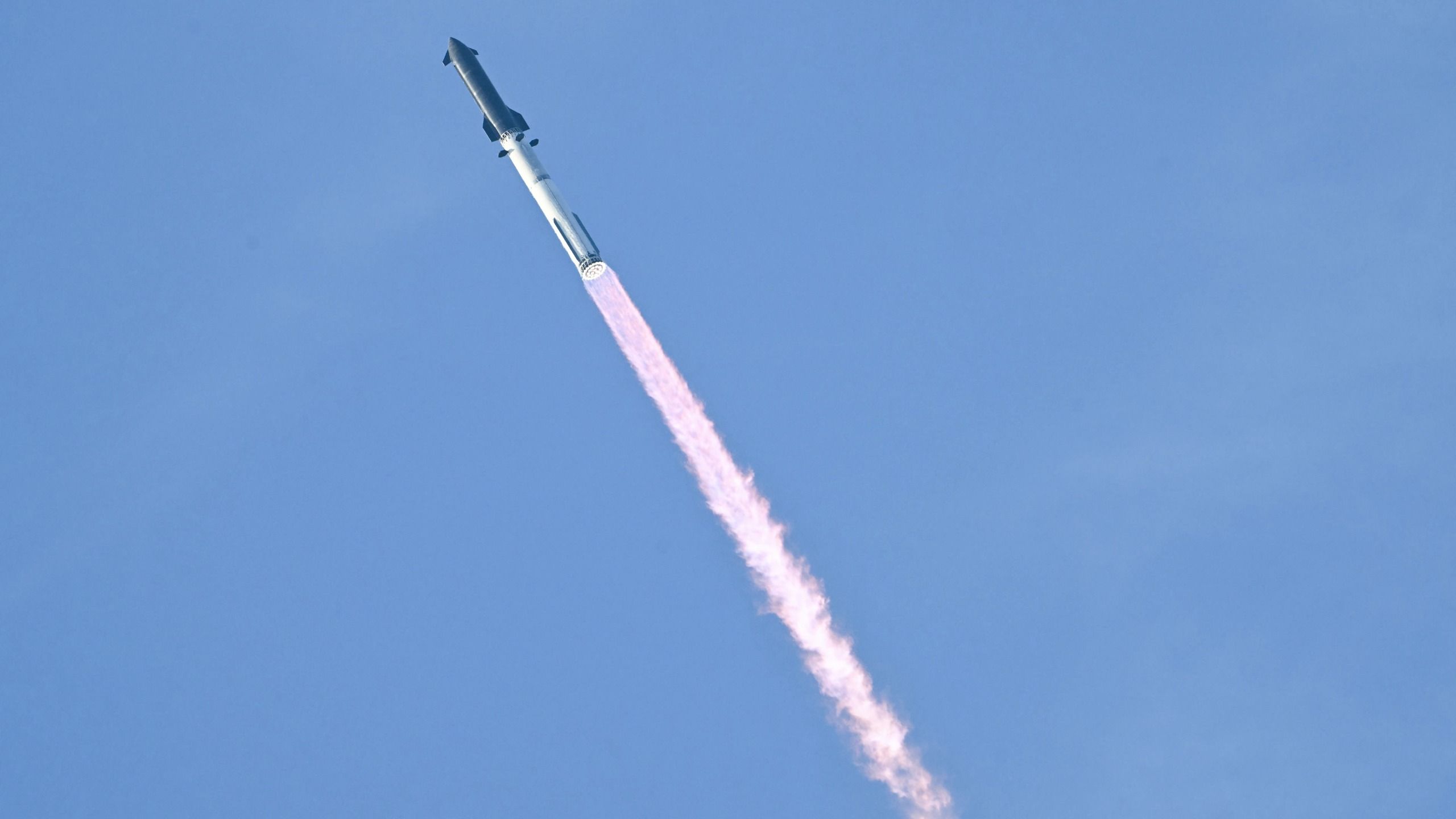
During liftoff, one of the six Raptor engines on the Starship upper stage went out [5]. SpaceX spokesperson Dan Huot announced the orbital attempt was called off, then reversed course as flight controllers decided to press ahead [6]. "We are not giving up yet," Huot said. "We will continue to hang out ... edge of your seat." [7] About 25 minutes after liftoff, Ship 41 fired a single Raptor briefly to enter orbit [8]. "Starship is orbital," mission control confirmed [9].
What that sequence shows is engine-out tolerance on the upper stage, at least on this profile. A launcher that can lose an engine and still reach its target orbit lets customers plan payloads with more margin than one that cannot. The flight does not tell you how much margin was left, or whether a second failure would have been survivable.
This was the primary goal of the test: reach orbit for the first time and deploy 26 Starlink satellites into an operational orbit [10]. Scientific American calls those 26 Starlink V3 satellites the first operational payloads Starship has carried to orbit [11]. SpaceX flew V3 Starlinks on Flight 13 in July, but on a suborbital trajectory, and they soon fell back to Earth [12]. The company's specs put Starship's lift capacity at more than 100 metric tons to Earth orbit [4]. Twenty-six satellites is a small fraction of that.
Getting to low Earth orbit is one link in a chain SpaceX has laid out for itself: entering orbit, deploying payloads, surviving reentry, making pinpoint landings, achieving smooth recoveries, and then repeating the sequence often enough to make the economics work [13]. Flight 14 did not attempt a tower catch of either stage, and it did not demonstrate the orbital propellant transfers that moon and Mars missions require [14]. The Super Heavy booster came back for a controlled splashdown in the Gulf of Mexico about seven minutes after liftoff, though it appeared to shut down several engines during flight [15]. Ship was to circle Earth for roughly six orbits across a nearly 10-hour mission before a splashdown in the Pacific off Chile [16].
NASA picked Starship as the first crewed lander for its Artemis program [17], and SpaceX plans to phase out the Falcon 9 in favor of Starship over the next several years [18]. Scientific American frames a failure plainly: a major failure on Flight 14 would not doom SpaceX's plans, but it would mean more costly delays, more hardware redesigns, and more hurdles [19]. Reaching orbit clears one of those hurdles, while the reentry and reuse links that carry the cost savings a customer counting on cheap heavy lift would bank on remain unproven.
Three of the 26 satellites carry cameras to image Ship's heat shield, which SpaceX engineers will study to see if they can improve it [20]. The heat shield has to survive reentry intact. This flight is meant to gather data on it.
What to watch
- Whether the next flight attempts a tower catch of the Ship upper stage, which SpaceX has said may happen next.
- The heat-shield imagery from the three camera-equipped Starlinks, and whether it drives another shield redesign.
- How SpaceX's stated Falcon 9 phase-out timeline holds up now that Starship has reached orbit only once.