Science1 publisherNot yet confirmed elsewhere2 min readPublished
A 64-year marmot record lost two-thirds of its colony, and now runs on a popularity vote
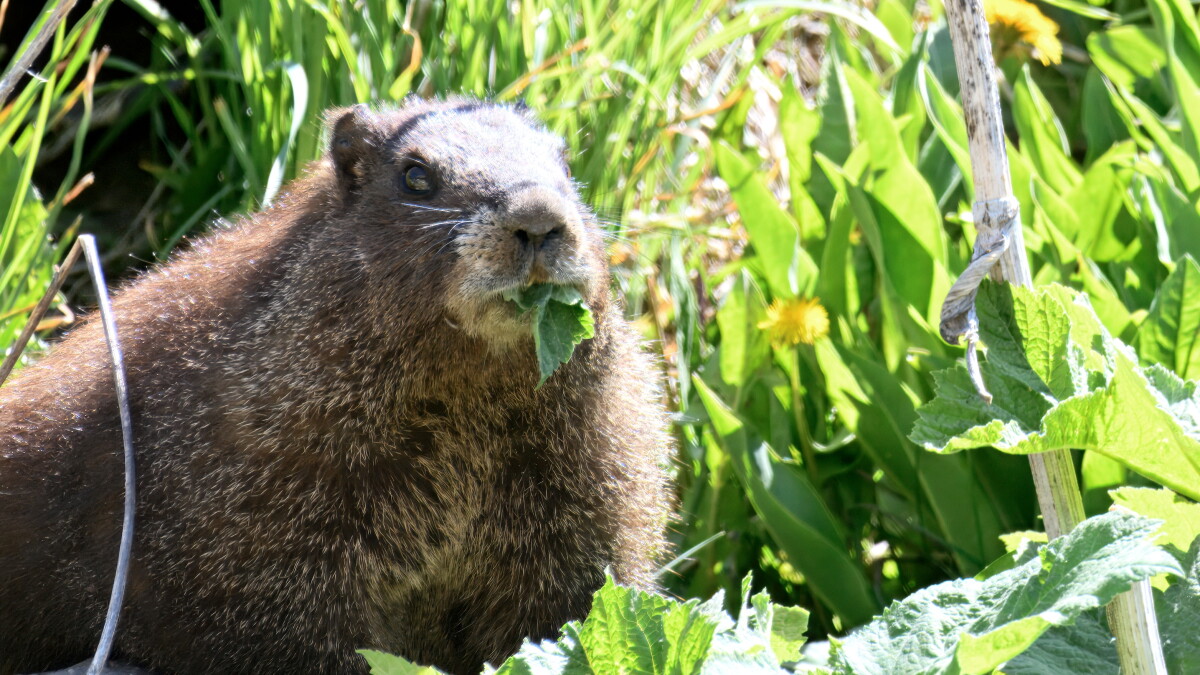
Thin snow killed roughly 100 of more than 160 yellow-bellied marmots at Gothic, Colorado. Federal cuts hit the same study, so its funding plan is now a Fat Bear Week imitation.
The Scientist · Science desk
What happened
- Two-thirds of one Colorado marmot population died during hibernation last winter after thin snow left their burrows without an insulating cover.
- The project leader's count: more than 160 animals going into winter, 60 at the start of this season.
- Fat Marmot Week, a Fat Bear Week imitation starting Monday, is soliciting donations to keep the research going through federal funding cuts.
- Snowpack in the Upper Colorado River Basin was the worst on record, and a new study finds climate change made the drought about 14 times more likely.
- The study began in 1962 at the Rocky Mountain Biological Laboratory in Gothic, and is run by UCLA and the University of Ottawa.
Compiled by The ScientistSomething wrong?How this is made
Why it matters
- cost The continuity of a 64-year record now depends on small donations gathered through a joke contest, a revenue line no grant office can plan a field season around.
- constraint With the survivor cohort at roughly three-eighths of last year's, the recovery years will be measured on a much thinner sample than the decades they are compared against.
- exposure The same missing snowpack sits upstream of Colorado River water users, so the die-off reads as a gauge on supply for farms and towns as much as on rodents.
- precedent If charisma keeps this dataset alive, funders learn that photogenic species can crowdfund their own monitoring, and the unphotogenic long-term series have no equivalent fallback.
The physiology explains why snow depth is a survival variable and not a comfort. A hibernating marmot lets its core temperature fall to about 41 degrees Fahrenheit, barely above the winter burrow around it, and breathes once every minute or two [6]. It has doubled its weight to as much as 13 pounds and must spend all of that underground over half a year or more [10]. There is no thermal slack in that arrangement. Remove the insulating snow and the burrow becomes the thing that kills, which is what the researchers believe happened last winter [3].
The arithmetic on the project leader's own figures is worth doing. More than 160 animals down to 60 is a loss of at least 100, about 62 percent, leaving this season's sample at roughly three-eighths of last year's [16]. That sits comfortably with the two-thirds the team describes [1].
Those hundred animals were also a hundred records. Marmots here are trapped in wire boxes baited with oats and peanut butter, with some individuals wary and others catchable three or four times in a single morning [11], and the field crews can tell animals apart by how they behave toward each other [14]. Individual histories of that kind are what a series started in 1962, now 64 years long, is made of [4][17]. Social structure is part of the signal too: the animals are described as flexibly social, some living in colonies of up to 30 and others alone [13]. A colony crash does not just lower a count, it removes the specific animals whose behaviour the earlier decades were spent documenting.
Which makes the fundraising hard to describe without wincing. Dan Blumstein, who leads the project, put it as laughing the way down while the Titanic sinks, because what else is there to do [9]. The contest is openly mostly for fun [2], and it is now standing in for the money that kept a continuous record continuous.
The rest of the lab's ledger points the same way: fewer bees and other pollinators, sagebrush moving into valleys that used to be wildflower [7]. And the snow that failed over these burrows is the snow the Colorado River runs on, which is the point Emily Renkey makes about what happens in these mountains not staying in them [12]. A long dataset is worth the most in the year it records something its own baseline has never held. That year has arrived at Gothic, and it arrived as a cash-flow problem.
What to watch
- Whether the lab discloses what Fat Marmot Week actually raised, and whether it covers a full field season.
- Next winter's snowpack over Gothic, and whether the 60 survivors hold or the colony falls again.
- The peer-reviewed write-up of the die-off, including the exact starting count and the cause of death.