Science1 publisher2 min readPublished
Funding losses pushed a 64-year marmot study onto OnlyFans
A Frontiers Q&A says funding losses have put Dan Blumstein's yellow-bellied marmot study at risk. A marked-animal record that lapses cannot be rebuilt later, and his OnlyFans account is the response.
The Scientist · Science desk
What happened
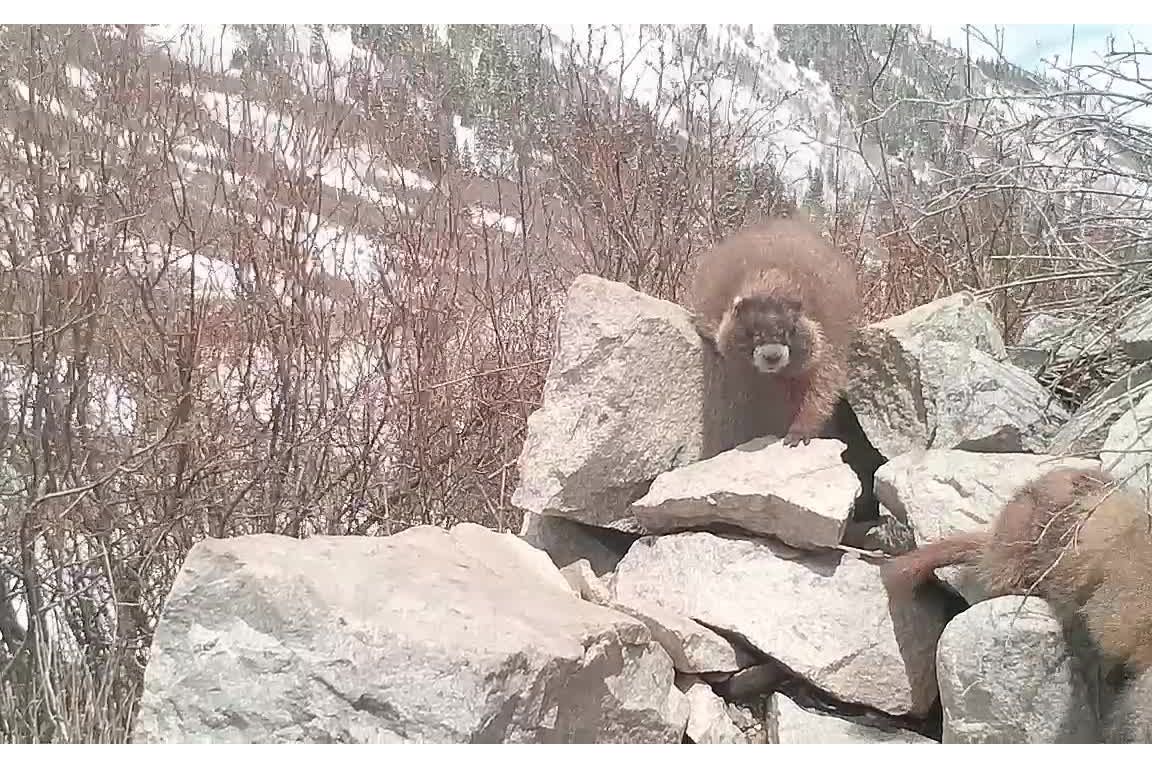
- Dan Blumstein, a UCLA ecology and evolutionary biology professor, has been posting videos of the Rocky Mountain Biological Laboratory's study marmots to an OnlyFans account called OnlyMarms.
- The study was started near Crested Butte, Colorado, in 1962 by Ken Armitage, and it has followed the fate of individually marked yellow-bellied marmots every season since.
- The introduction to the Frontiers Q&A says funding losses are now putting that study at risk and describes Blumstein as fighting back.
- By his own count the marmots are the world's second-longest study of individually distinguishable free-living mammals, trailing Jane Goodall's chimpanzee work by two years.
Compiled by The ScientistSomething wrong?How this is made
Why it matters
- constraint Pups can only be marked in the summer they are born, so a season lost to a budget gap leaves a hole in the series that no later award can buy back.
- exposure Part of the program's income now depends on public interest in a novelty account, and phys.org dates that interest to the past few weeks.
- precedent A program this old treating subscriber revenue as a funding line makes improvised income a live option for other long-term field studies, and hands agencies a story in which the gap got covered without them.
Blumstein said long-term studies are the only route to watching evolution in action and to understanding plasticity. He called plasticity one of the most important things to study in an era of major environmental change [9]. The specific results follow from the span. Winter and summer survival respond to different factors, and those factors act differently on animals of different ages and sexes [10]. Marmots do not physiologically age while they hibernate [11]. Some individuals live alone while others live in large, multigenerational, female-dominated groups called matrilines, so one population supplies the contrast needed to test what social living does to fitness [12].
That contrast is what makes the site useful for an argument still under dispute. Blumstein said the marmots provide some of the best support in the wild for multilevel selection. Under that idea, an individual's position in a social group has consequences for survival and reproduction, and so does the structure of the entire group [13]. One finding came from a single animal. "It was a marmot pup screaming in my hands as I held it gently that took me down a path to understand the sound of fear in animals," he said [15].
The account came out of fieldwork downtime. "I spend a lot of time in meadows waiting for marmots to do things, and it's a good place to think," Blumstein said [14]. He was mulling the study's funding problems, and had recently watched the Apple TV show Margo's Got Money Troubles, about a single mom who resorts to OnlyFans to support her family [16].
The money framing comes from the Q&A itself. It says the study is as expensive to run as it is valuable, and that funding challenges forced Blumstein to innovate in new and surprising ways [4]. It also says funding losses are putting the study at risk [5]. The Q&A does not include the study's budget, a named funder, or what OnlyMarms has earned [17]. So the question an outside funder would ask, whether subscription income can substitute for a lapsed grant at the scale of a field season, is not settled by this record.
One co-director improvising does not measure how long-term field ecology is financed. The case does establish the size of the asset in play. Blumstein said students can enter a study like this one and immediately have years of data to work with, or years of insights that let them design focused new experiments [18].
What to watch
- Whether Blumstein publishes what OnlyMarms takes in, and how that compares with the cost of one field season.
- Whether the next summer's marking is fully staffed, since a gap in the marked-animal record cannot be filled later.
- Whether UCLA or the Rocky Mountain Biological Laboratory formalizes outreach income, or other long-term field programs open comparable accounts.