Science1 publisherNot yet confirmed elsewhere3 min readPublished
More than 70 studies of conservation 'bright spots' point to three recurring patterns
Researchers who brought 'bright spots' to coral reefs reviewed more than 70 studies and found three patterns in ecosystems that beat their pressures. Because the cases were chosen for their success, the list describes what the winners share; whether those traits cause the gains is still open.
The Scientist · Science desk
What happened
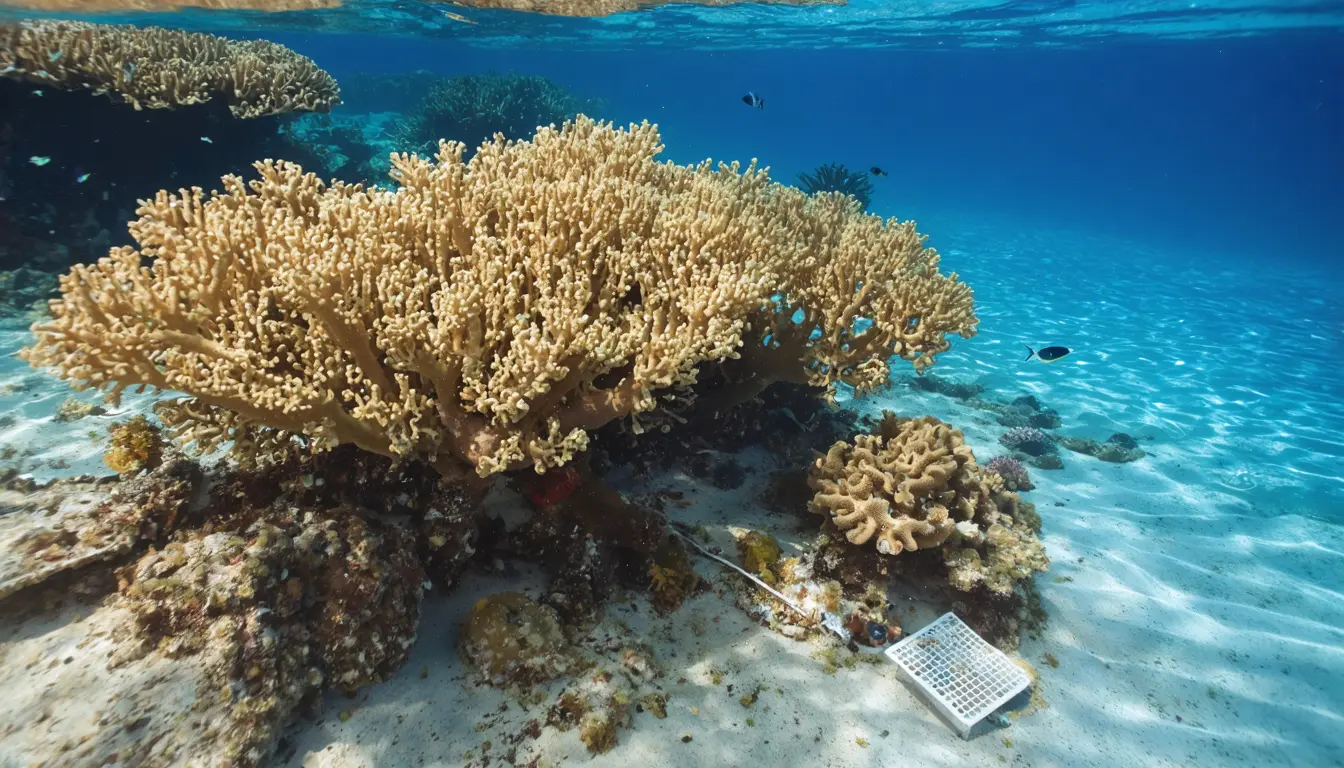
- Among nearly 1,700 reefs surveyed worldwide, the team found over a dozen sites holding far more fish than their pressures predicted.
- The idea traces to Muluk, a small coastal community in Papua New Guinea whose elders close a stretch of reef to fishing every few years.
- Since the team brought the concept to coral reefs in 2016, other scientists have applied it to many other systems and species worldwide.
- The method, known as positive deviance, comes from medicine and public health, where it is commonly used to study what works against the odds.
Compiled by The ScientistSomething wrong?How this is made
Why it matters
- constraint Because the review is built from successes, some resting on expert anecdote, its three patterns cannot yet be separated from traits that declining sites may share too.
- decision A manager weighing whether to copy a programme like Muluk's closures now has questions to settle first: does the intervention fit the place, and can the community keep adapting it?
- capability Any monitoring programme that records pressures alongside outcomes can estimate what each site should hold and single out the overperformers for closer study.
Over a dozen out of nearly 1,700 is a small share. Twelve divided by 1,700 is about 0.7 percent [18], and the true figure is slightly higher because the authors give both counts loosely [7]. A reef gets the label by holding more fish than its fishing, habitat and climate pressures would predict [8]. So a bright spot is a measure of distance from an estimate. Where the cut-off sits decides how many turn up, and among 1,700 sites some will sit high by chance or because of something the estimate left out.
That reef count comes from the team's earlier global search, which started after Muluk's reefs looked healthier than those farther down the coast in 2001 [6]. The new paper is the review, which drew on research in ecology, conservation, sustainability and development to ask how bright spots get identified and what produces them [10]. Some of those studies flag bright spots with statistical models of which systems fare better than expected, a method that states what each site should have held. Others rely on experts recounting unexpected success [11].
The reasons for success across those cases were many and varied, but three patterns kept recurring [4]. The first, action, is a specific intervention that is good for nature and fit for purpose; in Muluk it is the reef closure the elders impose as needed [1]. The second, ability, is a community's capacity to adapt. In Muluk, strong ties between youth and elders have handed the closure system down the generations [2]. The third, architecture, concerns the social and environmental context around a site [3].
The thing this doesn't tell you is whether those traits produce the extra fish. A review of bright spots collects cases picked for success. Fitted interventions and close-knit communities could be just as common at sites that declined, and only a comparison with those sites would show it. The chimpanzee cases the authors cite show the problem. In West Africa, some thriving communities of critically endangered chimpanzees live in pristine, inaccessible habitat, while others, as at Boé in Guinea-Bissau, live near villages whose traditions discourage hunting [12]. Of those two groups, only the second involves a practice another community could adopt.
Conservation has mostly studied failure, identifying urgent threats in the hope of blunting their worst effects [14]. Some of the cases the authors cite turn on interventions specific enough to transfer. First Nations communities in Canada's Great Bear Rainforest supported a threatened grizzly population with measures that included a trophy hunting ban under both Indigenous and provincial law [15]. Off Tasmania, scientists and wildlife managers treated shy albatross chicks for external parasites and built them artificial nests [16].
The authors wrote that such case studies, until now, "have not offered any clear or concrete wisdom for conservationists to apply elsewhere" [17]. In my view the review supplies a list of things to check at the next outlier reef. Showing that a Muluk-style closure raises fish counts on a reef that lacks one would take a trial with comparison reefs, and the account describes none.
What to watch
- A comparison of bright-spot traits against sites with similar closures or community ties that did not outperform, which would separate cause from coincidence.
- Repeat surveys of the dozen-plus outlier reefs, to see whether they stay above prediction or drift back toward it as chance outliers tend to.
- Any attempt to introduce a Muluk-style rotating closure on a reef that lacks one, monitored alongside comparison reefs.