Science1 publisherNot yet confirmed elsewhere2 min readPublished
Habitat models pick out lasting sperm whale refuges off the Seychelles and Mauritius
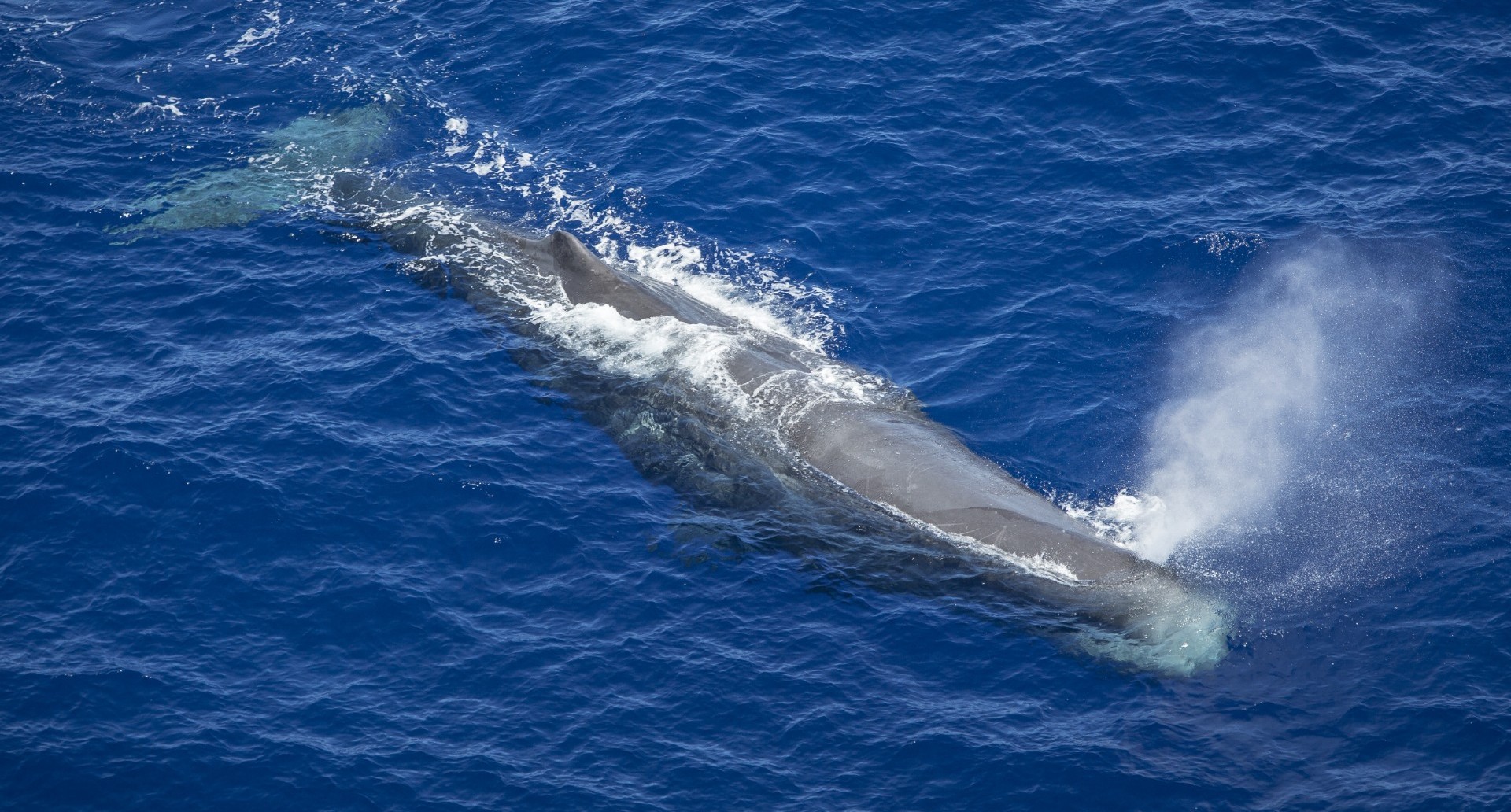
University of Exeter-led models project sperm whales in the southwest Indian Ocean losing 20% to 40% of suitable habitat by 2100. The authors say the refuges that persist are where protection should start, with boundaries redrawn as the rest of the habitat moves.
The Scientist · Science desk
What happened
- Projected losses shrink as emissions rise: 40% under SSP1-2.6, 37% under SSP2-4.5 and 20% under the high-emissions SSP5-8.5 path.
- Steep underwater slopes came out as key habitat because they lift nutrients from the depths to where deep-sea squid, the whales' prey, thrive.
- Whaling once targeted this population and evidence on its numbers and movements has been thin since, so the models draw on surveys from the last two decades.
- The paper appears in Endangered Species Research and uses ensemble ecological niche models to predict long-term core habitat under future climate scenarios.
Compiled by The ScientistSomething wrong?How this is made
Why it matters
- decision Protected areas for this population would need boundaries planned for revision, because the models show suitable habitat forming a changing patchwork through the century.
- constraint The 20% loss under SSP5-8.5 cannot fairly be cited as a better outcome for whales, since the models leave out ecosystem effects the authors say could harm them.
- capability Pooled surveys from nine groups give planners an ocean-scale habitat map for a population whose numbers and movements went poorly documented after whaling ended.
On these projections, the high-emissions path loses half as much habitat as the low-emissions one, a gap of 20 percentage points [19]. The study puts this down to currents. Extreme warming also brings stronger currents in the projections, and those offset the damage [16][7].
The thing this doesn't tell you is what happens to the rest of the food web. The authors stress that they did not assess wider ecosystem impacts, and that those could be harmful to whales [17]. So the 20% figure measures habitat suitability as the models define it. Citing it as evidence that heavy warming spares sperm whales would turn a result about ocean conditions into a claim about animals, and the study did not test that claim.
The inputs matter for a population this poorly documented. The modelling depended on data from nine research groups and on work by governments and nongovernmental organisations in countries around the Indian Ocean, according to Alexander Lomas of the University of Exeter [5]. Violaine Dulau, who chairs IndoCet, the Indian Ocean network for cetacean research, said: "By bringing together data and expertise from across the western Indian Ocean, we can finally see the bigger picture." [6]
The core habitat is the more durable result. The models find places that stay important despite warming, particularly off the Seychelles and Mauritius and along the steeply shelving ridges between them [8]. Jeremy Kiszka, a professor at Florida International University who worked on the study, said: "Climate change is predicted to substantially reduce suitable habitat for sperm whales in the southwest Indian Ocean, but we also identified places that could remain important refuges for these animals through the end of the century." [18]
Lomas drew the protection argument from the whales' range. "Sperm whales travel great distances, so protection must cover extensive areas to allow them to feed, breed and migrate," he said [9]. "By identifying core habitats, our study provides a baseline to begin building this protection," he said, adding that the team also found "a changing patchwork of suitable areas as the climate changes" [10][11].
The release ties that goal to the recently agreed High Seas Treaty. The treaty aims at global-scale conservation against threats including overfishing, noise, pollution and climate change [12]. Kirsten Young, who leads the Exeter Cetacean Research Group, described meeting the whales "hundreds of kilometers from land, around Saya de Malha Bank" [4].
What to watch
- Studies of how deep-sea squid and the wider food web in the southwest Indian Ocean respond to warming, the ecosystem effect the authors did not model.
- Whether protected areas set up under the High Seas Treaty allow boundaries to be revised as suitable habitat moves.
- New surveys around Saya de Malha Bank and the ridges between the Seychelles and Mauritius that test whether whales keep using the predicted core habitat.
Clarity's read
What the record supports and how the coverage leans. The claims behind it follow.
Reality
- Evidence50
- Adoption
- Insufficient
- Hype gap+10
- Incentives
- Insufficient
- Confidence55
Claim ledger
Ranked by verification strength, evidence, and original report placement.
- [1]
A research team led by the University of Exeter combined sperm whale surveys in the southwest Indian Ocean with predictions of how climate change will shift where the whales are found.
- [2]
The paper is published in Endangered Species Research, titled 'Using ensemble ecological niche models to predict long-term core habitat of sperm whales (Physeter macrocephalus) in the southwest Indian Ocean under future climate scenarios.'
- [3]
Sperm whales in the southwest Indian Ocean were targeted by whaling in the past; evidence on their numbers and movements has been limited since, and the new study uses data from studies carried out in the last two decades.
- [4]
"Meeting these sperm whales hundreds of kilometers from land, around Saya de Malha Bank, was incredible"
ReportedSupportedSource: Kirsten Young, leader of the Exeter Cetacean Research Group2 sources— create a free account to open themView cited source - [5]
Lomas said the paper depended on data from nine research groups and work by governments and nongovernmental organizations from different countries around the Indian Ocean.
ReportedSupportedSource: Alexander Lomas, University of Exeter2 sources— create a free account to open themView cited source - [6]
"By bringing together data and expertise from across the western Indian Ocean, we can finally see the bigger picture."
ReportedSupportedSource: Violaine Dulau, chair of IndoCet2 sources— create a free account to open themView cited source - [7]
Suitable whale habitat is expected to shrink as temperatures rise, although the stronger currents predicted under more extreme warming may benefit whales.
- [8]
The study found long-term core habitat, places that remain key for the whales despite warming, particularly off the Seychelles and Mauritius and along the steeply shelving ridges in between.
- [9]
"Sperm whales travel great distances, so protection must cover extensive areas to allow them to feed, breed and migrate," said Alexander Lomas, from the University of Exeter.
- [10]
"By identifying core habitats, our study provides a baseline to begin building this protection."
- [11]
"But we also find a changing patchwork of suitable areas as the climate changes"
- [12]
Initiatives including the recently agreed High Seas Treaty aim to bring about global-scale conservation, addressing threats including overfishing, noise, pollution and climate change.
- [13]
Underwater topography, particularly steep slopes, is key for sperm whales, as slopes promote the movement of nutrients from the depths into the area where their prey, deep-sea squid, can thrive.
- [14]
Projected habitat loss by 2100 is 40% under the 'optimistic' SSP1-2.6 scenario, in which greenhouse gas emissions decline rapidly.
- [15]
Projected habitat loss by 2100 is 37% under the 'intermediate' SSP2-4.5 scenario.
- [16]
Projected habitat loss by 2100 is 20% under the 'pessimistic' SSP5-8.5 scenario; the study projects that damage from extreme warming would be offset by stronger currents.
- [17]
The authors stress that they did not assess wider ecosystem impacts, which could be harmful to whales.
- [18]
"Climate change is predicted to substantially reduce suitable habitat for sperm whales in the southwest Indian Ocean, but we also identified places that could remain important refuges for these animals through the end of the century."
ReportedSupportedSource: Jeremy Kiszka, professor at Florida International University, involved in the studyView cited source - [19]
Projected habitat loss under SSP5-8.5 (20%) is half that under SSP1-2.6 (40%), a gap of 20 percentage points.
Sources
1 independent publisher whose own reporting we read for this story.
- phys.orgSperm whale study highlights need for 'extensive and dynamic' conservation
1 article · October 8, 2026
Topics and entities
Follow any of these and your For You feed starts watching them — no settings page required.