InvestNot yet confirmed elsewhere1 publisher2 min readPublished
Flock's $8.3B asset is a searchable national archive. Its liability is the same archive
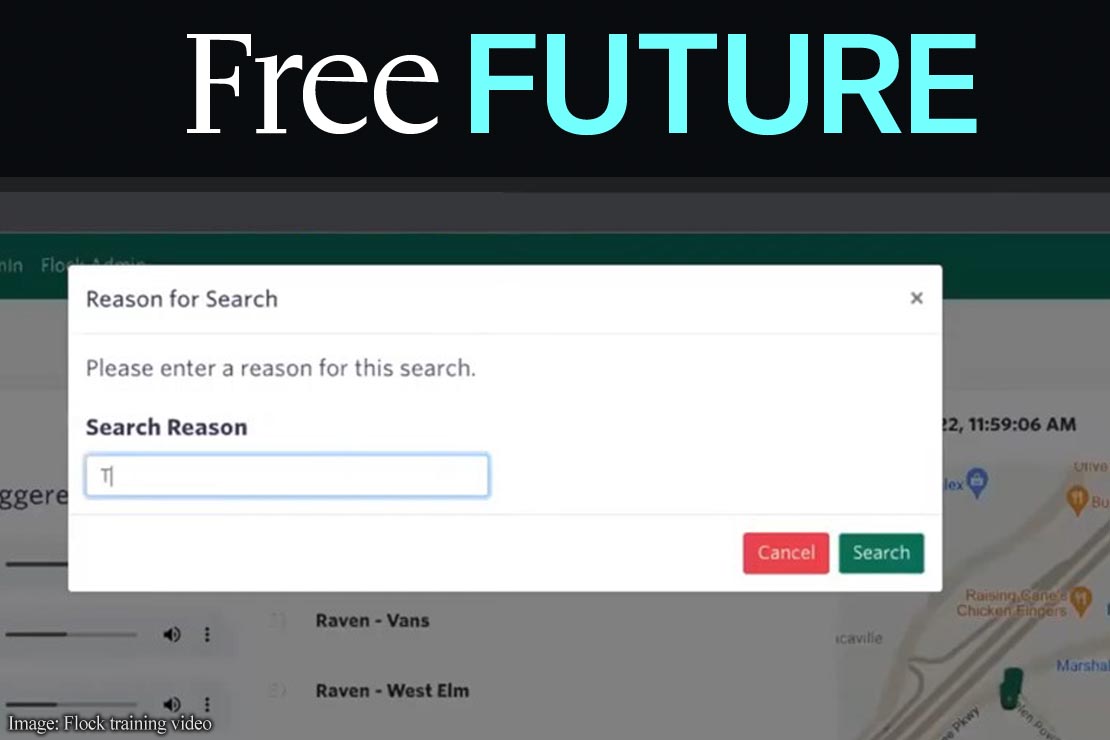
One officer logged more than 700 unauthorized searches on his estranged wife's car. The feature that made that possible is the one a16z and Tiger paid about 16 times revenue for.
The Investor · Invest desk
What happened
- Flock's cameras record plates plus make, model, color and identifying details in more than 5,000 communities across 49 states, searchable by natural-language description.
- The company told Fortune in April it raised $500 million at an $8.3 billion valuation, has taken $1.2 billion in total, and crossed $500 million in ARR in the first half of 2026.
- Cameras have been vandalized or destroyed in 36 states, and 82 contracts have been terminated since 2021.
Why it matters
- contradiction The 30-day deletion line is the sentence Flock takes into council chambers; the LAPD contract is the document a plaintiff or state attorney general reads first, and the community-control defense...
- exposure Because a single query reaches thousands of jurisdictions, misuse by one credentialed officer touches drivers in towns that never voted on Flock and have no contract to cancel in response.
- constraint The stored history rests on police buying location data rather than compelling it; if that gap closes, the repricing hits the archive rather than the installed hardware.
- decision With over half of new revenue outside plate readers, agencies buying drones or gunshot detection are choosing whether to take on plate-reader politics as part of the package.
Christopher Goodson's searches ran across the 22 months from September 2024 to June 2026, so more than 700 queries works out to roughly 32 a month, better than one a day against a single car belonging to his estranged wife [1][11]. He was arrested last week, at the end of that run rather than during it [1].
The capability he used is not separable from the product. Providence police identified the Brown University shooter using the same two properties: reach across more than 70 Flock cameras and 30 days of retained history, which showed a gray Nissan with Florida plates passing 14 times since December 1 [9]. Remove the archive or the cross-jurisdiction search and the December case gets harder [7][9]. Leave both in place and a logged-in officer with a grievance has a national instrument.
That makes retention the line an investor should read twice. Flock's public position is that data belongs to its customers and is typically deleted after 30 days [15], and CEO Garrett Langley told Fortune that local communities, not Flock, set sharing rules, offense filters and retention windows [3]. Fortune reports the LAPD's own Inspector General found at least one Flock contract permitting the company to hold data for five years and use it for "any purpose in Flock's sole discretion" [16]. Five years is about 61 times the number quoted to city councils [17].
The backlash has cost less than its volume suggests. Eighty-two terminated contracts since 2021, against more than 5,000 communities, is about 1.6 percent [6][2][13], and camera vandalism reported in 36 states is a maintenance line rather than a revenue one [2]. The exposure sits elsewhere. Privacy attorney Anne Toomey McKenna describes a Catch 22: the Supreme Court has held that accessing someone's location data is a search requiring a warrant, and buying the same data sits in a gray area [8]. At roughly 16.6 times the $500 million in annual recurring revenue Flock crossed in the first half of 2026 [4][14], the valuation prices continued access, not solar panels on poles.
More than half of new revenue is already outside plate readers, in video, gunshot detection, drones and AI-powered search [10]. That broadens the sensor mix behind the same credentialed access layer, which is precisely where the Goodson case landed. The $700 million Flock raised before April's round bought the network [4][12]; the $500 million round at $8.3 billion bought the argument that the network can be governed [4]. Goodson is the exhibit that argument now has to survive, and he arrived with dates and a query count attached.
What to watch
- Whether the Goodson prosecution produces discovery on how many other accounts show similar sustained query patterns, and in which departments.
- Whether Flock publishes retention and reuse terms across its contracts after the LAPD Inspector General finding, or another city auditor examines its own agreement.
- The termination count: 82 since 2021 is noise against 5,000 communities, but a step change in cancellations would hit the ARR that supports the $8.3 billion mark.
Clarity's read
What the record supports and how the coverage leans. The claims behind it follow.
Reality
- Evidence62
- Adoption86
- Hype gap+12
- Incentives68
- Confidence60
Claim ledger
Ranked by verification strength, evidence, and original report placement.
- [1]
Florida officer Christopher Goodson used his department's Flock access to log more than 700 unauthorized inquiries into his estranged wife's vehicle between September 2024 and June 2026, and was arrested last week.
- [2]
Residents in 36 states have vandalized or destroyed automated license plate recognition cameras, 82 contracts have been terminated since 2021, and city council fights have run from Boston to Santa Clara.
- [3]
Flock CEO Garrett Langley told Fortune the company was started to solve crimes, that it is setting a baseline with recent privacy enhancements and measures to address officer abuse, and that "local communities, not Flock, decide their sharing rules, offense filters, and retention windows."
ReportedSupportedSource: Garrett Langley, via Fortune2 sources— create a free account to open themView cited source - [4]
Flock told Fortune in April it had raised $500 million at an $8.3 billion valuation, had taken in $1.2 billion in total, and crossed $500 million in annual recurring revenue in the first half of 2026.
- [5]
Flock Safety is nine years old and backed by investors including a16z and Tiger Global.
- [6]
Flock's solar-powered cameras log license plates plus the make, model, color and identifying details of every vehicle that passes, in more than 5,000 communities across 49 states.
- [7]
Law enforcement officers can search Flock-collected data using natural-language descriptions, such as car color or a bumper sticker, across thousands of jurisdictions simultaneously.
- [8]
Privacy attorney and University of Richmond visiting law professor Anne Toomey McKenna said the Fourth Amendment was not designed for persistent, pervasive surveillance, calling it a "Catch 22": the Supreme Court has ruled that accessing someone's location data is a search requiring a warrant, but police simply buying the data enters a gray area.
- [9]
After the December 13 Brown University shooting that killed two and wounded eight, Providence police ran a tip about a gray Nissan with Florida plates through more than 70 Flock cameras with 30 days of history, found the car had passed 14 times since December 1, identified it as a rental, and traced the suspect to a New Hampshire storage unit less than a week after the shooting.
- [10]
Flock has expanded into video, gunshot detection, drones and AI-powered search software, and confirmed to Fortune that over half of new revenue is non-license plate readers.
- [11]
September 2024 through June 2026 is 22 months, so more than 700 queries averages about 32 per month, or better than one per day.
- [12]
Flock had raised about $700 million before the $500 million round disclosed in April.
- [13]
82 terminated contracts against more than 5,000 communities is about 1.6 percent.
- [14]
An $8.3 billion valuation against $500 million of annual recurring revenue is about 16.6 times revenue.
- [15]
Flock says the data belongs to its customers and is typically deleted in 30 days.
- [16]
Fortune found that the LAPD's own Inspector General discovered at least one Flock contract lets the company retain data for five years and use it for "any purpose in Flock's sole discretion."
ReportedContestedSource: Fortune, citing the LAPD Inspector General2 sources— create a free account to open themView cited source - [17]
A five-year retention term is about 61 times the 30-day retention Flock describes publicly.
Sources
1 independent publisher whose own reporting we read for this story.
Topics and entities
Follow any of these and your For You feed starts watching them — no settings page required.
Topics
Entities
- Flock SafetyFollow
- Garrett LangleyFollow
- a16zFollow
- Tiger GlobalFollow
- Christopher GoodsonFollow
- Anne Toomey McKennaFollow
- Providence Police DepartmentFollow
- LAPD Inspector GeneralFollow
- Brown UniversityFollow
- University of RichmondFollow
- Matt FeuryFollow
- Paige ToddFollow
- David UlevitchFollow
- David GeorgeFollow
- Y CombinatorFollow