Build2 publishers3 min readPublished
Flock's roadside camera kept its own decryption key on an unencrypted partition
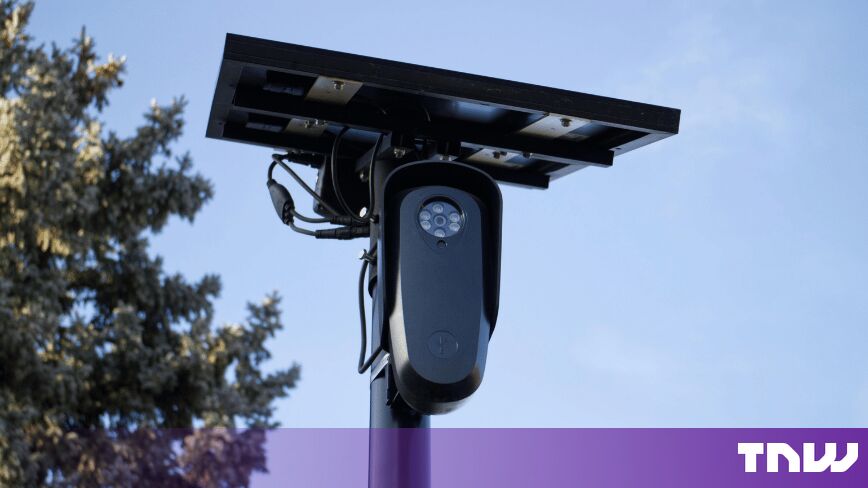
A hacking group took a camera down from above a roadway and found the key to its media store sitting in plaintext on the same flash, in hardware whose business case is being cheap enough to leave unattended.
The Engineer · Build desk
What happened
- The hacking group stegan0gram took a Flock camera down from above a roadway and found, on an unencrypted partition labeled media, the key that unlocked the storage holding its captured video and images.
- The camera was still holding 27,321 video clips when it came down, MP4 files at 1024 by 768 running about a second or two each.
- Flock's public FAQ says its license plate readers generally capture six to 12 images of a vehicle per session, with engineers able to adjust the setting for traffic and location.
- A Flock spokesperson told WIRED and 404 Media that removing and tampering with a camera is illegal, and the company pointed to its vulnerability disclosure policy when asked about the key.
Compiled by The EngineerSomething wrong?How this is made
Why it matters
- constraint Flock's end-to-end encryption claim holds only while the camera stays bolted to the pole; once the hardware is in someone else's hands, the stored evidence is readable.
- cost Anchoring the media key in hardware an attacker cannot read out adds a part and a provisioning step to every unit in a fleet whose pitch was undercutting $25,000 readers, and customers renewing contracts pay for it.
- decision Anyone buying unattended sensors now has a specific question for review: is the key unwrapped by a secure element, or fetched from a file on the same flash?
- exposure Every pole-mounted unit is a plausible target for the same procedure, and the material sitting behind that key is imagery of drivers and riders who were never suspects.
Encryption at rest has one requirement: the key must not sit where the ciphertext sits. An unattended camera makes that awkward. The device has to come back after a power cut with nobody there to type a passphrase, so something on the board must unwrap the media key by itself. When that something is a plaintext file on a mountable partition, the attack is a mount command. The most sensitive storage on this device did stay encrypted and inaccessible [4].
Flock says images and metadata are encrypted throughout their lifecycle, starting on the device and continuing through transmission and cloud storage [9]. WIRED and 404 Media wrote that the claim can hold at the protocol level and still offer little protection when a key is recoverable from the same physical hardware, since an attacker does not need to defeat the algorithm if the deployed device supplies the key [22]. Flock has also said that flaws a security researcher noted still require physical access to exploit, and that images are only briefly retained on the device before being forwarded to the cloud [11]. The recovered clip store works out to roughly 1,300 clips for every day of the surviving log window [4].
A typical passing vehicle produced about 28 images on this camera, and some produced more than 100 [6]. That is about 2.3 times the top of the range Flock publishes [2]. The log totals sit in the same place: 1.6 million images over about 50,200 detections is roughly 32 images per detection [1], or about 76,000 images a day [3]. For those rates to describe a different pole, that pole would need this camera's settings and something close to its traffic volume. WIRED and 404 Media said the findings establish how this particular device operated, not every camera model and configuration in Flock's network [8].
The joint WIRED and 404 Media investigation, published by 404 Media on September 16th, describes an edge that is narrower than the system it feeds [3]. Plate text and vehicle color, make and model are resolved on Flock's servers; the camera detects people, vehicles, bicycles and plate-like shapes, crops them, and uploads the crops alongside the original images [13]. The detector is loose about what counts as a plate. It flagged bumper stickers and dealership frames as candidates, and in one case cropped an American flag patch on a motorcyclist's saddlebag [14]. People appeared in 11 clips, all motorcycle riders, which the reporters attributed to the camera's position above a road [15]. They found no active facial recognition beyond the capabilities Android includes by default [16].
The hardware lineage explains the constraint. Langley founded Flock Safety in 2017 with Matt Feury and Paige Todd after break-ins in his Atlanta neighborhood left police without useful evidence [17]. Todd recalled in a Georgia Tech profile that the first version was effectively an Android phone in a waterproof box [18]. Cheap components, cellular connectivity and machine learning let the company replace automatic license plate readers that could cost about $25,000 per camera [19].
Several police officers have been arrested for using Flock to stalk romantic partners, and some towns and cities have ended their contracts [21]. This recovery began with someone taking a camera off its mount, and not everyone opposed to the cameras endorses that. "I think that type of vigilantism will only crystallize the police and the state at large in their belief that this tool is necessary," Noel Pichardo, a former Pawtucket, Rhode Island police officer, told 404 Media [20].
What to watch
- Whether Flock ships a firmware change that moves key material off a readable partition, and whether it says so publicly.
- Whether Flock confirms the compromised camera's image-capture settings were standard, or revises the six-to-12 figure in its FAQ.
- Whether any agency renewal starts specifying hardware-anchored key custody after the contract cancellations already reported.