InvestIndependently confirmed2 publishers2 min readPublished
BlocksBridge says IREN's 6% and 9% AI debt packages show project terms setting borrowing costs
IREN secured $3.65 billion of AI financing at a blended 6% in June and $2.4 billion at a fixed 9% in August. BlocksBridge says lenders increasingly weigh customer, contract and path to completion, but the packages fund different projects.
The Investor · Invest desk
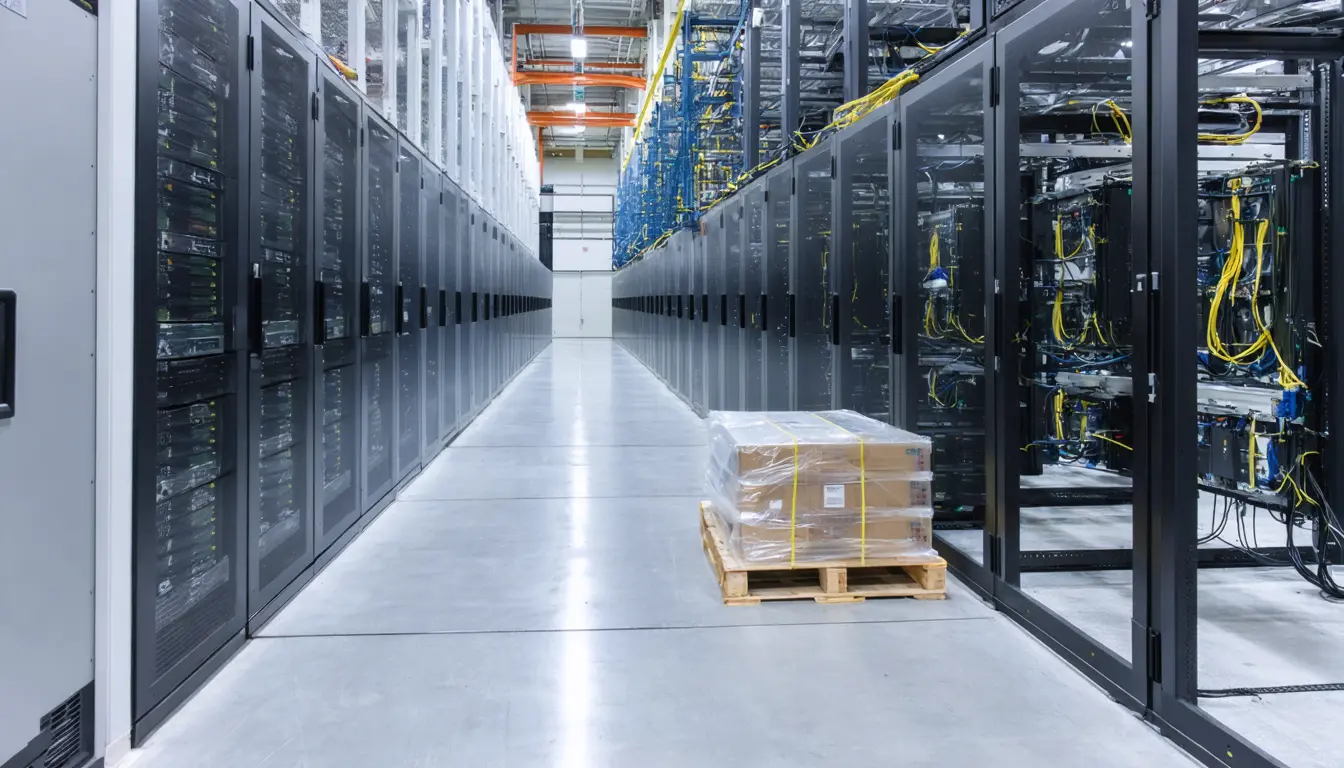
IREN's $3.65 billion GPU package carries a blended 6% cost; its $2.4 billion arrangement a fixed 9%. IREN advance payments equal approximately 45% of GPU capital spending. Google backstopped $1.4 billion of Fluidstack leases at Cipher.
- 3.65 $ billion IREN GPU package at blended 6%, announced June 1, claim 1
- 2.4 $ billion IREN arrangement at fixed 9%, claim 3 Disclosed in IREN's August results
- 45 %, approx. IREN advance payments, share of GPU capital spending, claim 14 Disclosed July, recent agreements
- 1.4 $ billion Google backstop, Fluidstack leases at Cipher, claim 8 Barber Lake project, September 2025
| Figure | Value | Note | Claim |
|---|---|---|---|
| IREN GPU package at blended 6%, announced June 1 | 3.65 $ billion | 1 | |
| IREN arrangement at fixed 9% | 2.4 $ billion | Disclosed in IREN's August results | 3 |
| IREN advance payments, share of GPU capital spending | 45 %, approx. | Disclosed July, recent agreements | 14 |
| Google backstop, Fluidstack leases at Cipher | 1.4 $ billion | Barber Lake project, September 2025 | 8 |
What happened
- BlocksBridge, in its Oct. 8 Miner Weekly newsletter, cautioned that the two IREN packages fund different projects with different exposures and are not a direct rise in borrowing costs.
- The cheaper package supports IREN's Microsoft cloud contract, and the 9% arrangement supported its air-cooled expansion at Mackenzie.
- Google backstopped $1.4 billion of Fluidstack lease obligations at Cipher's Barber Lake project in September 2025 and received warrants on about 5.4% of Cipher's equity.
- A June BlocksBridge analysis citing VanEck data estimated that public miners needed roughly $50 billion to complete their planned AI infrastructure.
- In July IREN disclosed customer advance payments equal to about 45% of GPU capital spending on its recent agreements.
Why it matters
- constraint Winning a customer does not close the funding: equipment, facilities and power infrastructure still need capital, so an announced contract says little about what a miner has left to raise.
- cost Existing Cipher shareholders bear the cost of Google's backstop if the warrants are exercised for shares, and that cost does not appear in any interest rate.
- decision Anyone comparing miners' AI financing has to add warrants, required equity contributions, parent guarantees and restricted project cash to the coupon before ranking one deal against another.
- contradiction BlocksBridge offers the pair as evidence that project terms drive cost while cautioning that the two are not directly comparable, so the 3-point spread cannot be split among customer, contract and completion risk.
Run the two packages at full drawdown, interest only (our assumption, not a disclosed term), and the annual interest is a near tie. At 6%, $3.65 billion costs about $219 million a year [1][20]; at 9%, $2.4 billion costs about $216 million [3][21]. The bigger loan costs $3 million a year more than the smaller one despite a rate 3 points lower [25][19], and the two together carry a weighted 7.2% on $6.05 billion [22].
We think the lender-quality reading is right in direction and only partly proven by this pair. The newsletter's summary of lender behavior is short: "[B]ig lenders have become more selective about data center loans and decisions increasingly depend on the customer, the contract and the path to completion," BlocksBridge said [5]. The narrower claim the evidence carries is that lenders price the distance between a signed contract and a running data center. Other explanations fit the same two rates.
The coverage does not name the customer behind the Mackenzie expansion [2] and gives no tenor, collateral or lender for either package, so a weaker counterparty cannot be told apart from a different structure. One rate is described as blended [1] and the other as fixed [3]. BlocksBridge also separates equipment finance from funding a whole development, noting that a facility covering most GPU purchases does not automatically pay for buildings, electrical infrastructure, construction contingencies and working capital [6]. If the spread traces to tenor or security, the customer-quality reading fails. If it traces to construction scope, lenders are pricing completion risk, and we would keep that half of the thesis.
Customer prepayments leave 55% of that GPU spending uncovered [26], and according to IREN the payments reduced the amount it needed to finance directly [15]. Cash and equivalents were about $7.6 billion on June 30, restricted cash included [16].
Cipher's corporate revolver is priced in spread: $200 million maturing in March 2030 at SOFR plus 1.25 to 1.75 percentage points, with an option to add up to $50 million [17][18]. The Barber Lake backstop is priced in equity [8], so the two cannot be set side by side on interest alone.
IREN's estimated funding gap is $21.1 billion [12], or 42% of the roughly $50 billion public miners needed [11][23]. Add Riot at $7.2 billion and HIVE at $4.6 billion [13] and three companies account for about 66% of it [24].
What to watch
- Whether IREN discloses tenor, security and the customer for the 9% Mackenzie package; those terms would separate credit quality from construction scope.
- The next miner GPU financing backed by a named hyperscaler, and whether it prices nearer 6% or 9%.
- Whether Google exercises its Cipher warrants for shares or settles in cash; share exercise dilutes existing holders.
Clarity's read
What the record supports and how the coverage leans. The claims behind it follow.
Reality
- Evidence58
- Adoption
- Insufficient
- Hype gap+8
- Incentives
- Insufficient
- Confidence60
Claim ledger
Ranked by verification strength, evidence, and original report placement.
- [1]
IREN's $3.65 billion GPU financing package, announced on June 1, carries a blended debt cost of 6%, according to BlocksBridge.
ReportedSupportedSource: BlocksBridge Consulting, Miner Weekly newsletter, as reported by crypto.news2 sources— create a free account to open themView cited source - [2]
The $3.65 billion package supports IREN's Microsoft cloud contract, and the $2.4 billion package supported IREN's air-cooled expansion at Mackenzie.
ReportedSupportedSource: BlocksBridge Consulting, as reported by crypto.news2 sources— create a free account to open themView cited source - [3]
In its August results IREN disclosed a separate $2.4 billion financing arrangement carrying a fixed rate of 9%.
ReportedSupportedSource: IREN August results, as cited by BlocksBridge and crypto.news2 sources— create a free account to open themView cited source - [4]
In its Oct. 8 Miner Weekly newsletter, BlocksBridge cautioned against treating the two IREN transactions as a direct increase in IREN's borrowing costs, because the agreements fund different projects and carry different exposures.
ReportedSupportedSource: BlocksBridge Consulting, Oct. 8 Miner Weekly newsletter2 sources— create a free account to open themView cited source - [5]
"[B]ig lenders have become more selective about data center loans and decisions increasingly depend on the customer, the contract and the path to completion," BlocksBridge said.
ReportedSupportedSource: BlocksBridge Consulting, Miner Weekly newsletter2 sources— create a free account to open themView cited source - [6]
BlocksBridge distinguished equipment financing from funding an entire development: a facility that covers most GPU purchases does not automatically pay for buildings, electrical infrastructure, construction contingencies and working capital.
ReportedSupportedSource: BlocksBridge Consulting, as reported by crypto.news2 sources— create a free account to open themView cited source - [7]
Securing an AI customer addresses only part of the funding challenge; operators still need money to buy computing equipment, build facilities and install the power infrastructure needed to deliver contracted services.
ReportedSupportedSource: BlocksBridge Consulting, as reported by crypto.news2 sources— create a free account to open themView cited source - [8]
In a September 2025 transaction, Google agreed to backstop $1.4 billion of Fluidstack's lease obligations for Cipher Digital's Barber Lake project and received warrants representing approximately 5.4% of Cipher's equity on a pro forma basis, subject to adjustments.
ReportedSupportedSource: BlocksBridge Consulting, as reported by crypto.news2 sources— create a free account to open themView cited source - [9]
The Google agreement allowed potential cash settlement under certain circumstances; if the warrants are exercised for shares, they could dilute existing Cipher shareholders.
ReportedSupportedSource: BlocksBridge Consulting, as reported by crypto.news2 sources— create a free account to open themView cited source - [10]
For investors assessing expansion costs, BlocksBridge listed warrants, required equity contributions, parent guarantees and restrictions on project cash alongside interest payments.
ReportedSupportedSource: BlocksBridge Consulting, as reported by crypto.news2 sources— create a free account to open themView cited source - [11]
A June 2026 BlocksBridge analysis, citing VanEck data, estimated that publicly traded Bitcoin miners needed roughly $50 billion to complete their planned AI infrastructure projects.
ReportedSupportedSource: BlocksBridge Consulting analysis citing VanEck data, as reported by Cointelegraph2 sources— create a free account to open themView cited source - [12]
The June 2026 BlocksBridge analysis included a $21.1 billion funding gap at IREN alone.
ReportedSupportedSource: BlocksBridge Consulting analysis, as reported by Cointelegraph2 sources— create a free account to open themView cited source - [13]
Riot Platforms and HIVE Digital face funding requirements estimated at $7.2 billion and $4.6 billion, respectively.
ReportedSupportedSource: BlocksBridge Consulting analysis, as reported by Cointelegraph2 sources— create a free account to open themView cited source - [14]
IREN disclosed in July advance payments equal to approximately 45% of the GPU capital spending associated with its recent agreements.
- [15]
According to IREN, the customer payments reduced the amount it needed to finance directly for those deployments.
- [16]
IREN's July update put cash and cash equivalents at approximately $7.6 billion as of June 30, including restricted cash.
- [17]
In its May 5 business update, Cipher disclosed a $200 million revolving credit facility maturing in March 2030, with an option to increase capacity by up to $50 million.
- [18]
Cipher said the revolving facility carries an interest rate equal to the Secured Overnight Financing Rate plus 1.25 to 1.75 percentage points.
- [19]
The IREN rate gap is 3 percentage points (9% minus 6%).
- [20]
Interest on $3.65 billion at 6% is about $219 million a year, assuming full drawdown and interest-only payments.
- [21]
Interest on $2.4 billion at 9% is about $216 million a year, assuming full drawdown and interest-only payments.
- [22]
Across both packages, combined principal is $6.05 billion and the weighted interest rate is about 7.2%.
- [23]
IREN's estimated $21.1 billion funding gap is about 42% of the roughly $50 billion estimated sector need.
- [24]
IREN, Riot and HIVE together account for about $32.9 billion, or about 66%, of the roughly $50 billion sector need.
- [25]
The $3.65 billion loan at 6% costs about $3 million a year more in interest than the $2.4 billion loan at 9%.
- [26]
Advance payments of about 45% leave about 55% of the GPU capital spending on the recent agreements uncovered by customer prepayments.
Sources
2 independent publishers whose own reporting we read for this story.
- cointelegraph.comBitcoin miners face widening AI financing costs as lenders scrutinize deals
1 article · October 12, 2026
- crypto.newsBitcoin miners face uneven borrowing costs for AI expansion
1 article · October 12, 2026
Topics and entities
Follow any of these and your For You feed starts watching them — no settings page required.
Topics
- AI infrastructure financingFollow
- Data center lendingFollow
- Bitcoin miners' AI pivotFollow