Invest1 publisherNot yet confirmed elsewhere3 min readPublished
Korea's land minister concedes housing starts will reach only 80% to 88% of this year's target
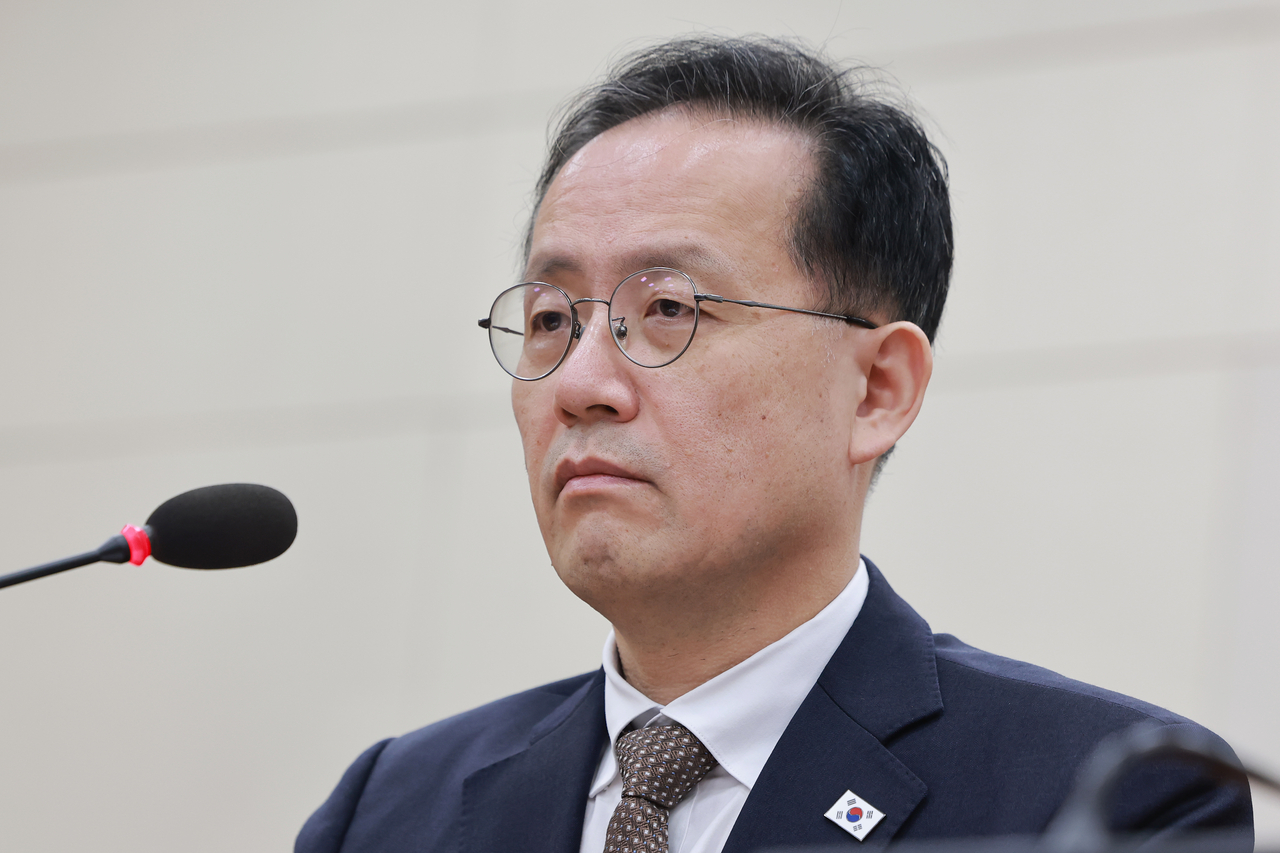
Land Minister Hong Ji-sun told lawmakers South Korea will start only 80% to 88% of this year's planned homes, the government's first admitted shortfall. Even the low end needs September-to-December starts about 1.55 times last year's, so the public-land fast-track she promised has to show up in starts before the year ends.
The Investor · Invest desk
What happened
- People Power Party lawmaker Jung Hee-yong said 86,349 homes had been started through August, 32.4% of the annual target.
- Hong said starts tend to bunch in the fourth quarter, as they did in each of the previous two years.
- Hong forecast Seoul prices will stabilise by year-end, saying the three Gangnam districts and Yongsan have already turned lower.
Compiled by The InvestorSomething wrong?How this is made
Why it matters
- constraint Hong's forecast of stable prices by December cannot draw on the supply she is promising, because her ministry traces today's shortage of finished homes to starts lost over the past three years.
- decision Redevelopment and rebuilding associations stuck in disputes with residents now have a reason to settle fast, since incentives go to projects that move quickly and the state has offered to mediate.
- capability A public board tracking projects from groundbreaking to move-in would let investors check progress toward the 80% floor without waiting for another admission at a parliamentary audit.
Jung's two figures, added together, put the annual target at about 267,600 starts (86,349 plus 181,261), with 32.3% already started, within rounding of the 32.4% he cited [17][18]. "We believe we can achieve somewhere around 80% to 88%," Hong said [2]. That implies a full-year total between roughly 214,100 and 235,500 [19]. Take out what was started by August and the last four months must produce between about 127,700 and 149,100 [20]. Backing last year's September-to-December out of Jung's 2.2 multiple gives about 82,400 [21]. The minister's floor needs 1.55 times that, her ceiling 1.81 times [22].
Hong's defence was the calendar. She said "there has been a tendency for housing starts to be concentrated in the fourth quarter, as was the case last year and the year before" [6]. That bunching is already in the base. Last year's roughly 82,400 was the bunched period, and this year has to beat it by more than half to reach the low end [21][22]. January to August averaged about 10,800 starts a month; the floor needs about 31,900 a month from here [23].
The price forecast has a shorter horizon. "By the end of the year, we expect home prices to stabilize and the pace of increases to moderate," Hong said [24]. She also said, "Home prices in the three Gangnam districts and Yongsan District have already turned lower, and the pace of increases has slowed in other areas as well." [25] Her ministry's diagnosis is that a sharp drop in starts over the past three years produced today's shortage of homes ready for occupancy [7]. "It is true that housing starts have fallen markedly over the past three years, delaying move-ins," she said [8]. On that account a home started this December fills a gap in some later year, so stability by year-end depends on the turn in Gangnam and Yongsan spreading to other districts [25][7].
The quarter can go three ways: starts reach about 127,700 or more and the floor holds; they fall short and the ministry revises its range a second time; or prices settle on the Gangnam turn and the supply miss stops mattering for the December figure [20][25]. I think the floor is the figure most at risk, because it asks for a jump of more than half over a period that was already the seasonal peak [22]. The case against that view is that public land belongs to the state. The ministry plans a "shortest-possible construction start model" there and aims to add more than 160,000 public-land starts through shorter timelines, and a ministry that controls the land can bring starts forward by decision [9]. Starts above about 127,700 by the end of December would prove the pessimistic view wrong [20].
Every measure Hong described at the National Assembly land committee's audit of her ministry on the 7th is on the supply side [16]. The list runs to shorter public-land timelines, locations for new sites of 73,000-plus units to be announced this year, a review of rules that stall redevelopment and rebuilding, speed incentives, state mediation between associations and residents, and regulatory easing with project-financing support for private builders [9][10][11][14]. Hong blamed the gains on a supply shortage, not just speculative demand, and nothing reported from the audit targets demand [15]. The account does not say whether the target is national or covers only greater Seoul, or by when the 160,000 public-land starts are due. "We will actively remove the factors blocking project speed and grant incentives to projects that proceed quickly," Hong said [12].
Progress will be published. "We will create a housing supply status board that discloses progress from groundbreaking to move-in," Hong said, adding, "This is something the president and the prime minister have instructed as well." [13]
What to watch
- Monthly starts for September through December against the roughly 127,700 needed to reach the minister's 80% floor.
- Which locations the ministry names for the 73,000-plus units before year-end, and how many of the 160,000 extra public-land starts it dates to this year.
- Whether the price declines Hong cited in the three Gangnam districts and Yongsan spread to other Seoul districts by December.