ScienceNot yet confirmed elsewhere1 publisher2 min readPublished
ISS astronaut photographs 100 square kilometers of Moon-type rock in southern Madagascar
ISS astronaut photographed Saririaky massif in Madagascar, 100 square km of anorthosite at least 600 million years old. Anorthosite also makes up much of the Moon's bright highlands, and NASA Earth Observatory says scientists link the deformed rock around it to the collisions that built Gondwana.
The Scientist · Science desk
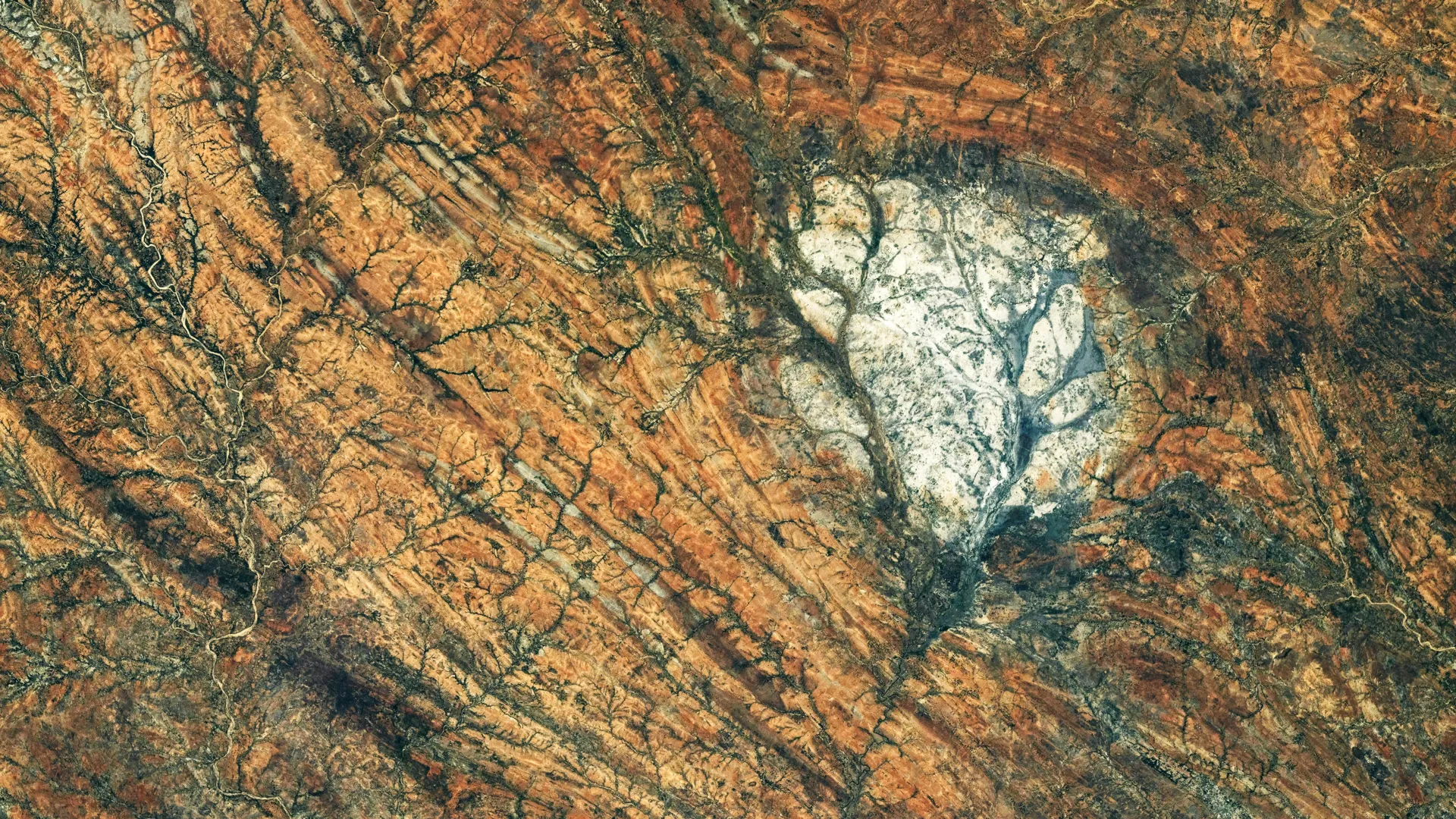
Three figures on the Saririaky massif: formed at least 600 million years ago, in the late Precambrian; a second anorthosite massif lies approximately 60 kilometers north and may once have been joined to it; exposed rock covers approximately 100 square kilometers.
| Figure | Value | Note | Claim |
|---|---|---|---|
| Saririaky minimum age | 600 million years | at least; late Precambrian | 4 |
| Distance to second massif | 60 km north | approximately; may once have been joined | 19 |
| Exposed Saririaky rock | 100 sq km | approximately | 5 |
What happened
- The photograph was taken on August 28, 2026, and NASA Earth Observatory describes the massif as a large body of rock exposed at Earth's surface.
- Saririaky lies inside a ductile shear zone, a region where rock deep in the crust deforms intensely under powerful geological forces.
- Some researchers suggest that a second anorthosite massif, about 60 kilometers north in the same shear zone, was once connected to Saririaky.
- Scientists believe the Moon's anorthosite formed early in the Moon's history, at a time when a vast magma ocean covered much of the young Moon.
Why it matters
- constraint The Moon comparison is a statement about rock type. Anorthosite is also mapped in eastern Canada, Scandinavia and southern India, so Saririaky is one Earth example among several.
- constraint Saririaky's late Precambrian origin puts it in a different era from the lunar highlands. It is the same rock type formed at another time, so it cannot stand in for the early lunar event.
- capability NASA Earth Observatory says similar rocks give an opportunity to investigate how the Moon formed and evolved, and Saririaky is a large exposed example on Earth's surface.
Anorthosite forms slowly. It is an intrusive igneous rock, so it solidifies from molten material beneath the surface [2], and the slow cooling gives its minerals time to grow into relatively large crystals [3]. Saririaky is exposed over about 100 square kilometers [5], and from orbit it shows as a roughly circular feature that is easy to tell from the surrounding terrain [17].
The photograph supplies the outline. The age comes from geological research, which places the rock in the late Precambrian at no less than 600 million years [4]. The deformation story comes from studies that found long, roughly parallel features running north to south in the surrounding rocks [10]. In the account ScienceDaily credits to NASA Earth Observatory [15], that evidence sits in the neighboring rocks [16], and scientists believe much of the change came as landmasses collided during the formation of Gondwana [11]. In a shear zone, enough heat and pressure let solid rock bend and stretch without breaking apart, and its minerals and textures can change in the process, a change called metamorphism [9].
The lunar side of the comparison is far older. The Moon's anorthosite-rich highlands are more than 4 billion years old [12]. Set the two stated minimums side by side, 4 billion years against 600 million, and the highlands' figure is about 6.7 times Saririaky's [18]. Both are floors, so the ratio compares lower bounds.
The second massif adds a hypothesis. It rests on boudinage, the pulling apart of a relatively strong body of rock into separate segments as the surrounding material deforms [20]. NASA's text makes the payoff conditional: if the explanation is correct, the two massifs preserve evidence of the forces that assembled a supercontinent [21].
We think the Moon comparison holds for the rock type and stops there on the evidence supplied. The NASA text does not say how the rock was dated, or whether it crystallized the way the lunar highlands did.
What to watch
- Published dating of Saririaky that sets an age above the stated 600-million-year floor and names the method used.
- A comparison of the second massif's age and mineral makeup with Saririaky's, which would test the boudinage idea.
- Any study that sets Saririaky's crystallization beside the lunar molten-rock-ocean model.
Clarity's read
What the record supports and how the coverage leans. The claims behind it follow.
Reality
- Evidence55
- Adoption
- Insufficient
- Hype gap+20
- Incentives
- Insufficient
- Confidence50
Claim ledger
Ranked by verification strength, evidence, and original report placement.
- [1]
On August 28, 2026, an astronaut aboard the International Space Station photographed the Saririaky anorthosite massif, a large body of rock exposed at Earth's surface.
- [2]
Anorthosite is classified as an intrusive igneous rock, meaning it forms when molten material cools and solidifies beneath Earth's surface.
- [3]
Because the cooling takes place underground, the minerals have time to develop into relatively large crystals.
- [4]
Geological research suggests that the Saririaky formation originated during the late Precambrian, at least 600 million years ago.
ReportedSupportedSource: geological research, as summarized by NASA Earth ObservatoryView cited source - [5]
The exposed Saririaky rock covers approximately 100 square kilometers (40 square miles).
- [6]
Anorthosite is an igneous rock that makes up much of the Moon's bright, reflective highlands.
- [7]
Large anorthosite deposits also occur in several regions of Earth, including eastern Canada, Scandinavia, southern India and Madagascar.
- [8]
The Saririaky massif lies within a ductile shear zone, a region where rocks undergo intense deformation as powerful geological forces act on them deep within Earth's crust.
- [9]
Under sufficiently high temperatures and pressures, solid rock can bend, stretch and change its structure without simply breaking apart, and the minerals and textures within it can be transformed, a phenomenon known as metamorphism.
- [10]
Studies of the region have identified long, roughly parallel geological features extending from north to south, which record the deformation that affected the rocks surrounding Saririaky.
- [11]
Scientists believe much of the transformation occurred as ancient landmasses collided during the formation of Gondwana, a supercontinent that eventually included parts of present-day Africa, India, Madagascar, Australia and Antarctica.
- [12]
The Moon's anorthosite-rich highlands are more than 4 billion years old.
- [13]
Scientists believe the Moon's anorthosite-rich rocks formed early in lunar history, when much of the young Moon was covered by an enormous ocean of molten rock.
- [14]
Similar rocks provide an important opportunity to investigate how the Moon formed and evolved.
- [16]
The neighboring rocks around Saririaky preserve evidence of enormous forces that reshaped the region hundreds of millions of years ago.
- [17]
In southern Madagascar, the Saririaky deposit forms a roughly circular feature that is easily distinguishable from the surrounding terrain.
- [18]
The stated minimum age of the lunar highlands (4 billion years) is about 6.7 times the stated minimum age of Saririaky (600 million years). Both figures are lower bounds, so this compares floors, not measured ages.
- [19]
Some researchers have suggested that a second anorthosite massif, located approximately 60 kilometers north of Saririaky within the same shear zone, was once connected to it.
ReportedInsufficientSource: some researchers, as summarized by NASA Earth ObservatoryView cited source - [20]
On this interpretation the original rock body was stretched and separated by tectonic forces, a process known as boudinage, in which a relatively strong layer or body of rock is pulled into separate segments as the surrounding material deforms.
- [21]
According to the NASA text, if the boudinage explanation is correct, the two formations preserve evidence of the tremendous forces involved in assembling one of Earth's ancient supercontinents.
Sources
1 independent publisher whose own reporting we read for this story.
- sciencedaily.comNASA spots a giant patch of Moon-like rock on Earth
1 article · October 11, 2026
Topics and entities
Follow any of these and your For You feed starts watching them — no settings page required.
Entities
- NASA Earth ObservatoryFollow
- ScienceDailyFollow
- International Space StationFollow
- Saririaky massifFollow
- AnorthositeFollow
- GondwanaFollow