ScienceNot yet confirmed elsewhere1 publisher2 min readPublished
Flinders University team sees wound-care potential in vanillin, the vanilla flavor compound
Flinders University researchers say vanillin has antioxidant, anti-inflammatory and antibacterial properties that could suit chronic-wound treatments. The team also points to its low cost and to its potential for delivering drugs that dissolve poorly in water.
The Scientist · Science desk
What happened
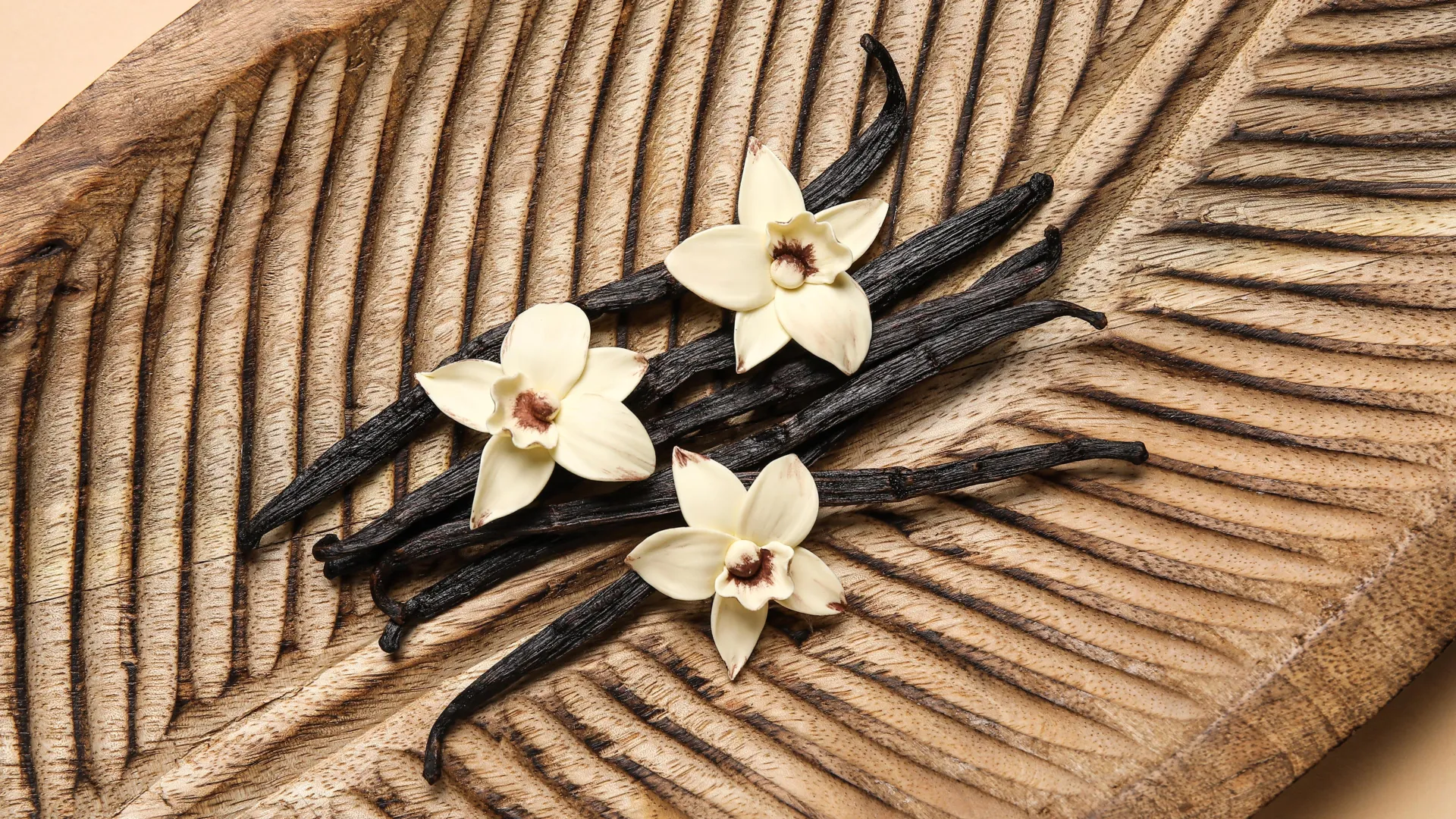
- Vanillin is the main flavor and fragrance compound in natural vanilla pods, and it can also be made synthetically from materials derived from clove oil or rice.
- The molecule can act as a dynamic crosslinker, connecting components within a material, which is the property the team ties to drug-carrying and tissue-repair formulations.
- Chronic wounds and ulcers resist treatment because of persistent inflammation, bacterial contamination and damage from oxidative stress.
- The team says synthetic vanillin is abundant and cost-effective, and it believes vanillin-based formulations may suit ulcer treatment and delivery of hydrophobic drugs.
Why it matters
- constraint No claim about patients can be made yet. The team itself says further development and clinical testing must come before effectiveness and safety are established.
- capability If the properties hold up in wounds, designers would have one ingredient to test against oxidative stress, inflammation and bacteria in the same formulation.
- cost The low price the team cites is for synthetic vanillin as a raw material; a finished wound product's price would depend on its own manufacturing and testing.
The release describes the work as an examination of vanillin through a framework that connects familiar food ingredients with practical medical applications [9]. The framework sets out what the molecule's chemistry allows. The release does not say which cell lines, animal models, concentrations or controls, if any, sit behind the three reported properties [1]. In our view they are reasons to test the compound in wounds.
The properties line up with the problems the release lists for chronic wounds, and oxidative stress is the least familiar of them. It occurs when harmful reactive molecules overwhelm the body's protective defenses, and it can damage cells and interfere with tissue repair [5]. A second quoted passage follows Vasilev's remarks in the release. It sets out the structural argument: "Owing to its amphiphilic molecular structure, vanillin can interact with reactive oxygen species, cellular membranes, and polymeric matrices, providing a basis for its incorporation into functional formulations." [7]
The drug-delivery argument is separate. Hydrophobic compounds do not dissolve easily in water. Some medications are hard to formulate and deliver as a result. The release says vanillin's structure may help researchers design materials that carry them to where they are needed [6].
The safety case comes from Professor Krasimir Vasilev, Director of Flinders' Biomedical Nanoengineering Laboratory. "Vanillin is among the most widely used flavor compounds in the global food system, valued for its sensory attributes, chemical stability and long history of safety - and that can be transferred to other areas, such as medical uses," he said [11]. The release does not address whether a safety record from eating the compound applies to open wounds.
What to watch
- A peer-reviewed paper or data release showing the cell, animal or lab models and the concentrations behind the antioxidant, anti-inflammatory and antibacterial findings.
- A first test of a vanillin-based formulation in an actual wound model, with an untreated control.
- Head-to-head comparison against the antibacterial and anti-inflammatory agents already used in chronic-wound care.
Clarity's read
What the record supports and how the coverage leans. The claims behind it follow.
Reality
- Evidence25
- Adoption
- Insufficient
- Hype gap+40
- Incentives
- Insufficient
- Confidence45
Claim ledger
Ranked by verification strength, evidence, and original report placement.
- [1]
Researchers from Flinders University's Biomedical Nanoengineering Laboratory found that vanillin has notable antioxidant, anti-inflammatory and antibacterial properties.
- [2]
Vanillin is the main flavor and fragrance compound in natural vanilla pods, and it can also be made synthetically from materials derived from sources such as clove oil or rice.
- [3]
Vanillin can function as a dynamic crosslinker, helping connect different components within a material, which could make it useful in formulations that carry drugs or support tissue repair.
- [4]
Chronic wounds and ulcers can be difficult to treat because of persistent inflammation, bacterial contamination and damage caused by oxidative stress.
- [5]
Oxidative stress occurs when harmful reactive molecules overwhelm the body's protective defenses, potentially damaging cells and interfering with tissue repair.
- [6]
Hydrophobic compounds do not dissolve easily in water, which can make certain medications difficult to formulate and deliver, and vanillin's chemical structure may help researchers design materials that carry them to where they are needed.
- [7]
"Owing to its amphiphilic molecular structure, vanillin can interact with reactive oxygen species, cellular membranes, and polymeric matrices, providing a basis for its incorporation into functional formulations."
ReportedSupportedSource: Quoted passage in the Flinders release following Professor Krasimir Vasilev's remarksView cited source - [8]
Vanillin-based wound treatments would still need further development and clinical testing before their effectiveness and safety in patients could be established.
- [9]
The Flinders researchers examined vanillin through a framework that connects familiar food ingredients with practical medical applications.
- [10]
A material capable of addressing oxidative stress, inflammation and bacteria could offer several advantages in wound care.
- [11]
"Vanillin is among the most widely used flavor compounds in the global food system, valued for its sensory attributes, chemical stability and long history of safety - and that can be transferred to other areas, such as medical uses," said Professor Krasimir Vasilev, Professor of Biomedical Nanotechnology and Director of Flinders' Biomedical Nanoengineering Laboratory.
ReportedInsufficientSource: Professor Krasimir Vasilev, Flinders University2 sources— create a free account to open themView cited source - [12]
The Flinders team says that because vanillin's synthetic form is abundant and cost-effective, it believes vanillin-based formulations may offer safe and multifunctional solutions for ulcer treatment and targeted drug delivery, especially of hydrophobic compounds.
ReportedInsufficientSource: Quote in the Flinders release following Professor Krasimir Vasilev's remarks2 sources— create a free account to open themView cited source
Sources
1 independent publisher whose own reporting we read for this story.
- sciencedaily.comScientists discover vanilla’s hidden healing potential
1 article · October 11, 2026
Topics and entities
Follow any of these and your For You feed starts watching them — no settings page required.
Entities
- Flinders UniversityFollow
- Krasimir VasilevFollow
- VanillinFollow
- ScienceDailyFollow