ScienceNot yet confirmed elsewhere1 publisher2 min readPublished
IBD gut tissue still carries abnormal cell-death signals when symptoms are controlled
Walter and Eliza Hall Institute researchers found abnormal cell death signals in gut biopsies from IBD patients whose disease was under control. The study does not show the signal predicts relapse; only 30 patients had follow-up.
The Scientist · Science desk
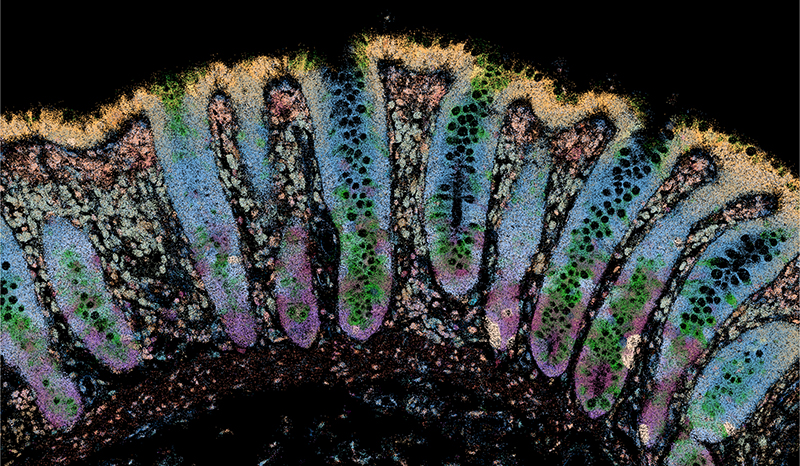
Key figures: of 30 IBD patients with follow-up, 16 had a flare requiring intensified or changed treatment; the study analyzed more than 900 intestinal biopsies; 22 of 52 patients with IBD were lost to follow-up.
| Figure | Value | Note | Claim |
|---|---|---|---|
| Of 30 followed up, flared needing changed treatment | 16 patients | 8 | |
| Intestinal biopsies, over | 900 biopsies | 1 | |
| Lost to follow-up | 22 of 52 patients | 20 |
What happened
- The study, published in Science, analyzed more than 900 intestinal biopsies from 80 people with and without IBD.
- Inflammation changed how intestinal cells behave and made them more vulnerable to abnormal death signals, and some signals appeared even in tissue without obvious inflammation.
- Of 52 patients with IBD, 30 had two to three years of follow-up: 16 had a flare that required intensified or changed treatment and 14 stayed stable.
- Patients who went on to relapse showed higher levels of a marker of cell-death signaling than people without IBD, a comparison that does not establish whether the marker predicts relapse.
Why it matters
- constraint The marker is not a test doctors can use to predict a flare, so the finding explains why disease returns without yet changing how remission is monitored.
- contradiction Patient tissue carried signals associated with necroptosis, but organoid cells exposed to inflammatory signals died mainly by apoptosis, and blocking necroptosis did not stop the death. A drug aimed at the signal seen in patients may not protect cells alone.
- cost Any treatment that dampens cell death works on pathways that also remove damaged or potentially cancerous cells, so safety has to be shown before efficacy matters.
- decision Christensen's longer-term goal is what she calls "molecular healing", a biological target beside symptom control. Whether it keeps patients well for longer is yet to be tested.
Spread across 80 people, more than 900 biopsies averages out to more than 11 per person [21]. Questions about individual patients, such as who flares, have a much smaller denominator. Twenty-two of the 52 patients with IBD, or 42%, were lost to follow-up [9][20]. The 16 who flared are 53% of the 30 who were followed [19].
The remission finding has the firmer footing. Most IBD patients in the study had inactive or mildly active disease [2], though that means the group is not purely in remission. Gastroenterologist Britt Christensen, who heads the Inflammatory Bowel Disease Unit at the Royal Melbourne Hospital [18], put the implication this way: "The bowel may still carry a vulnerability that is not apparent from symptoms alone," she told ScienceAlert [12].
Whether the same signals predict relapse is less settled. The patients who relapsed also had greater microscopic inflammation at the start [11]. In our view the data leave open that the marker partly tracks that inflammation. The thing this doesn't tell you is whether the marker adds anything beyond existing inflammation measurements, which ScienceAlert reports larger studies could establish [11]. Its account does not say how the 14 stable patients [8] compared on the marker.
The reported data show an association between cell-death signals and later relapse in a small group [10]. They do not show that the abnormal death causes flares. "The follow-up findings are promising but preliminary," Christensen said [14]. On treatment she was just as direct: "We have not shown that blocking these mechanisms safely prevents flares in patients," Christensen said [13].
What to watch
- Larger studies testing whether the cell-death signals add information beyond existing measures of microscopic inflammation.
- Cohorts that report the marker in stable patients as well as relapsers, with fewer lost to follow-up.
- Patient data on whether blocking the identified cell-death pathways is safe and prevents flares.
Clarity's read
What the record supports and how the coverage leans. The claims behind it follow.
Reality
- Evidence55
- Adoption
- Insufficient
- Hype gap−5
- Incentives
- Insufficient
- Confidence60
Claim ledger
Ranked by verification strength, evidence, and original report placement.
- [1]
The study, published in Science, examined more than 900 intestinal biopsies from 80 people with and without IBD.
- [2]
Most patients with IBD in the study had inactive or mildly active disease.
- [3]
The study was led by researchers at Australia's Walter and Eliza Hall Institute.
- [4]
Researchers found signs of abnormal cell death in gut tissue even from patients whose disease was under control.
- [5]
Inflammation could change how intestinal cells behave, making them more vulnerable to abnormal death signals, and some signals were detectable even in tissue without obvious inflammation.
- [6]
Patient tissue showed signals associated with necroptosis, but when organoids were exposed to inflammatory signals their cells died mainly through apoptosis.
- [7]
Blocking necroptosis did not prevent cell death under the conditions tested.
- [8]
Of 52 patients with IBD, 30 had follow-up information covering two to three years; 16 experienced a flare requiring intensified or changed treatment and 14 remained stable.
- [10]
Patients who later relapsed had elevated levels of a cell-death signaling marker compared with people without IBD, but that comparison does not establish whether the marker can tell who will relapse and who won't.
- [11]
Patients who relapsed also had greater microscopic inflammation initially, and larger studies could potentially establish whether the signals provide useful information beyond existing inflammation measurements.
- [12]
"The bowel may still carry a vulnerability that is not apparent from symptoms alone,"
ReportedSupportedSource: Britt Christensen, Royal Melbourne Hospital, told ScienceAlertView cited source - [13]
"We have not shown that blocking these mechanisms safely prevents flares in patients,"
- [14]
"The follow-up findings are promising but preliminary,"
- [15]
Cell-death pathways serve essential functions, including removing damaged or potentially cancerous cells.
- [16]
Christensen calls the longer-term goal "molecular healing", addressing cellular problems that persist beneath apparent recovery; whether that can keep patients well for longer is yet to be tested.
- [17]
The findings may help explain why the disease keeps coming back, but they are not a test doctors can use to predict a flare.
- [18]
Britt Christensen is a gastroenterologist and head of the Inflammatory Bowel Disease Unit at the Royal Melbourne Hospital.
- [19]
The 16 patients who flared were about 53% of the 30 patients with follow-up.
- [20]
The 22 patients lost to follow-up were about 42% of the 52 patients with IBD.
- [21]
More than 900 biopsies from 80 people averages more than 11 biopsies per person.
Sources
1 independent publisher whose own reporting we read for this story.
- sciencealert.comWhy Does IBD Keep Flaring Up? Scientists Found a Clue in The Gut Lining
1 article · October 12, 2026
Topics and entities
Follow any of these and your For You feed starts watching them — no settings page required.