Model of 10,826 Chinese plants puts hybrid wastewater savings at 25% to 37%
Chinese researchers assessed 10,826 wastewater plants and found reuse pays for itself and eases water stress for only about 450 million people today. Their modeling says mixing centralized and decentralized treatment would meet national targets at 25% to 37% lower infrastructure cost.
The Scientist · Science desk
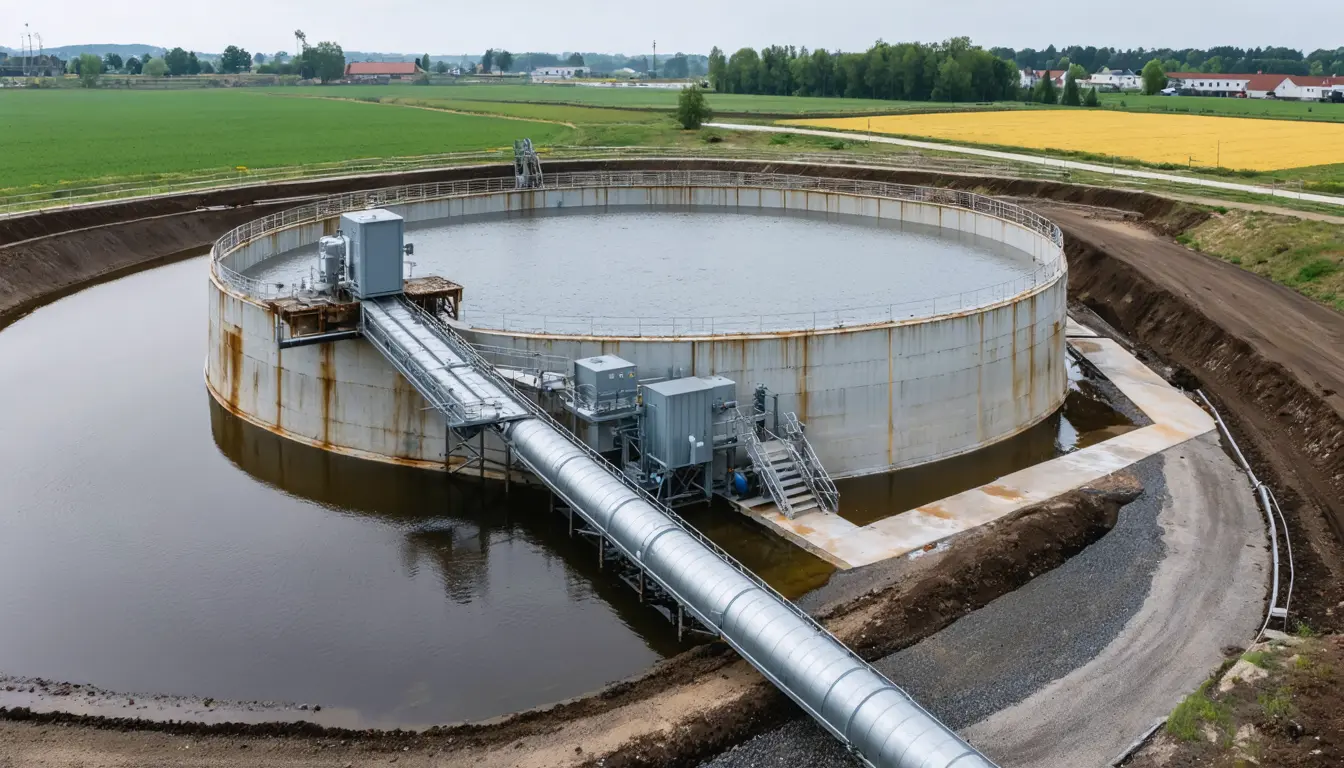
Around 450 million people live where wastewater reuse can both recover costs and substantially ease local water stress. Plants generally need 6,800 to 49,700 cubic meters a day of capacity to break even at current fees. The study inventoried 10,826 wastewater treatment plants.
| Figure | Value | Note | Claim |
|---|---|---|---|
| Around this many live where reuse pays and eases stress | 450 million people | 3 | |
| Break-even plant capacity at current fees, at least | 6,800 m³ a day | up to 49,700 cubic meters a day | 4 |
| Plants in the inventory | 10,826 plants | 2 |
What happened
- At current treatment fees, plants generally need a capacity of 6,800 to 49,700 cubic meters a day to break even, the researchers found.
- The authors say wastewater supply, treatment facilities and reuse demand are not always in the same places, so added capacity alone may not ease scarcity.
- They recommend centralized plants where wastewater is concentrated and decentralized treatment in dispersed settlements.
- Modeled savings would come mainly from skipping long sewer networks in sparsely populated areas and small centralized plants that do not pay their way.
- Professor Shen Lei of the Chinese Academy of Sciences' Institute of Geographic Sciences and Natural Resources Research led the study, published in Nature Water.
Why it matters
- What it limits constraint Everyone outside that 450 million lives where reuse fails at least one test, cost recovery or relief of local scarcity, so national capacity totals say little about who benefits.
- Who has to decide decision Planners weighing a new centralized plant have a size test to apply at current fees: whether expected flows reach the study's break-even capacity.
- What it sets up precedent If planners adopt the authors' call for demand-driven optimization, facility scale would be judged against local population and wastewater patterns, and capacity added would count for less.
The break-even range is wide: its top figure is about 7.3 times its bottom [12]. Viability is hardest, according to the researchers, where wastewater volumes are small and settlements are scattered [7].
The study's design is what lets it say where. The inventory joined plant records to data on wastewater generation, sewer networks, reclaimed-water demand, water scarcity and infrastructure costs, along with future scenarios built on the Shared Socioeconomic Pathways [2]. With supply, pipe, demand and scarcity in one dataset, the team could ask place by place whether reuse recovers its cost and eases local stress [3].
The paper's title states the finding: "China's centralized wastewater treatment system reaches efficiency limits in tackling water scarcity" [11]. The authors' remedy is a change in what planners optimize. Future planning, they say, should move "from capacity-oriented expansion toward demand-driven system optimization, matching facility scale to local patterns of population distribution and wastewater generation" [10].
The 25% to 37% saving is a modeling result, and its baseline is a purely centralized strategy [5]. It compares two designs inside the model and is not measured against what China spends now. Put as costs, the hybrid design comes to 63 to 75 units for every 100 the centralized one would cost [13].
The 450 million is a head count of residents in qualifying areas [3]. The thing this doesn't tell you is what share of the country that is, because the Phys.org summary does not give a national total.
In our view the 450 million and break-even results describe the system as it stands, since both are set at current conditions and current fees [3][4]. The hybrid saving describes a design that has not been built, and it holds only as far as the model's costs for long sewers and small plants hold [6].
What to watch
- Whether Chinese planners adopt hybrid plans for dispersed settlements, since operating costs there would test the modeled 25% to 37% savings.
- Any change to treatment fees, because the 6,800 to 49,700 cubic meter break-even range is set at current fees.
Clarity's read
What the record supports and how the coverage leans. The claims behind it follow.
Reality
- Evidence58
- Adoption
- Not scored
- Hype gap+10
- Incentives
- Not scored
- Confidence55
Claim ledger
Ranked by verification strength, evidence, and original report placement.
- [1]
The study was led by Professor Shen Lei of the Institute of Geographic Sciences and Natural Resources Research of the Chinese Academy of Sciences and was published in Nature Water.
- [2]
The researchers compiled a national inventory of 10,826 wastewater treatment plants, integrating datasets on wastewater generation, sewer networks, reclaimed-water demand, water scarcity, infrastructure costs and multiple future socioeconomic scenarios based on Shared Socioeconomic Pathways.
- [3]
Under current conditions, only around 450 million people reside in areas where wastewater reuse can both recover costs and substantially alleviate local water stress.
- [4]
At current wastewater treatment fees, plants generally require a capacity of 6,800 to 49,700 cubic meters per day to break even.
- [5]
Modeling results show that a hybrid strategy could meet national wastewater treatment and reuse targets while reducing infrastructure costs by 25% to 37% compared with a purely centralized strategy.
- [6]
The cost savings would mainly derive from avoiding the construction of long sewer networks in sparsely populated areas and uneconomical small centralized plants.
- [7]
Economic viability is a challenge particularly in areas with small wastewater volumes and scattered settlements.
- [8]
The researchers recommend site-specific planning, with centralized facilities where wastewater is concentrated, combined with decentralized treatment in dispersed settlements.
- [9]
Expanding wastewater treatment capacity alone may not be enough to ease water scarcity in China, since wastewater supply, treatment facilities and reuse demand are not always geographically aligned.
- [10]
According to the researchers, future wastewater infrastructure planning should shift from capacity-oriented expansion toward demand-driven system optimization, matching facility scale to local patterns of population distribution and wastewater generation.
- [11]
The paper is titled "China's centralized wastewater treatment system reaches efficiency limits in tackling water scarcity".
- [12]
The top of the break-even capacity range (49,700 cubic meters per day) is about 7.3 times the bottom (6,800).
- [13]
A hybrid system would cost 63 to 75 units for every 100 units a purely centralized system costs.
Get this ledger inside ChatGPT. Ask about any of our stories and the answer brings its figure, each claim’s verdict and the sources. Free, no account.
Sources
1 independent publisher whose own reporting we read for this story.
- phys.orgMatching wastewater treatment to local demand could help China tackle water scarcity
1 article · October 16, 2026
Topics and entities
Follow any of these and your For You feed starts watching them — no settings page required.
Topics
- Water reuseFollow
- Water ScarcityFollow
- Infrastructure planningFollow
- Wastewater treatmentFollow
Entities
- Chinese Academy of SciencesFollow
- Nature WaterFollow
- Institute of Geographic Sciences and Natural Resources ResearchFollow
- Shen LeiFollow