Florida State review says mass spectrometry can trace human activity in water's organic matter
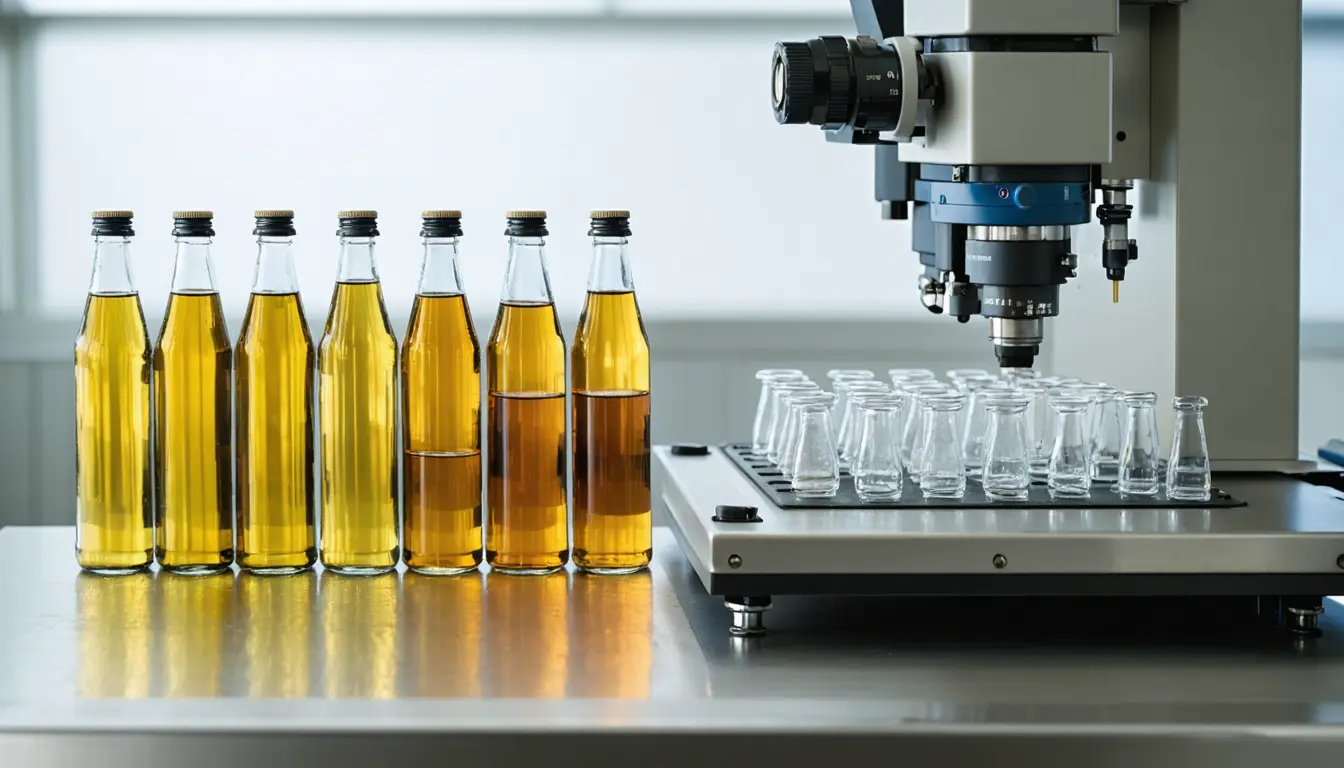
A Florida State-led Nature Water review argues ultrahigh-resolution mass spectrometry can read human impact in water from dissolved organic matter. It pools studies from many aquatic systems, so the case depends on how well a few markers hold up from site to site.
The Scientist · Science desk
What happened
- Dissolved organic matter is found in all global waters, feeds aquatic life, affects drinking water treatment and takes part in major biogeochemical cycles.
- The instrument can examine tens of thousands of data points in one sample, in this case organic markers and molecular formulas.
- Changes in the mixture's molecular makeup can also reveal the effects of urbanization, fires and shifts in climate and precipitation patterns.
- Arctic change was another focus of the review, and nearly two-thirds of the soil carbon on Earth is frozen in Arctic permafrost.
Why it matters
- What it limits constraint Spencer credits the work to the National MagLab's facilities, so anyone who wants to use these markers first has to ask whether they can be read off that hardware.
- Who has to decide decision Spencer asks researchers to make their data openly accessible so marker identification can improve. Labs holding dissolved organic matter datasets now face a choice about releasing them.
- What's now possible capability If the markers hold up, Spencer says, they would show how a system will respond to changes downstream.
Rob Spencer, who led the review published in Nature Water [2], gave the Amazon River Basin as his example. "When analyzing tens of thousands of molecular formulas in a sample, we might end up with 10 diagnostic markers in the Amazon River Basin that track land-use change, for example," he said [5]. He offered the number as an illustration. If "tens of thousands" means 20,000 or more, those ten markers are at most 0.05% of the formulas measured [12].
The cross-basin agreement is the part we find interesting. Spencer said studies of the Mississippi Basin had turned up a small set of organic markers linked to agriculture, and that those molecular formulas were very similar to the Amazon's [13]. "It was really interesting to look across different temperate and tropical systems and see similar responses at the molecular level with common major human impacts," he said [11].
Any controls in a review sit in the studies it pools. Mike Stukel, chair of the FSU Department of Earth, Ocean, and Atmospheric Science, said that by synthesizing work across many aquatic systems, Spencer and his colleagues "highlight both the power and current limitations of UHRMS" [14]. The summary we have does not list those limitations, say how many studies were pooled, or give an effect size in any unit.
An open question is whether a marker list that tracks agriculture in one basin would still flag it in a sample also shaped by fire or urbanization. The review says both alter the same mixture [6]. And "linked to" is an association.
Spencer said that "we're seeing an almost diagnostic response to human activities at the molecular level" [15]. We think "almost" is the right word. The claim is credible for the cases cited, a short marker list per impact that recurs in the Amazon and the Mississippi. It does not yet support taking one basin's list and using it as a test in another. That view would change if the full review shows the lists holding as more basins are added.
What to watch
- Whether the full review reports how many molecular formulas the Amazon and Mississippi marker lists share.
- Whether researchers deposit their dissolved organic matter datasets openly, as Spencer asks.
- Whether marker lists built in one basin are tested on samples affected by several impacts at once.
Clarity's read
What the record supports and how the coverage leans. The claims behind it follow.
Reality
- Evidence45
- Adoption
- Not scored
- Hype gap+20
- Incentives55
- Confidence50
Claim ledger
Ranked by verification strength, evidence, and original report placement.
- [1]
A Florida State University-led review shows how ultrahigh-resolution mass spectrometry can help researchers identify the molecular fingerprints of human activity in water systems around the world.
- [2]
Rob Spencer, the Verta Cox professor of oceanography at Florida State University, led the review, which was published in Nature Water.
- [3]
Dissolved organic matter is a complex mixture found in all global waters; it is an energy source for aquatic life, affects drinking water treatment and plays an important role in major biogeochemical cycles.
- [4]
Ultrahigh-resolution mass spectrometry lets researchers examine tens of thousands of data points, in this case organic markers and molecular formulas, that provide diagnostic data.
- [5]
Spencer said: "When analyzing tens of thousands of molecular formulas in a sample, we might end up with 10 diagnostic markers in the Amazon River Basin that track land-use change, for example."
- [6]
Changes in dissolved organic matter's molecular composition can also reveal the effects of urbanization, fires and overall changes in climate and precipitation patterns.
- [7]
Spencer said one motivation for the review was to encourage researchers to make their data openly accessible so that identification of diagnostic indicators and organic markers for different human impacts can improve.
- [8]
Nearly two-thirds of all soil carbon on Earth is frozen in Arctic permafrost, and Arctic change was another focus of the review.
- [9]
Spencer said: "At FSU, we're uniquely positioned to conduct this research thanks to the National MagLab's facilities."
- [10]
Spencer said that identifying these diagnostic indicators ultimately tells researchers how things will respond to changes downstream.
- [11]
Spencer said: "It was really interesting to look across different temperate and tropical systems and see similar responses at the molecular level with common major human impacts."
- [12]
Ten markers out of tens of thousands of molecular formulas are at most 0.05% of the formulas measured, if 'tens of thousands' means 20,000 or more.
- [13]
Spencer said similar research in the Mississippi Basin found a small number of organic markers linked to agriculture, and that these molecular formulas were very similar to those from the Amazon.
- [14]
Mike Stukel, chair of the FSU Department of Earth, Ocean, and Atmospheric Science, said that by synthesizing what has been learned across many different aquatic systems, Spencer and colleagues "highlight both the power and current limitations of UHRMS".
- [15]
Spencer said: "we're seeing an almost diagnostic response to human activities at the molecular level."
Get this ledger inside ChatGPT. Ask about any of our stories and the answer brings its figure, each claim’s verdict and the sources. Free, no account.
Sources
1 independent publisher whose own reporting we read for this story.
- phys.orgMolecular fingerprints reveal how human activities alter water systems worldwide
1 article · October 16, 2026
Topics and entities
Follow any of these and your For You feed starts watching them — no settings page required.
Topics
- Arctic permafrost carbonFollow
- Dissolved organic matterFollow
- Mass SpectrometryFollow
- Water quality monitoringFollow