Alaskan lake cores show hillslope erosion running 2 to 3 times higher on patchy permafrost
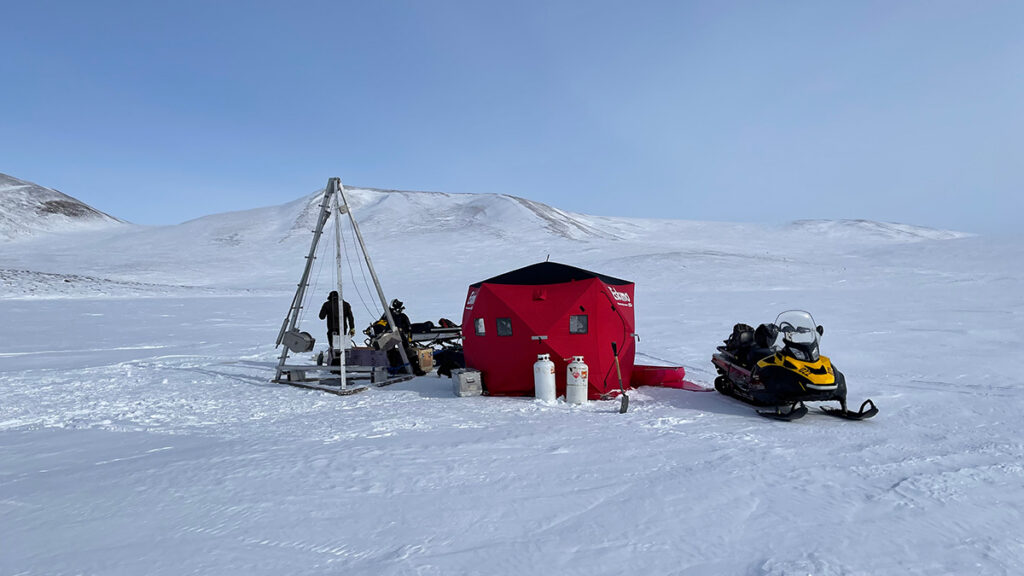
Özpolat and colleagues found hillslope erosion 2 to 3 times more intense under discontinuous permafrost, using cores from 12 Alaska lakes. The cores come from landscapes near their present state, and the authors say the gap may be site-specific.
The Scientist · Science desk
Three figures: average diffusive erosion intensity in discontinuous permafrost areas was 2 to 3 times greater than in continuous permafrost areas; in discontinuous areas 50% to 90% of the landscape is underlain by permafrost; sediment cores came from 12 lakes in Alaska.
| Figure | Value | Note | Claim |
|---|---|---|---|
| Diffusive erosion intensity vs continuous, at least | 2 times greater | up to 3 times greater | 9 |
| Discontinuous areas underlain by permafrost, at least | 50% | up to 90% | 2 |
| Alaska lakes cored | 12 lakes | 5 |
What happened
- Models that include both hillslope and channel erosion in permafrost regions typically estimate the split, because direct catchment-scale observations are scarce.
- They span the middle Holocene to the present, a period when climate and permafrost conditions in both areas resembled today's.
- In both areas, diffusive hillslope processes were statistically more significant than advective channel processes.
Why it matters
- capability A landscape evolution model can be tuned to rates read from lake sediment instead of an assumed hillslope-to-channel split.
- constraint Anyone applying the 2 to 3 times factor to a slope that is actively thawing is using it outside the conditions the cores sampled.
- decision Modelers wanting a factor for other Arctic catchments must either reuse the Alaska ratio with a site-specific caveat or wait for the replication the authors call for.
"Discontinuous" is a loose category. In such a landscape only 50% to 90% of the ground is underlain by permafrost [2], so the two study areas differ by degree: Toolik in the north has more continuous permafrost, and Delta Junction in the south has more discontinuous [5]. Across that gradient, the average intensity of diffusive erosion, the process that mainly moves sediment on hillslopes [3], was 2 to 3 times greater in the discontinuous areas [9]. That is a difference of 100% to 200% [13]. In both areas, diffusive processes were statistically more significant than advective ones [8]. The Eos summary does not say how the 12 lakes divide between the regions or how large the diffusive-over-advective gap is.
The time window is the design choice to look at. The cores reach back to the middle Holocene, a period when climate and permafrost conditions at both areas resembled today's [6]. They therefore describe landscapes near their present state, and the 2 to 3 times figure compares two of them. It does not follow a slope through thaw. The forecast that hillslope erosion could increase significantly as warming shifts landscapes toward discontinuous permafrost [11] is an extrapolation across that gap. We think it is a reasonable hypothesis and not yet a measured response.
The authors warn that the gap in erosion intensity could be peculiar to the sites they studied, and they call for comparable work in other catchments [10]. The base is 12 lakes in two parts of Alaska [5].
The stated payoff is better models of how the Arctic will respond to climate change [12]. In our view the 2 to 3 times figure works as a calibration for landscape evolution models, the kind the authors constrained with their core-derived rates [7]. Carrying it into infrastructure planning would stretch it. The cores average catchment-scale erosion from the middle Holocene to the present, and a road or a pipeline sits on one slope.
What to watch
- Core-based erosion studies in other Arctic catchments, which would show whether the 2 to 3 times gap holds outside Toolik and Delta Junction.
- Measurements of erosion on slopes that are actively moving from continuous to discontinuous permafrost, which the middle Holocene cores cannot supply.
- Whether landscape evolution models adopt measured diffusive and advective rates in place of estimated ones.
Clarity's read
What the record supports and how the coverage leans. The claims behind it follow.
Reality
- Evidence62
- Adoption
- Insufficient
- Hype gap−5
- Incentives
- Insufficient
- Confidence58
Claim ledger
Ranked by verification strength, evidence, and original report placement.
- [1]
Özpolat et al. examined differences in how continuous and discontinuous permafrost landscapes erode, in a study published in Earth's Future in 2026.
- [2]
In discontinuous permafrost landscapes, only 50% to 90% of the landscape is underlain by permafrost.
- [3]
Diffusive processes primarily move sediments on hillslopes, while advective processes primarily erode and transport sediments in channels.
- [4]
The relative magnitudes of diffusive and advective erosion remain largely unquantified in permafrost regions, and in the few models that incorporate both processes they are typically estimated rather than based on direct catchment-scale observations.
- [5]
The researchers took sediment cores from 12 lakes in Alaska, near Toolik in the north (more continuous permafrost) and near Delta Junction in the south (more discontinuous permafrost).
- [6]
The cores spanned the middle Holocene to the present, capturing a period when the climate and permafrost conditions in these areas were similar to their present conditions.
- [7]
From the cores, the researchers calculated sediment fluxes and erosion rates in the lakes' catchments, then used those rates to constrain the diffusive and advective components of a landscape evolution model.
- [8]
In both study areas, diffusive, primarily hillslope processes were statistically more significant than advective processes, suggesting diffusive processes have been more responsible for shaping the landscape since the middle Holocene.
- [9]
In areas with discontinuous permafrost, the average intensity of diffusive erosional processes was 2 to 3 times greater than in areas with continuous permafrost.
- [10]
The authors caution that the intensity differences may be specific to the study sites and that similar work should be done in other catchments to further evaluate their results.
- [11]
The findings suggest that as warming shifts some landscapes from continuous toward discontinuous permafrost conditions, hillslope erosion could increase significantly.
- [12]
Better understanding of how diffusive and advective processes vary across permafrost landscapes would help improve models of how the Arctic will respond to climate change.
- [13]
A 2 to 3 times greater intensity is a difference of 100% to 200% above the continuous-permafrost level.
Get this ledger inside ChatGPT. Ask about any of our stories and the answer brings its figure, each claim’s verdict and the sources. Free, no account.
Sources
1 independent publisher whose own reporting we read for this story.
- eos.orgPatchier Permafrost Is Linked to More Intense Hillslope Erosion
1 article · October 14, 2026
- phys.orgPatchier permafrost is linked to more intense hillslope erosion in Alaska
1 article · October 14, 2026
Topics and entities
Follow any of these and your For You feed starts watching them — no settings page required.
Topics
- Arctic erosion and sediment transportFollow
- Climate change scienceFollow
- Permafrost Thaw and Arctic CarbonFollow