Science1 publisherNot yet confirmed elsewhere2 min readPublished
Nobel laureate Francis Halzen credits neural nets with finding the Milky Way in IceCube data
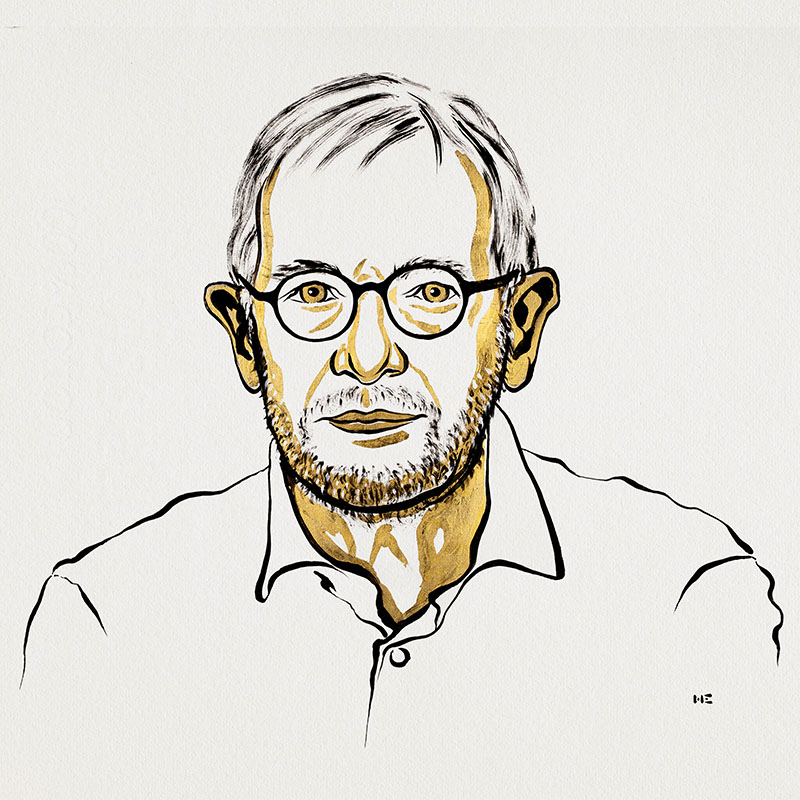
Nobel physics laureate Francis Halzen said he proposed neural nets for physics data in 1991 and credits them with finally showing IceCube the Milky Way. His account links an idea he says took decades to mature to one of the Antarctic detector's best-known results.
The Scientist · Science desk
What happened
- IceCube, the observatory Halzen conceived, detects neutrinos with 5,484 optical modules set deep in the Antarctic ice.
- Halzen, 82 and a professor at the University of Wisconsin-Madison, spoke to reporters in Turin a day after the prize was announced.
- He said a map of the sky in neutrinos normally shows other galaxies but not the Milky Way, unlike the sky as it is normally seen.
- AFP reports that Halzen's project has received about $250 million from the US National Science Foundation.
Compiled by The ScientistSomething wrong?How this is made
Why it matters
- capability In Halzen's telling, the Milky Way emerged from IceCube's data once the analysis changed. What the detector can see depends on its software as well as its sensors in the ice.
- contradiction Antonio Zoccoli of Italy's National Institute for Nuclear Physics cast the prize as a win for fundamental research in an era of applied technology, while the laureate credits AI tools with a key result. The prize supports both readings.
- decision Halzen said he is writing a new proposal and hopes the Nobel helps get it funded. Its reviewers will be weighing a request from a new laureate.
Halzen dated the idea himself. "In fact, the first neural nets appeared in the late 1980s, and I am very proud that I wrote a paper in 1991 proposing to use AI to analyze the data of part of the classical physics experiment," he said [4]. That paper came about 35 years before the prize [15].
The payoff came late. "We kind of used neural nets occasionally. And that changed a few years ago, when these very powerful neural nets came along," Halzen said [5]. The early proposal and the working tool are separate events. In his telling, what closed the gap was how strong the networks became [5].
The result he credits to the networks is a satisfying one. "It was only after we used neural nets and machine learning techniques that we finally began to see the Milky Way in our data, which we now have extracted convincingly," he said [8]. He described IceCube as having "solved a very interesting problem for the AI" [6]. I like this as a test of a new method, because the target was never in doubt. Our own galaxy is there. The open question was whether the analysis could separate its neutrinos from those arriving from other galaxies [7].
The report does not say how much the networks added. It gives no significance figure or comparison with IceCube's earlier analysis methods for the Milky Way result, or whether the prize citation mentions machine learning. "Convincingly" is Halzen's own word [8]. The link between the Nobel and his early bet on neural nets is one Halzen drew himself, speaking with pride about his early promotion of AI in his neutrino research [1].
On money, Halzen set his own case apart. He said "doing science is more difficult" now because of funding issues, although "universities are surviving," and called himself the "wrong person" to discuss cuts because his observatory had been spared [11].
Asked whether he had always dreamed of the Nobel, he said he preferred cycling as a child. "I'm from Belgium, I wanted to win the Tour de France," he joked [13].
What to watch
- Any IceCube analysis that quantifies how much the newer neural networks improve on earlier methods for the Milky Way neutrino signal.
- Whether the Nobel committee's published citation for Halzen mentions machine learning or the Milky Way result.
- The fate of the funding proposal Halzen said he is writing and hopes the prize will help.