Science1 publisher3 min readPublished
Divers search Lake Issyk-Kul's floor for the edge of a Silk Road town drowned about 800 years ago
Some 20 scientists funded by the Russian Academy of Sciences are diving on a Silk Road town that sank into Lake Issyk-Kul an estimated 800 years ago. What it adds to Central Asian history hangs on lab dates for remains that have proved hard to date.
The Scientist · Science desk
Drafted by a language model from the sources cited here and checked against its claim ledger before publication. How we use AISend a correction
What happened
- No major exploration of the site had taken place between its rediscovery in the 19th century and this expedition, which began in 2024.
- Traces of two cemeteries at the site suggest they were built during the early Islamization of the region.
- Divers have found a decorated public building that may have been a mosque, a public bath or a religious school.
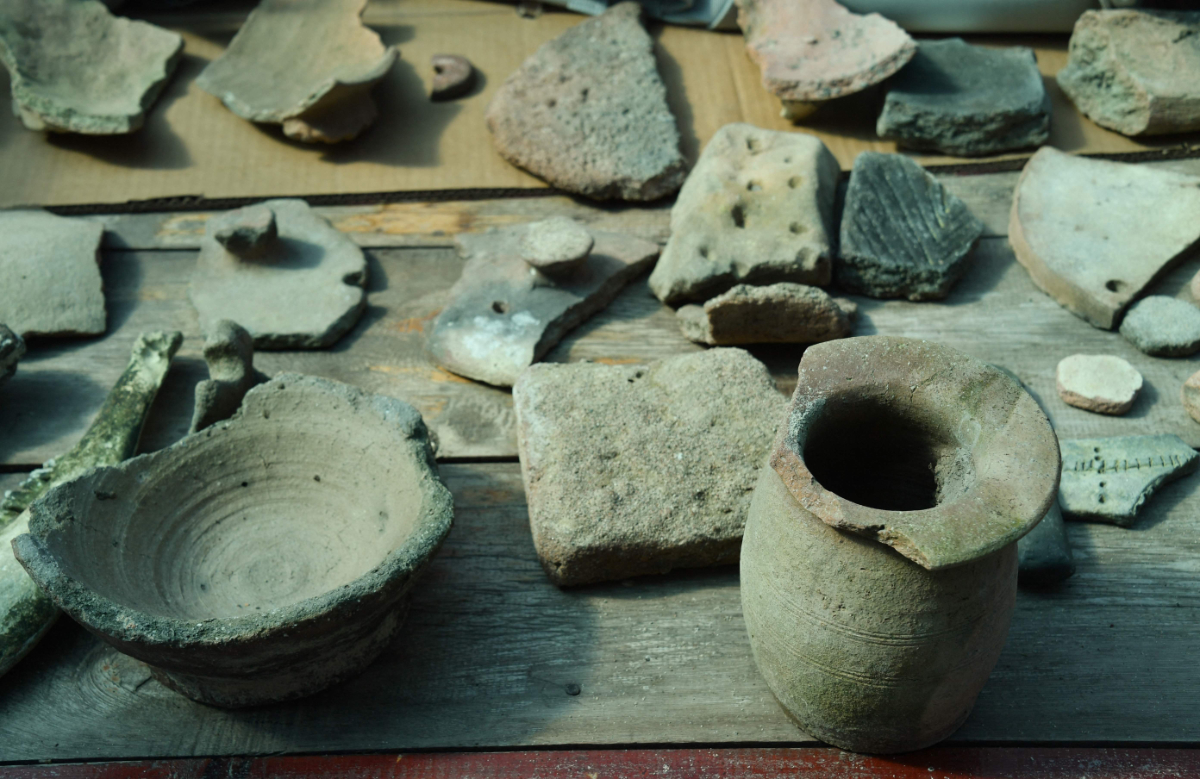
- Among the better-preserved finds is a child's chamber pot, a tuvaq, a type the expedition director says is still used in Central Asia and the Caucasus.
Compiled by The ScientistSomething wrong?How this is made
Why it matters
- constraint Until the bones and pottery are dated, placing the town under Karakhanid rule is an inference from who is thought to have held the route.
- contradiction Menshikov's Pompeii framing needs a sudden end, while the theories on record still include a slow flood behind a tectonic dam.
- capability Bone analysis is the route to describing the inhabitants of a town whose name and population are unknown.
"The visibility isn't very good today, but I hope we'll still be able to find the boundary of the settlement," Elizaveta Bodrova, a 42-year-old diving volunteer, told AFP before going over the side of a motorboat [21]. That boundary decides the only size figure on record. Researchers believe the city, whose name and population are unknown, may have covered up to five square kilometres [5]. While divers are still looking for its edge, that figure is an upper estimate.
The finds from one morning were modest. After several hours on the lakebed, the divers came back with animal bones and pottery shards [9]. Viktor Pozdnyakov, a 22-year-old diver and laboratory assistant on the team, explained the plan for each. "The bones that have been found will enable archaeologists to determine their diet and the age of the remains, as well as the diet of the people who lived in this region," he said [10]. Of the shards, he said: "The pottery will enable us to date the finds and determine the approximate period more precisely" [11].
The flood itself is dated only by an estimate of about 800 years ago [2], and AFP did not report how that figure was reached. The Karakhanids, a Turkic dynasty that controlled much of Central Asia until the early 13th century, are thought to have held this section of the Silk Road while the settlement existed [4]. Counted back from 2026 [20], the flood estimate lands around the 1220s, in the same early 13th century in which Karakhanid control ended [1]. That overlap is between two approximate dates. Dates from the site would show whether the timing really matches. They would not, by themselves, show that one caused the other.
Maxim Menshikov, the expedition director, reaches for a bigger comparison. "You could compare this research to that of Pompeii," he said [14]. "They had a highly developed civilization and culture. And in an instant, nature simply destroyed it all" [15]. What submerged the city is unknown [16]. A landslide, one of the theories, would fit Menshikov's instant. The other theory, gradual flooding behind a "tectonic dam" formed after an earthquake, would not [16]. Andrei Strelnikov, a geologist with the Russian Academy of Sciences, said the probable cause was a "past seismic disaster" [17].
AFP reports that the findings could shape understanding of the history of Central Asia and beyond [22]. I think that is fair as a statement of what the site might yield. As evidence it is early, because the objects recovered so far still have to be dated. Menshikov's case for the stakes rests on where the ruins sit. "This is actually a blind spot in history, even though it is right in the center of Central Asia," he said [13].
What to watch
- Dates from the pottery and bone analysis, and whether they fall inside the ninth-to-early-13th-century span of Karakhanid control.
- Whether divers find the settlement's boundary and so test the estimate of up to five square kilometres.
- Geological evidence that separates a sudden landslide from slow flooding behind a tectonic dam.