Korea's new battery complex at Gwangyang Bay starts with POSCO affiliates' existing plans
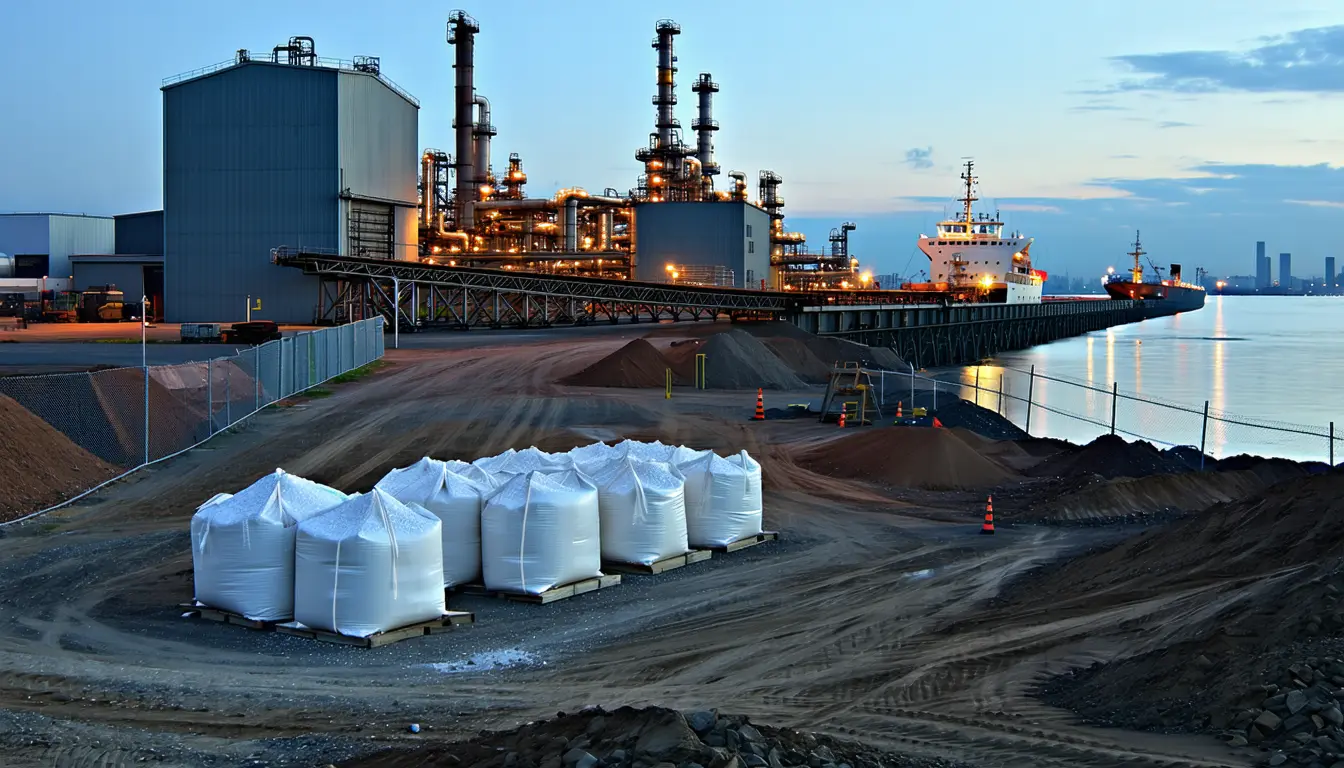
South Korea designated six Gwangyang Bay industrial parks, covering 21.3 million square meters, as a national battery complex centered on raw materials. The city will first speed up plans by POSCO affiliates and other incumbents, under a 12.99 trillion won investment goal shared with robotics and defense.
The Investor · Invest desk
What happened
- POSCO affiliates already lead a raw-materials and components production system in the area with 83,000 metric tons of annual capacity.
- The city will sharply expand water supply, wastewater treatment, electricity and access roads, centered on the Sepung Industrial Complex.
- Korea's existing battery complexes in Cheongju, Pohang, Ulsan and Saemangeum focus on cells and materials, and Gwangyang Bay adds the raw-materials link long called weak.
- The city began with a 2023 ordinance to promote the industry and won final designation after presentation reviews in May and July.
Why it matters
- Who's exposed exposure Early results at the complex depend on the capital schedules of incumbents led by POSCO affiliates, since the city is aiming its administrative effort at them first.
- What it limits constraint Private investment in the six parks can move only as fast as the Sepung water, power and road work, so the public-works schedule sets the pace for company capital.
- Who has to decide decision Cell and energy-storage makers now have to weigh sitting next to lithium, nickel and cathode supply against joining the cell clusters that already exist elsewhere in Korea.
The 12.99 trillion won is company spending that the government says it will support through 2042. It covers all three complexes named in this round: robotics in Gumi and Pohang, defense in Changwon, batteries in Gwangyang, Yeosu and Suncheon [10][11]. Over the roughly 16 years to 2042, that averages about 810 billion won a year for the whole round [15]. If the three complexes split it evenly, the battery complex would get about 4.33 trillion won, or some 270 billion won a year [14][16].
The first claim on the designation goes to capital already committed. The city said it will focus administrative resources in particular on speeding up the investment plans of companies already operating in or committed to the area, POSCO Group affiliates among them [4]. The existing base covers lithium and nickel refining and smelting, cathode materials, graphite and used-battery recycling [6]. Recruiting firms in equipment, parts, cells, energy storage and recycling, segments the city calls relatively underrepresented, is a parallel aim [5].
The city did not say what the water, power and road work around Sepung will cost or who will pay for it [3]. It also wants the designation to get its key regional projects written into the central government's development plan [3].
One outcome is that the designation mostly ratifies timetables POSCO's affiliates had already set, adding little capital that was not coming anyway [4]. Another is that water and power were the real limit, so faster infrastructure pulls committed projects forward and brings tonnage online sooner. A third is that cell and energy-storage makers stay with the complexes in Cheongju, Pohang, Ulsan and Saemangeum, which already focus on cells and materials [8], and Gwangyang Bay stays the upstream supplier it is today. I think the first is the likeliest in the next few years, because the city's own priority list starts with firms already on site [4]. The second is the strongest counter-case. If pipes and power lines were holding back committed projects, speeding them up is how new capacity arrives.
"With this designation, the Gwangyang Bay area has become a national strategic base responsible for South Korea's battery supply chain," Min Hyung-bae, mayor of Jeonnam-Gwangju Special Metropolitan City, said [12]. He added: "Now we must produce results worthy of the name specialized complex" [13].
What to watch
- A company other than a POSCO affiliate committing to a cell, energy-storage or recycling plant in the six parks would cut against the view that the designation mainly speeds up existing plans.
- Whether the central government's development plan takes in the city's regional projects and funds the Sepung water, power and road expansion.
- Any government breakdown of the 12.99 trillion won by complex; a battery share well above a third would change the per-year figure.
Information, not investment advice. This story is general information about companies and markets, drawn from cited reporting. It is not a recommendation to buy, sell or hold any security; check the cited sources before acting.
Clarity's read
What the record supports and how the coverage leans. The claims behind it follow.
Reality
- Evidence45
- Adoption30
- Hype gap+25
- Incentives65
- Confidence50
Claim ledger
Ranked by verification strength, evidence, and original report placement.
- [1]
Jeonnam-Gwangju Special Metropolitan City said on Sept. 30 it is launching efforts to develop the Gwangyang Bay area into a national supply chain base for basic raw materials and core components, after Gwangyang Bay was designated a specialized complex for secondary batteries under the national advanced strategic industries program.
- [2]
The complex covers six industrial parks in the Gwangyang Bay area, including the Yulchon No. 1 General Industrial Complex and the Haeryong General Industrial Complex, spanning 6.45 million pyeong, or about 21.3 million square meters.
- [3]
The city plans to use the designation to have its key regional projects incorporated into the central government's development plan, and will sharply expand core infrastructure for corporate investment, including water supply, wastewater treatment, electricity and access roads, centered on the Sepung Industrial Complex.
- [4]
Administrative resources will focus in particular on accelerating the investment plans of companies already operating in or committed to the area, including POSCO Group affiliates.
- [5]
At the same time, the city intends to attract firms in equipment, parts, battery cells, energy storage systems and used-battery recycling, segments relatively underrepresented in the Gwangyang Bay area.
- [6]
The region's industrial base spans refining and smelting of basic raw materials such as lithium and nickel, production of core materials including cathode materials and graphite, and recycling of used batteries.
- [7]
A production system for raw materials and components with annual capacity of 83,000 metric tons is in operation in the area, led by POSCO affiliates.
- [8]
The raw materials and components segment has long been cited as a weak link in the domestic secondary battery supply chain; Gwangyang Bay's raw materials supply chain is added to the existing network of specialized complexes in Cheongju, Pohang, Ulsan and Saemangeum, which focus on cells and materials.
- [9]
The city enacted an ordinance to promote the battery industry in 2023, designated Gwangyang Bay an opportunity development zone in 2024, held a National Assembly forum in 2025, signed agreements with 10 universities in February this year, then submitted a development plan and secured final designation after presentation reviews in May and July.
- [10]
The government newly designated three national advanced strategic industry specialized complexes, covering robotics, defense and secondary batteries, and plans to support a combined 12.99 trillion won in private investment through 2042.
- [11]
Gumi and Pohang were selected for robotics, Changwon for defense, and Gwangyang, Yeosu and Suncheon for secondary batteries.
- [12]
"With this designation, the Gwangyang Bay area has become a national strategic base responsible for South Korea's battery supply chain,"
- [13]
"Now we must produce results worthy of the name specialized complex."
- [14]
An even three-way split of the 12.99 trillion won would give the battery complex about 4.33 trillion won.
- [15]
Spread over roughly 16 years to 2042, the 12.99 trillion won averages about 810 billion won a year across all three complexes.
- [16]
On an even split, the battery complex's share would average about 270 billion won a year to 2042.
Get this ledger inside ChatGPT. Ask about any of our stories and the answer brings its figure, each claim’s verdict and the sources. Free, no account.
Sources
1 independent publisher whose own reporting we read for this story.
- en.sedaily.comGwangyang Bay Named Battery Materials Hub in Korea
1 article · September 30, 2026
Topics and entities
Follow any of these and your For You feed starts watching them — no settings page required.
Topics
- South Korean industrial policyFollow
- Battery recyclingFollow
- Battery Supply ChainFollow
Entities
- Gwangyang BayFollow
- POSCO GroupFollow
- Min Hyung-baeFollow
- Jeonnam-Gwangju Special Metropolitan CityFollow