InvestIndependently confirmed3 publishers2 min readPublished
Grayscale's ZCSH puts Zcash in brokerage accounts, and none of its ZEC is shielded
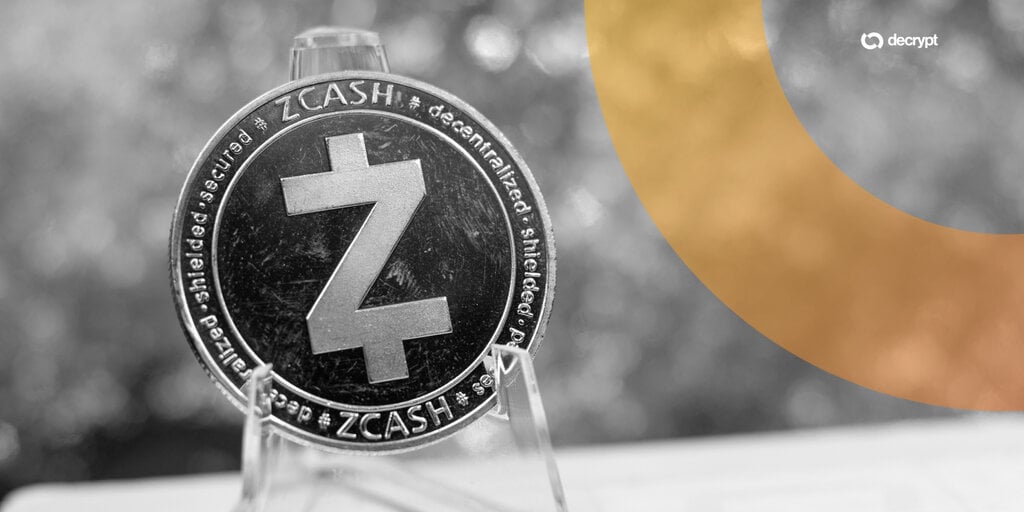
The first US spot Zcash product gives brokerage accounts price exposure to a privacy coin while holding its ZEC in transparent custody. Allocators now have to argue the asset, not the access.
The Investor · Invest desk
What happened
- Grayscale's ZCSH began trading on NYSE Arca on August 25, the first US exchange-traded product offering spot exposure to Zcash's ZEC.
- The fund charges 2.50% a year, roughly ten times the fee on a typical Bitcoin ETF.
- The listing comes months after developers disclosed and patched a critical vulnerability in Zcash's shielded transaction system.
- CoinShares' August survey of 30 managers overseeing about $1.16 trillion found digital asset allocations back up to 1.2%, with Zcash named by respondents.
- The vehicle is nine years old: it started as a private placement in October 2017, with the conversion filing made in November.
Why it matters
- cost On launch assets of about $313 million, the fee takes roughly $7.8 million a year out of shareholder returns, with early revenue routed back into Zcash ecosystem development.
- decision Screens that kept privacy coins out of client portfolios can no longer lean on the absence of a regulated product, so the policy has to be rewritten around the network or the wrapper.
- exposure Buyers get a familiar brokerage line item backed by a trust that is not registered under the Investment Company Act of 1940, which is less protection than the format implies.
- contradiction Grayscale sells the fund on demand for genuine financial privacy as AI expands monitoring of financial activity, while what a shareholder receives is a tracking share and no capacity to transact...
The only comparable ZEC position anyone has disclosed belongs to Cypherpunk Technologies, which reported 323,394.38 ZEC as of August 11 and put that at about 1.92% of circulating supply [19]. Work backwards and Zcash has roughly 16.8 million coins outstanding [25]; a $13.2 billion market cap at $784 a coin gives the same answer [13][12][28]. ZCSH launched holding about 387,000 ZEC [5], around 2.3% of supply [21] on its first day, a larger stack than the Nasdaq-listed treasury company that has been accumulating at an average price of $341.83 [19].
None of it is shielded. The pool that makes Zcash a privacy network holds about 4.4 million ZEC, 26% of supply [15]; the fund's coins come to roughly 8.8% of that pool's size [22] and sit outside it, in Coinbase custody wallets [6], with BNY as administrator and Jane Street and Virtu as authorized participants [4]. That is the compliance question in one line: the instrument is as traceable as a Bitcoin ETF, and the asset it tracks is not.
The harder diligence problem sits upstream. In May, according to Decrypt, researcher Taylor Hornby used Anthropic's Claude Opus 4.8 to find a four-year-old flaw in Zcash's Orchard shielded pool that could have minted counterfeit ZEC, and once it was patched on June 1 the network's own privacy made it impossible to determine cryptographically whether anyone had exploited it [3]. July's remedy caps how much ZEC can leave the retired pool at what entered it, trapping any fakes rather than proving none exist [8]. Anyone underwriting supply integrity here is relying on bookkeeping, not on proof.
The entry point is not gentle either. Perpetual futures open interest went from $962.5 million on August 19 to nearly $1.8 billion by Monday [16], an 87% build in six days [26], on $5.3 billion of daily futures volume, close to three times open interest [16][27]. Funding stayed positive across venues, 0.0180% on Bybit against 0.0100% on Binance and OKX [17]. ZEC touched $880, an eight-year high, and was at $784 by Wednesday morning [12], about 11% lower [23]. Grayscale's own framing is a higher-risk satellite holding, complementary to Bitcoin rather than a replacement [9], which is an unusually honest label to hang on a product that opens a new asset class to advised money [2].
What to watch
- Whether ZCSH's coin count grows from its launch balance, which is the only clean read on brokerage-account demand rather than legacy trust holders.
- Grayscale says it is monitoring exchange support and regulatory treatment of privacy assets; a delisting or a state-level restriction would narrow the wrapper's reach.
- Whether a second issuer files for a privacy-asset ETP, and whether that undercuts the 2.50% fee.
Clarity's read
What the record supports and how the coverage leans. The claims behind it follow.
Reality
- Evidence71
- Adoption56
- Hype gap+20
- Incentives74
- Confidence70
Perspective Coverage
3 publishers- Builder
- Builder 27%
- Operator
- Operator 25%
- Investor
- Investor 48%
Claim ledger
Ranked by verification strength, evidence, and original report placement.
- [1]
Grayscale's Zcash ETF (ticker ZCSH) began trading on NYSE Arca on Tuesday, August 25, giving investors spot exposure to ZEC through a traditional brokerage account.
- [2]
According to Grayscale, ZCSH is the first ETF to provide spot access to Zcash, allowing the privacy-oriented cryptocurrency to be traded through a regular brokerage account, as no regulated products had done so until now.
- [3]
In May, security researcher Taylor Hornby used Anthropic's Claude Opus 4.8 to discover a four-year-old vulnerability in Zcash's Orchard shielded pool that could have allowed an attacker to create counterfeit ZEC; developers deployed an emergency patch on June 1, and the network's privacy features made it impossible to determine cryptographically whether the flaw had been exploited.
- [4]
ZCSH converts Grayscale's long-running private Zcash Trust into a redeemable exchange-traded product holding actual ZEC, custodied by Coinbase, with BNY as administrator and Jane Street and Virtu as authorized participants.
- [5]
The fund launched with roughly 387,000 ZEC, about $313 million in assets under management.
- [6]
ZCSH holds its ZEC in transparent Coinbase custody wallets, so the ETF gives investors price exposure without touching the shielded technology that makes Zcash a privacy asset.
- [7]
The product began as the Grayscale Zcash Trust in October 2017 as a private placement, and Grayscale filed with the SEC in November to convert the trust into an exchange-traded fund.
- [8]
In July, Zcash activated the Ironwood upgrade, replacing Orchard with a new shielded pool and adding accounting rules that prevent more ZEC from leaving the retired pool than entered it, trapping any counterfeit coins that may exist.
- [9]
Grayscale Head of Index Steve Vanourny: "We view ZCSH as a focused, higher-risk satellite position within a broader digital-asset allocation that is complementary to, but not a replacement for, Bitcoin."
ReportedSupportedSource: Steve Vanourny, Head of Index, Grayscale, to Decrypt2 sources— create a free account to open themView cited source - [10]
Grayscale's Head of Index Steve Vanourny linked the launch to a wider privacy thesis: "As AI reshapes how financial activity can be monitored, we believe demand for genuine financial privacy will only grow."
ReportedSupportedSource: Steve Vanourny, Head of Index, Grayscale2 sources— create a free account to open themView cited source - [11]
Vanourny said Grayscale will judge Zcash by adoption, utility and network security rather than price, and will monitor the Ironwood rollout as well as exchange support and regulatory treatment of Zcash and privacy assets more broadly.
- [12]
ZEC reached $880 before the fund's launch, its highest level in eight years, and was trading at $784 by Wednesday morning according to CoinMarketCap.
- [13]
ZEC had a market capitalisation of $13.2 billion on Wednesday morning, making it the 11th largest cryptocurrency, per CoinMarketCap.
- [14]
ZCSH charges a 2.50% annual fee, about 10x a typical Bitcoin ETF, with early fee revenue earmarked for Zcash ecosystem development.
- [15]
Zcash's shielded pool holds roughly 4.4 million ZEC, about 26% of supply, and July's Ironwood upgrade made it more efficient.
- [16]
ZEC perpetual-futures open interest rose from $962.5 million on August 19 to nearly $1.8 billion as of Monday, with overall daily futures volume of $5.3 billion, according to Loris Tools data.
- [17]
Funding rates were positive on major exchanges: 0.0100% on Binance and OKX and 0.0180% on Bybit, with an overall average of 0.0106%, meaning leveraged traders paid higher costs to stay long.
- [18]
CoinShares' August fund manager survey of 30 participants controlling around $1.16 trillion reported digital asset allocations rising to 1.2% of portfolios, the first uptick since the October 2025 sell-off began, with the "other" category seeing the largest increase and respondents naming Zcash alongside HYPE and SUI.
- [19]
Cypherpunk Technologies (Nasdaq: CYPH) disclosed it holds 323,394.38 ZEC as of August 11, about 1.92% of circulating supply, at an average price of $341.83, and recorded a $46 million unrealised gain on its ZEC exposure in second-quarter results.
- [20]
ZCSH's prospectus makes clear the trust is not registered under the Investment Company Act of 1940.
- [21]
ZCSH's launch holding of about 387,000 ZEC is roughly 2.3% of circulating supply.
- [22]
ZCSH's 387,000 ZEC equals about 8.8% of the size of the 4.4 million ZEC shielded pool.
- [23]
ZEC at $784 was about 11% below its $880 high.
- [24]
A 2.50% annual fee on about $313 million of launch assets is roughly $7.8 million a year.
- [25]
Cypherpunk's 323,394.38 ZEC at 1.92% of circulating supply implies roughly 16.84 million ZEC outstanding.
- [26]
Open interest rose about 87% between August 19 and the following Monday, a span of six days.
- [27]
Daily futures volume of $5.3 billion is close to three times the nearly $1.8 billion of open interest.
- [28]
A $13.2 billion market cap at $784 a coin implies about 16.84 million ZEC in circulation, matching the figure implied by Cypherpunk's disclosure.
Sources
3 independent publishers whose own reporting we read for this story.
- bankless.comGrayscale's Zcash ETF Begins Trading on NYSE Arca
1 article · August 25, 2026
- cryptopolitan.comFirst US privacy-coin ETF lists as Grayscale’s ZCSH opens ZEC to Wall Street
1 article · August 25, 2026
- decrypt.coGrayscale Launches Zcash ETF Following Critical Privacy Flaw That Rocked the Cryptocurrency
1 article · August 25, 2026
Topics and entities
Follow any of these and your For You feed starts watching them — no settings page required.
Topics
- Institutional digital-asset allocationFollow
- Custody and fund infrastructureFollow
- Privacy CoinsFollow
- Crypto ETFsFollow
- AI-assisted vulnerability researchFollow
- Protocol security and supply-integrity upgradesFollow
Entities
- NYSE ArcaFollow
- Steve VanournyFollow
- GrayscaleFollow
- Jane StreetFollow
- NU7Follow
- BNYFollow
- Investment Company Act of 1940Follow
- SECFollow
- ZcashFollow
- Loris ToolsFollow
- Claude Opus 4.8Follow
- Grayscale Zcash ETF (ZCSH)Follow
- Ironwood (NU6.3)Follow
- Orchard shielded poolFollow
- Taylor HornbyFollow
- CoinSharesFollow
- CoinbaseFollow
- CoinMarketCapFollow
- VirtuFollow
- Cypherpunk TechnologiesFollow
- AnthropicFollow