Preprint ties past sundown towns to higher racial bias across 1.3 million white participants
Counties that once had a sundown town show higher implicit and explicit racial bias in a UC Riverside preprint of more than 1.3 million white participants. The authors do not claim the towns caused the difference.
The Scientist · Science desk
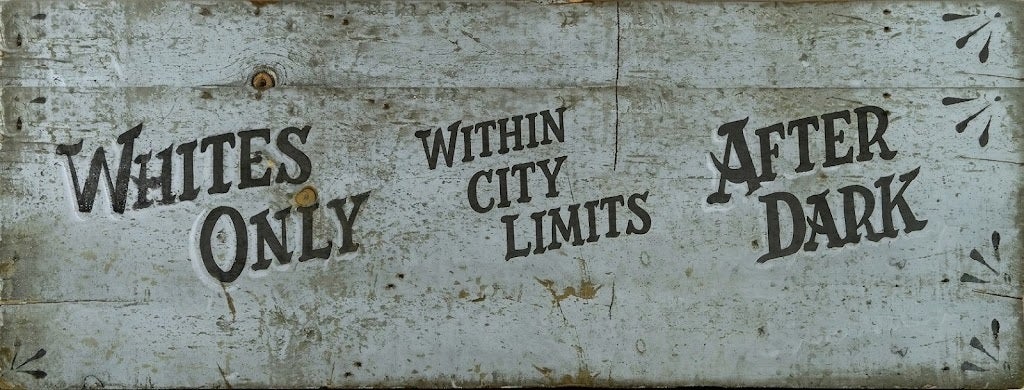
What happened
- The responses come from Project Implicit, an international coalition of psychological scientists, in data collected between 2002 and 2024.
- The authors coded sundown status three ways: at least one town in the county, the number of towns, and whether the whole county counted as a sundown county.
- They adjusted for each county's 1860 share of enslaved people and its share of Black residents during the Great Migration, and neither explained the result.
- Implicit skin-tone bias also tracked sundown status, while explicit skin-tone bias did not.
- Sundown status predicted implicit age bias but not explicit age bias, and was positively associated with disability bias.
Why it matters
- constraint A county comparison cannot separate towns that shaped residents from places that kept or drew biased ones, and the lead author's own account describes both routes.
- contradiction Age and disability bias also track sundown status, which fits a general marker of prejudiced places at least as well as a legacy specific to race.
- decision Anyone tempted to use sundown-town status as a place-level risk flag should treat it as a proxy, since the authors themselves decline to call it a cause.
With roughly 650,000 participants on each side of the comparison [14], chance is the smaller worry. Size and scope are different things, though. The phys.org account does not report how large the gap is or how many counties the sample covers, and the county count matters. Sundown status is a property of a county, so we'd expect the number of counties to limit the evidence more than the number of people does.
The harder problem is direction. Calanchini, who led the work, said that the forces behind biased institutions "continue to shape the biases of people who live and work in them, and also attract more biased people to those places, which further perpetuates the cycle of bias in places." [13] A comparison across counties cannot tell a town that shaped its residents from a place that drew or kept biased ones. The authors stop short of concluding that sundown towns' legacies directly cause modern prejudicial attitudes. They point instead to discriminatory policing and laws, limited interracial contact and violence as patterns that persist [11].
The count of towns is the more direct test of an exposure story, and it comes out null. If exclusion left a cumulative mark, a county with several sundown towns should score above a county with one. It did not: towns beyond the first predicted neither implicit nor explicit bias [10]. The phys.org summary of the authors' conclusion is that the link to racial bias sits next to a wider pattern, with sundown towns more prone to prejudice generally [12].
We would read the result as a county-level association that survives two historical adjustments, and no more. Sundown status may flag places that are more biased for several reasons, the towns' own history among them. Of the ways these counties could differ, the account describes adjusting for two. The paper is a preprint on PsyArXiv [8], so the numbers can still change before any journal version.
What to watch
- Whether a journal version reports effect sizes and the number of counties behind the 1.3 million participants.
- Whether the result holds when sundown counties are compared with similar counties that never had a sundown town.
Clarity's read
What the record supports and how the coverage leans. The claims behind it follow.
Reality
- Evidence50
- Adoption
- Insufficient
- Hype gap−5
- Incentives
- Insufficient
- Confidence50
Claim ledger
Ranked by verification strength, evidence, and original report placement.
- [1]
The sample was more than 1.3 million white participants, about half living in counties with at least one sundown town and half in counties with none.
- [2]
The sample was part of a large racial bias data set collected from 2002 to 2024 by Project Implicit, an international coalition of psychological scientists.
- [3]
The researchers considered sundown towns in three ways: whether a county had at least one, how many it had, and whether the county as a whole was considered a sundown county.
- [4]
The researchers statistically accounted for the proportion of enslaved people in a county in 1860 and the proportion of Black people in a county during the Great Migration, and found these did not explain the sundown town findings.
- [5]
A sundown town was a predictor of implicit skin-tone bias, but not explicit skin-tone bias.
- [6]
Sundown towns predicted implicit age bias but not explicit age bias, and had positive associations with disability bias.
- [7]
Counties with at least one sundown town and counties identified as sundown counties have higher implicit and explicit racial bias today than counties with no sundown town.
- [8]
The study was published on the preprint server PsyArXiv.
- [9]
The study was led by UC Riverside psychology professor Jimmy Calanchini, with colleague Maximilian Primbs.
- [10]
The presence of more sundown towns beyond the first one within a county did not predict either implicit or explicit bias.
- [11]
The authors stop short of concluding that sundown towns' legacies directly cause modern prejudicial attitudes; they suggest legacies of discriminatory policing and laws, limited interracial contact and violence established patterns that persist.
- [12]
The authors' conclusion suggests a link between sundown towns and racial bias, but also indicates sundown towns are more prone to prejudice generally.
- [13]
"continue to shape the biases of people who live and work in them, and also attract more biased people to those places, which further perpetuates the cycle of bias in places."
- [14]
Roughly 650,000 participants lived in counties with a sundown town and roughly 650,000 in counties without.
Get this ledger inside ChatGPT. Ask about any of our stories and the answer brings its figure, each claim’s verdict and the sources. Free, no account.
Sources
1 independent publisher whose own reporting we read for this story.
- phys.org'Sundown towns' linked to lingering racial bias
1 article · October 14, 2026
Topics and entities
Follow any of these and your For You feed starts watching them — no settings page required.