Science1 publisher2 min readPublished
Day-old butter chicken was the one leftover Deakin's blind tasters preferred
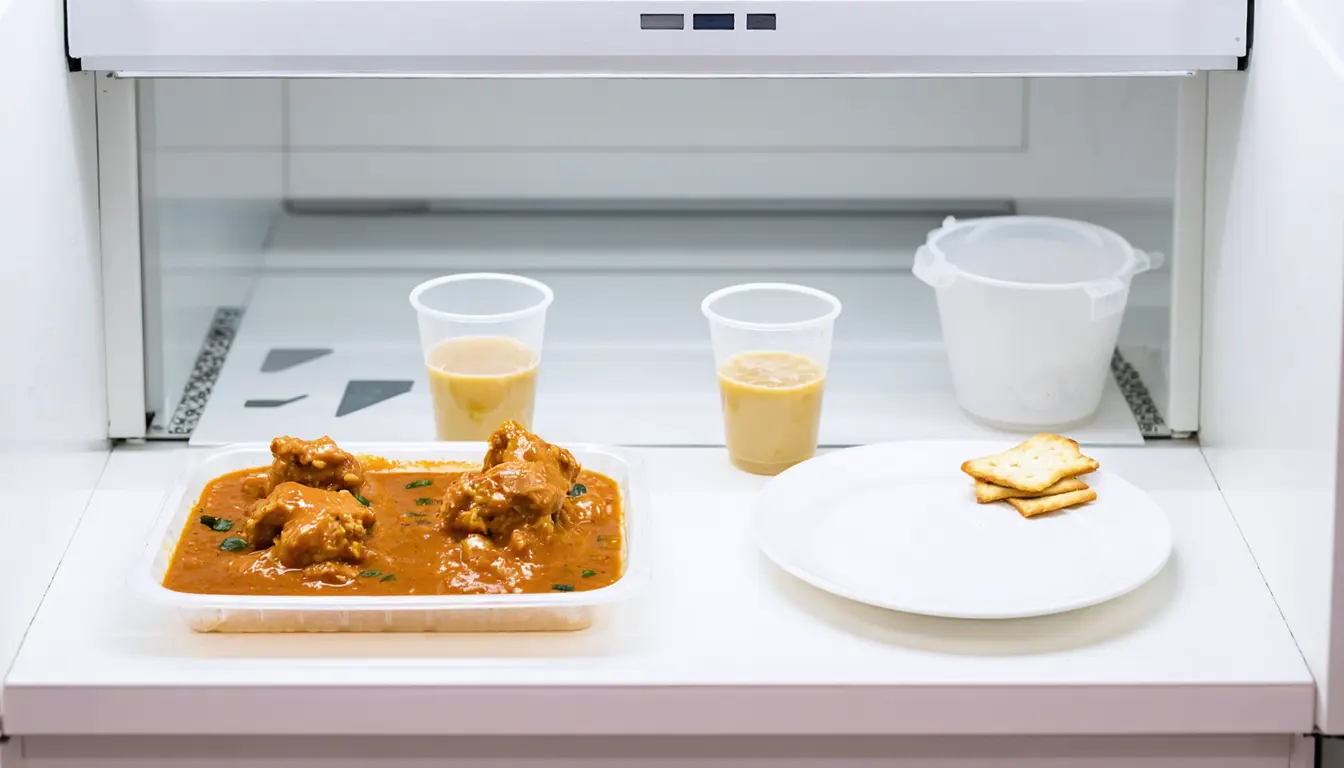
Deakin University's blind tasters preferred day-old butter chicken in nearly 64% of comparisons, the only one of four dishes to win as a leftover. Scored on their own, none of the four rated differently fresh or reheated, so the answer depends on how the question is put.
The Scientist · Science desk
Drafted by a language model from the sources cited here and checked against its claim ledger before publication. How we use AISend a correction
What happened
- A panel of 30 university staff and students picked the test dishes from a list of 25: beef lasagna, butter chicken, dhal and apple crumble, the four they most believed improve overnight.
- A separate group of 65 adults tasted randomly coded samples over two sessions, some made that day and some 24 hours earlier, refrigerated and reheated, without knowing which was which.
- Beef lasagna was the only dish tasters could not reliably tell apart fresh from day-old.
- Dhal and apple crumble tasted detectably different after a night in the fridge, yet tasters were about as likely to prefer the fresh version as the leftover.
Compiled by The ScientistSomething wrong?How this is made
Why it matters
- decision Anyone making these four dishes a day ahead took no measurable hit on liking scores in this test, so cooking early carried no taste penalty here.
- constraint One unreviewed preprint with 65 tasters, a single 24-hour interval and the team's own recipes cannot yet support claims about other dishes, other recipes or longer storage.
- capability With the exact recipes in the supplementary materials, another lab or a home cook can rerun the same four dishes and check whether the butter chicken preference reappears.
The difference test included identical pairs, and those pairs are the control. Given two identical samples of dhal, tasters said "different" just over half the time. Given one fresh and one day-old, they said it 83 percent of the time [6]. Dhal's real detection margin is the gap between the two, under 33 percentage points [1].
Telling two dishes apart and liking one more are separate questions. The study asked them separately, along with a third: how much tasters liked each sample on its own [5]. Butter chicken won the side-by-side comparisons [2]. Its solo liking score did not differ significantly between fresh and day-old [9]. "These findings show that the next-day effect is modest, food-specific, and dependent on the sensory outcome measured," Keast and colleagues wrote [10]. I think the likeliest reading is a real but small preference. A forced choice between two similar plates can pick up a lean that a single rating does not.
The four dishes were the selection panel's strongest candidates [3], so the test started from the belief's best cases. One of the four, 25 percent, won on preference [2], and none won on solo liking [9]. As a general rule about leftovers, the belief fares poorly in this experiment. The narrower claim survives: a sauce-heavy curry can beat its fresh self in a direct comparison. It survives in a preprint that has not yet been peer reviewed [1].
The result matches the first author's own experience. Russell Keast trained as a chef before becoming a food and sensory scientist [11], and his own example of the effect was a curry. "You have a takeaway curry one night, then eat the leftovers for breakfast the next morning, and somehow it seems even better," he told New Scientist [12].
The thing this doesn't tell you is why butter chicken improved. The study measured what people tasted, not the chemistry behind it [13]. The researchers suggest that a sauce-rich dish gives flavor and aroma compounds more chances to shift around in the fridge before the next day than a dish with more structure, such as lasagna, does [14].
What to watch
- Whether the preprint's statistics, especially the butter chicken preference, hold up through peer review.
- A chemistry study measuring flavor and aroma compounds in fresh and day-old butter chicken, to test the redistribution idea the team proposed.
- A larger panel testing whether the side-by-side preference for day-old butter chicken ever shows up in solo liking scores.