Fink says halting data center construction would push the U.S. into recession
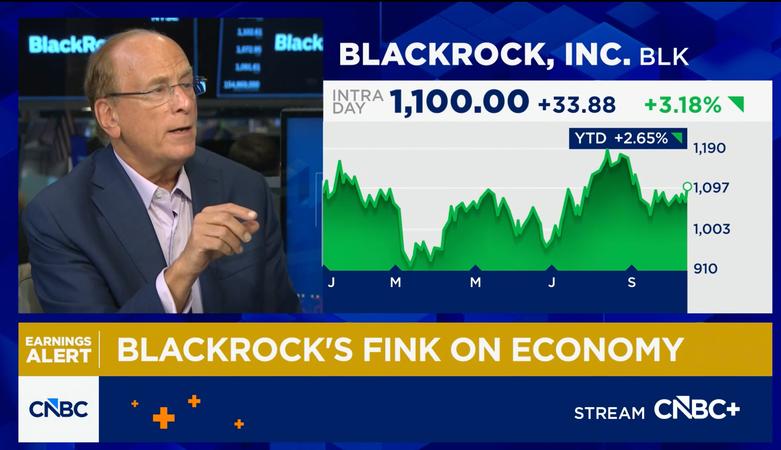
BlackRock CEO Larry Fink told CNBC that a data center moratorium would put the U.S. in a recession. Moody's puts this year's capex at $700 billion, and Fink separately warned that the national debt has reached $40 trillion.
The Investor · Invest desk
Moody's puts planned U.S. data center capex at $700 billion this year and at least $2.4 trillion through 2030, up to $2.48 trillion. At least 49% of Americans told Pew data centers are mostly bad for the environment, home energy costs and nearby quality of life.
| Figure | Value | Note | Claim |
|---|---|---|---|
| Planned U.S. data center capex this year, per Moody's | 700 billion dollars | 3 | |
| U.S. data center spending through 2030, Moody's, at least | 2.4 trillion dollars | up to $2.48 trillion | 4 |
| Americans who say data centers are mostly bad, at least | 49% | Pew Research Center survey | 5 |
What happened
- Moody's puts the U.S. total at $2.4 trillion to $2.48 trillion through 2030 and global data center spending at $7 trillion by the end of the decade.
- At least 49% of Americans told a Pew Research Center survey that data centers are mostly harmful to the environment, to what households pay for energy and to quality of life in the areas around them.
- Fink answered that most of the fears are "misinformation" and said "Data centers are not the problem."
- On the debt, Fink linked the borrowing to credit demand and said bond auctions are getting "larger and larger."
- BlackRock reported third-quarter net inflows of $205 billion, revenue up 19% and an operating margin of 47.8%.
Why it matters
- exposure Construction crews, energy infrastructure and AI compute hardware, the demand Fink cites, are the sectors a moratorium would reach directly.
- constraint Fink's own remedy for the debt, unlocking private capital to reach 3% growth, leans on the same corporate spending a moratorium would stop.
- exposure Crypto holders are exposed through risk appetite: a recession typically cuts it, and bitcoin, near $81,200 at press time, has historically sold off in broad risk aversion.
CoinDesk's report of the interview leaves the Moody's range hard to use. Against the $700 billion Moody's puts on this year [3], the top of the range, $2.48 trillion through 2030 [4], works as a cumulative total only if later years are smaller. Spread over the five years from 2026 to 2030, it averages about $496 billion a year [14]. Five years at this year's pace would come to $3.5 trillion [15]. The article's phrase "rising to" fits an annual figure for 2030 better, but it does not define the window.
Fink's causal claim rests on one sentence. "So much of our economy is based on the buildout of this capex," he said [19]. The CoinDesk report does not include an estimate of data center spending as a share of output, a model of what a halt would do, or the text of any moratorium proposal; Fink spoke of "a moratorium of some sort" [1]. A recession, in the article's definition, is two straight quarters of shrinking output [2].
We'd treat the claim as plausible and untested. It fails if capex falls sharply and output still grows for two quarters, and it holds if a contraction begins when construction stalls. The competing reading is that opposition slows projects one site at a time, so any damage would show in the capex estimates well before it showed in output.
The debt is a separate calculation. Fink said it went from $8 trillion in 2000 to $40 trillion in 2026 [7], a fivefold rise [16]. "We grew $32 trillion in 26 years," he said [8], or about $1.23 trillion a year [17]. That is roughly 1.8 times Moody's figure for this year's data center spending [18].
His remedy is private money. "We need to unlock private capital to grow the U.S. economy by 3%," he said [10]. CoinDesk describes companies as the ones pouring money into data centers [20], and lists sticky inflation and rising bond yields among the strains already on the economy [21].
What to watch
- Whether Moody's clarifies if its $2.4 trillion to $2.48 trillion range is a cumulative total or an annual figure for 2030.
- Any named moratorium proposal, since Fink's warning covers only "a moratorium of some sort."
- Whether bond yields keep rising as auctions grow, the strain Fink ties to government credit demand.
Clarity's read
What the record supports and how the coverage leans. The claims behind it follow.
Reality
- Evidence38
- Adoption
- Insufficient
- Hype gap+35
- Incentives45
- Confidence62
Perspective Coverage
3 publishers- Builder
- Builder 13%
- Operator
- Operator 20%
- Investor
- Investor 67%
Claim ledger
Ranked by verification strength, evidence, and original report placement.
- [1]
Fink said in a CNBC interview that "a moratorium of some sort in this country" would put the U.S. in a recession.
- [2]
A recession is commonly defined as two straight quarters of shrinking economic output.
- [3]
Moody's estimates planned capital spending on U.S. data centers at $700 billion this year.
- [4]
Moody's estimates U.S. data center spending rising to between $2.4 trillion and $2.48 trillion through 2030, and global spending reaching $7 trillion by the end of the decade.
- [5]
A Pew Research Center survey found at least 49% of Americans say data centers are mostly bad for the environment, home energy costs and quality of life for those living near them.
- [6]
Fink said most of the fears about data center buildouts are "misinformation" and added, "Data centers are not the problem."
- [7]
Fink noted the national debt has gone from $8 trillion in 2000 to $40 trillion in 2026.
- [8]
Fink said: "We grew $32 trillion in 26 years."
- [9]
Fink said: "That's a massive impact on demand for credit. The government is demanding more and more credit, and bond auctions are getting larger and larger."
- [10]
Fink said: "We need to unlock private capital to grow the U.S. economy by 3%."
- [11]
Fink pointed to data centers' job creation, noting demand for construction workers, energy infrastructure and AI compute hardware.
- [12]
BlackRock reported third-quarter net inflows of $205 billion, revenue up 19% and an operating margin of 47.8%.
- [13]
A recession typically reduces investors' appetite for risky assets; bitcoin has historically faced selling pressure during broad-based risk aversion and traded near $81,200 at press time, down 0.8% since midnight UTC.
- [14]
If the Moody's $2.48 trillion is a cumulative total over 2026 to 2030, it averages about $496 billion a year.
- [15]
Five years at this year's $700 billion pace would total $3.5 trillion.
- [16]
A rise from $8 trillion to $40 trillion is a fivefold increase.
- [17]
An increase of $32 trillion over 26 years averages about $1.23 trillion a year.
- [18]
The average annual debt increase of about $1.23 trillion is roughly 1.8 times the $700 billion Moody's attributes to this year's U.S. data center spending.
- [19]
Fink said: "So much of our economy is based on the buildout of this capex."
- [20]
CoinDesk reports that companies are pouring so much money into data centers that any attempt to slow it could hurt the U.S. economy.
- [21]
The U.S. economy is already stressed on several fronts, including sticky inflation and rising bond yields.
Get this ledger inside ChatGPT. Ask about any of our stories and the answer brings its figure, each claim’s verdict and the sources. Free, no account.
Sources
3 independent publishers whose own reporting we read for this story.
- coindesk.comBlackRock's Fink names a U.S. recession trigger, sounds alarm over $40 trillion national debt
1 article · October 14, 2026
- cryptobriefing.comBlackRock’s Fink warns US data center halt could trigger recession
1 article · October 14, 2026
- qz.comBlackRock's Larry Fink warned a data center moratorium could trigger a recession
1 article · October 14, 2026
Topics and entities
Follow any of these and your For You feed starts watching them — no settings page required.