ScienceNot yet confirmed elsewhere1 publisher2 min readPublished
Genomes of a Fijian canopy bee found in 2024 imply a 99% fall in its effective population
Hylaeus navai, a Fijian canopy bee, lost about 99% of its effective population over roughly 150 years, a genetic reconstruction in Ecology and Evolution estimates. The bee was found only in 2024, so the history comes from its DNA.
The Scientist · Science desk
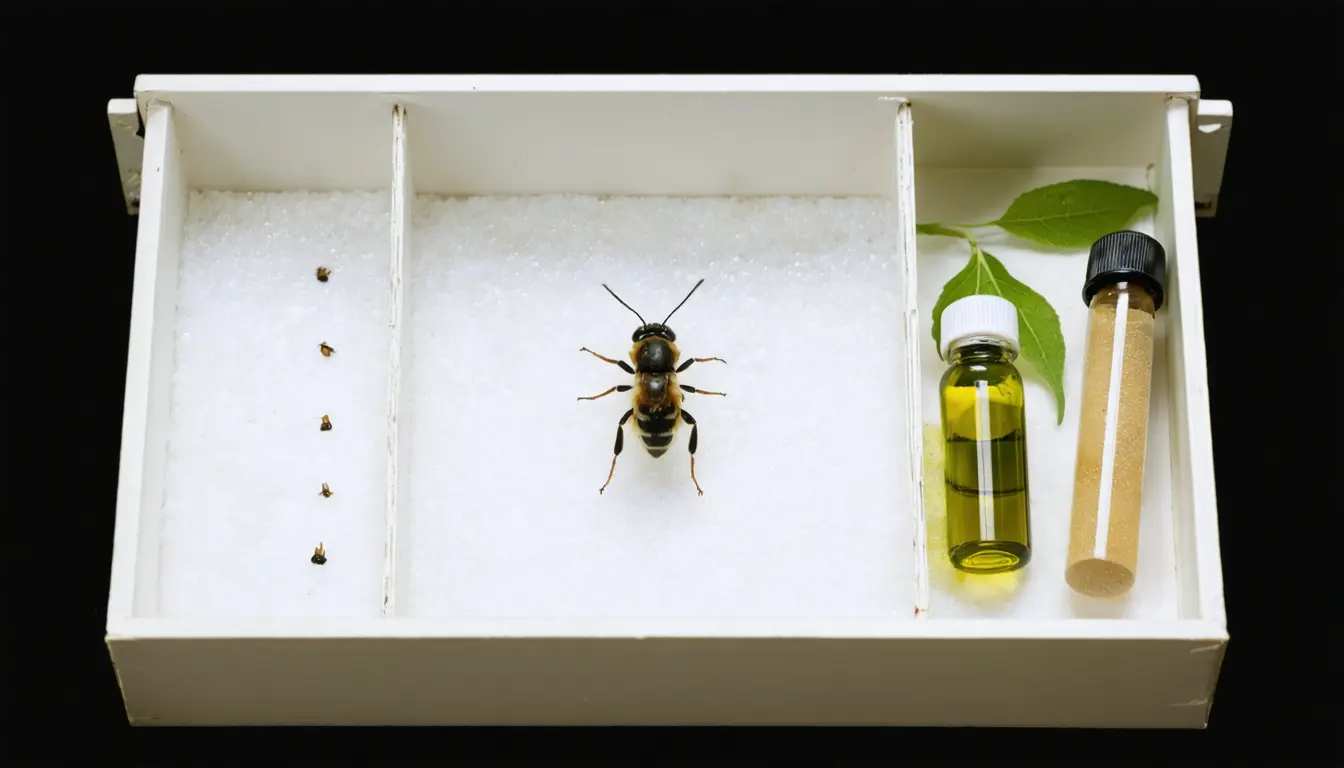
Key figures: H. navai population size fell 82% in the steepest of three separate 10-year periods the study inferred; the bees are estimated to be restricted to at least 1.4%, up to 2.4%, of Fiji's terrestrial area; DNA was analyzed from 94 bees across four species.
| Figure | Value | Note | Claim |
|---|---|---|---|
| Steepest of three 10-year declines in population size | 82% | 10 | |
| Bees' estimated range, % of Fiji's land, at least | 1.4% | up to 2.4% | 14 |
| Bees with DNA analyzed | 94 bees | 5 |
What happened
- The team sampled low vegetation and tree canopies at 54 locations on Viti Levu and analyzed DNA from 94 bees across four species.
- Genetic evidence showed reduced diversity and elevated inbreeding in H. navai, which the authors read as a severe population bottleneck.
- The reconstruction puts the fall in a series of three distinct bursts rather than a single slide across the 150 years.
- Britain officially colonized Fiji in 1874, and the deforestation, agricultural expansion and habitat fragmentation since then likely affected the bees.
- The invasive African tulip tree, introduced in 1936, has red flowers that likely attract the bees, but its nectar is known to be toxic to honey bees and stingless bees.
Why it matters
- constraint Removing the tulip tree would be a guess on current evidence, because its nectar toxicity is established for other bees and the team lists it as a proposed cause.
- exposure With the bees confined to 1.4% to 2.4% of Fiji's terrestrial area, mostly at higher elevations, there is little range left to lose beyond the highlands.
- capability Genetic reconstruction combined with historical collection records gave a decline history for a species discovered only two years ago.
The 99% is a modelled change in effective population size [2]. The estimate carries a range of roughly 82% to nearly 100% once uncertainty is counted [15].
The three bursts fit the headline figure. The study authors wrote, "Over three separate 10-year periods in H. navai's demographic history, we inferred population size declines of 61%, 76% and 82%." [10] If each decline applies to the population the previous one left, the combined fall is 1 - (0.39 x 0.24 x 0.18), or about 98.3% [16]. On that reading, nearly all of the loss sits in three decades of the 150 years.
The timing also limits what the candidate causes can explain. The study's window coincides with European colonization [1], and Britain took formal control of Fiji in 1874 [12]. The African tulip tree reached the islands in 1936 [13], 62 years later [17]. In our view that confines the tree to the later part of the decline at most. The team calls it a potential "ecological trap" [13] and notes that its explanations are proposals, not yet demonstrated causes [18].
What the study does show is that a decline of this size can be reconstructed for a canopy group that was largely overlooked until researchers began routinely sampling treetops [4]. The thing this doesn't tell you is how common that is, since the population analyses covered H. navai alone, chosen because it was more abundant in the sample [6].
The authors argue for a formal assessment. They wrote, "These declines provide evidence to justify an International Union for Conservation of Nature (IUCN) assessment, with population size declines of this magnitude aligning with criteria for a listing of critically endangered." [11] In our view that is a reasonable request, since even the low end of the estimated range is an 82% fall [15].
What to watch
- Experimental tests of African tulip tree nectar on Fijian Hylaeus, which the team says are still to be done.
- Work on how warming and cyclone damage affect the remaining highland habitat.
- Whether an IUCN assessment of H. navai is opened, as the authors say the declines justify.
Clarity's read
What the record supports and how the coverage leans. The claims behind it follow.
Reality
- Evidence58
- Adoption
- Insufficient
- Hype gap+12
- Incentives
- Insufficient
- Confidence55
Claim ledger
Ranked by verification strength, evidence, and original report placement.
- [1]
The study, published in Ecology and Evolution, indicates that the species has declined dramatically over the last 150 years, a time span that coincides with European colonization of the Fijian islands.
- [2]
DNA-based reconstruction suggested an approximately 99% decline in the effective population size of H. navai over about 150 years.
- [3]
The bee species was discovered in Fiji only two years ago; in 2024 researchers discovered six Hylaeus species endemic to Fiji.
- [4]
The native Hylaeus bees were largely overlooked until researchers began routinely sampling treetops, where the bees tend to live, feed and reproduce.
- [5]
The team sampled low vegetation and tree canopies at 54 locations on Fiji's main island, Viti Levu, and analyzed DNA from 94 bees across four species.
- [6]
Because H. navai was more abundant in their sample, the researchers focused their population analyses on this species.
- [7]
The analyses combined genetic reconstruction, historical collection records and environmental models.
- [8]
Genetic evidence showed reduced diversity and elevated inbreeding among H. navai, indicating the bees had experienced a severe population bottleneck.
- [9]
The approximately 99% decline in H. navai's effective population size came over about 150 years in a series of three distinct bursts.
- [10]
Over three separate 10-year periods in H. navai's demographic history, we inferred population size declines of 61%, 76% and 82%.
ReportedSupportedSource: Study authors, Ecology and Evolution paper, as quoted by phys.orgView cited source - [11]
These declines provide evidence to justify an International Union for Conservation of Nature (IUCN) assessment, with population size declines of this magnitude aligning with criteria for a listing of critically endangered.
ReportedSupportedSource: Study authors, Ecology and Evolution paper, as quoted by phys.orgView cited source - [12]
Fiji was officially colonized by Britain in 1874; since then the islands have experienced increased deforestation, agricultural expansion and habitat fragmentation, likely affecting the bees.
- [13]
The invasive African tulip tree was introduced to Fiji in 1936 as an ornamental plant; it produces red flowers that likely attract the bees, but its nectar is known to be toxic to honey bees and stingless bees, making it a potential "ecological trap" for H. navai.
- [14]
The bees are estimated to be restricted to only 1.4% to 2.4% of Fiji's terrestrial area, mostly at higher elevations.
- [15]
The approximately 99% decline had a range of roughly 82% to nearly 100% when uncertainty was considered.
- [16]
If the three declines of 61%, 76% and 82% compound sequentially, the combined fall is about 98.3%.
- [17]
The African tulip tree was introduced 62 years after Britain's 1874 colonization of Fiji.
- [18]
The team notes that the proposed explanations (habitat loss, the African tulip tree, cyclones) are not yet demonstrated causes, and says future work should test whether African tulip tree nectar harms Fijian Hylaeus and examine how warming and cyclone damage affect the remaining highland habitat.
Sources
1 independent publisher whose own reporting we read for this story.
- phys.orgFijian bee genomics suggest 99% effective population decline since European colonization
1 article · October 12, 2026
Topics and entities
Follow any of these and your For You feed starts watching them — no settings page required.
Topics
- Conservation genomicsFollow
- Island biodiversityFollow
- Pollinator declineFollow
Entities
- Hylaeus navaiFollow
- Ecology and EvolutionFollow
- International Union for Conservation of NatureFollow
- Phys.orgFollow
- Tegan A. EdwardsFollow