ScienceNot yet confirmed elsewhere1 publisher2 min readPublished
Older adults assigned daily walnuts scored modestly lower on a dietary inflammation index
In a two-year trial of 319 older adults in Loma Linda, those assigned daily walnuts scored modestly lower on the Dietary Inflammatory Index. The score is an estimate from reported diet and does not by itself show that anyone's inflammation fell.
The Scientist · Science desk
What happened
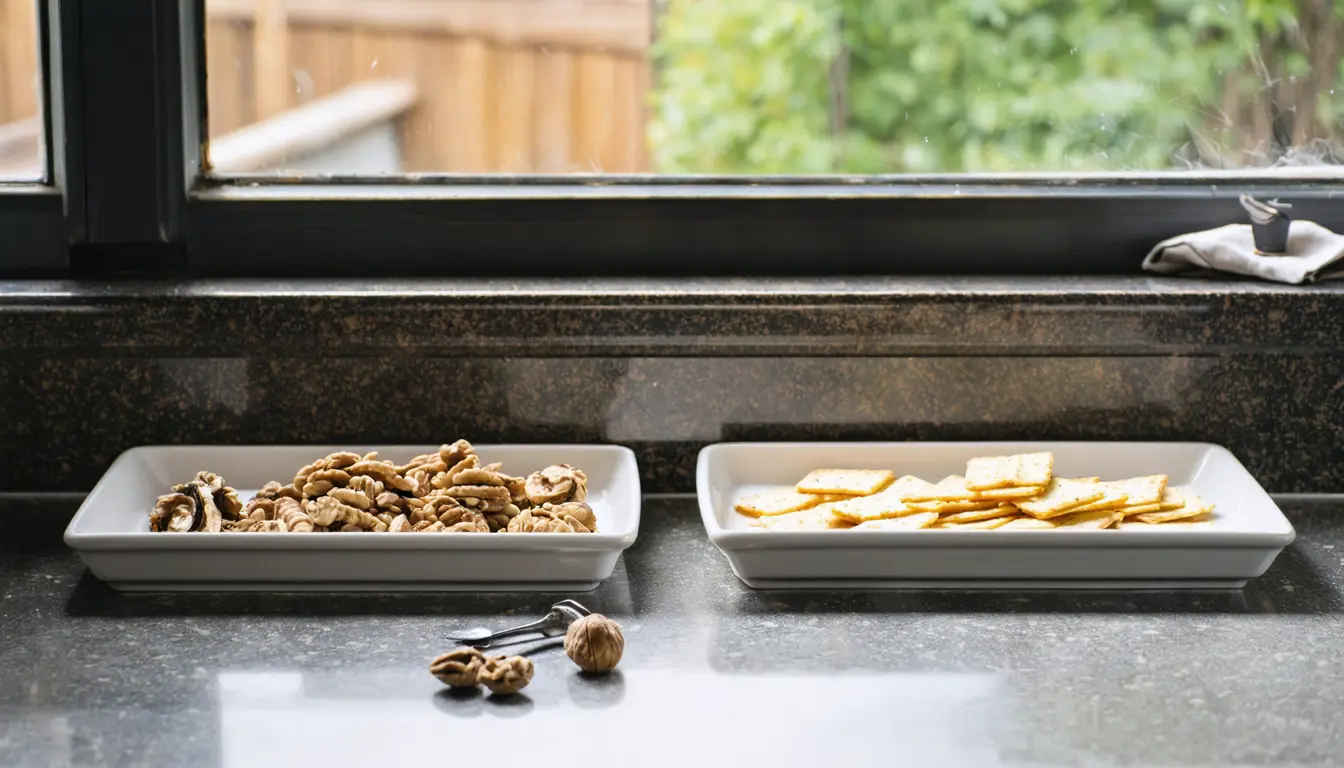
- The walnut group added roughly 1 to 2 ounces, or 30 to 60 grams, of walnuts to its daily meals.
- The paper reports its results as ancillary to the Walnuts and Healthy Aging randomized controlled trial.
- Earlier work from the same broader trial associated daily walnut consumption with reductions in several inflammation markers measured in blood.
Why it matters
- constraint The control arm also restricted other nuts, so the trial cannot separate an effect specific to walnuts from an effect of nuts in general.
- constraint The diet-score and blood-marker findings come from one trial, so their agreement is one study's consistency and not an independent replication.
- decision Anyone copying the habit has to pick what the walnuts replace; co-author Jayme Brisco points to snack foods full of sugar and refined carbohydrates.
Assignment is the strength of the design. The paper presents these results as ancillary to a randomized controlled trial [12], so differences at two years are less likely to come from people choosing walnuts for themselves.
The measurement is weaker. Diet came from recall: on five occasions over two years, participants described everything they ate and drank in the preceding 24 hours [6]. Five recalls of 24 hours each cover five days of eating [13], which is under 1 percent of the roughly 730 days of the trial [14]. The participants had been told either to eat walnuts or to avoid them [3][4], and beyond those instructions they were not asked to overhaul how they ate [5]. They knew what the study expected of them. Walnuts are also part of what the index scores [8], so we'd expect some of the gap to come from the nuts themselves.
The thing this doesn't tell you is how big the shift was. Discover Magazine reports only that the walnut group scored modestly but statistically significantly lower [7], and its account omits the scores, the between-group difference and any confidence interval. Senior investigator Sujatha Rajaram said in a press release: "The important message is that incorporating walnuts into the diet was associated with a shift toward a less inflammatory dietary pattern." [10]
In our view the result supports a narrow statement. In a randomized comparison, a daily walnut habit moved the estimated inflammatory potential of older adults' reported diets by a small, significant amount. Discover's own summary is that the findings suggest potential benefits worth investigating [16].
What to watch
- The full paper's score values, between-group difference and confidence interval, which would size a gap Discover calls only modest.
- A trial arm that eats a different nut, which would show whether the lower score is specific to walnuts.
- Blood-marker results reported alongside the diet scores for the same participants, which would link the eating pattern to measured inflammation.
Clarity's read
What the record supports and how the coverage leans. The claims behind it follow.
Reality
- Evidence45
- Adoption
- Insufficient
- Hype gap+15
- Incentives
- Insufficient
- Confidence50
Claim ledger
Ranked by verification strength, evidence, and original report placement.
- [1]
The study was published in the Journal of the Academy of Nutrition and Dietetics; older adults assigned to eat walnuts daily had diets with slightly lower estimated inflammatory potential after two years.
- [2]
The research involved 319 older adults in Loma Linda, California, participating in the larger Walnuts and Healthy Aging trial.
- [3]
One group added roughly 1 to 2 ounces, or 30 to 60 grams, of walnuts to their daily meals.
- [4]
The comparison group avoided walnuts and restricted other nuts.
- [5]
Beyond those instructions, participants were not asked to overhaul their eating habits.
- [6]
On five occasions over two years, participants described everything they had eaten and drunk during the preceding 24 hours.
- [7]
Researchers used those reports to calculate Dietary Inflammatory Index scores; by the study's end, the walnut group scored modestly but statistically significantly lower than the comparison group.
- [8]
The Dietary Inflammatory Index estimates how inflammatory an overall diet may be, drawing on the foods and nutrients someone consumes.
- [9]
The index is not a blood test; a lower score does not, by itself, demonstrate that someone's inflammation has fallen or that they will avoid disease.
- [10]
"The important message is that incorporating walnuts into the diet was associated with a shift toward a less inflammatory dietary pattern."
- [11]
"But the simplest way might be eating a handful of walnuts as a snack each day, specifically replacing the snack foods that are full of sugar and refined carbohydrates."
- [12]
The paper is titled "The Dietary Inflammatory Index Is Lower Among Healthy Older Adults Consuming a Walnut-Supplemented Diet. Ancillary Results From the Walnuts and Healthy Aging Randomized Controlled Trial".
- [13]
Five recalls of 24 hours each cover five days of eating.
- [14]
Five days of recalled eating is about 0.7 percent of the roughly 730 days in two years.
- [15]
Earlier research from the same broader trial found that daily walnut consumption was associated with reductions in several inflammation markers measured in blood.
- [16]
Discover Magazine wrote that the findings together suggest potential benefits worth investigating, without making walnuts a cure-all.
Sources
1 independent publisher whose own reporting we read for this story.
- discovermagazine.comA Handful of Walnuts a Day May Help Lower the Inflammatory Potential of Your Diet
1 article · October 13, 2026
Topics and entities
Follow any of these and your For You feed starts watching them — no settings page required.