Many of 45 EIT Food study participants would taste precision-fermented products before judging them
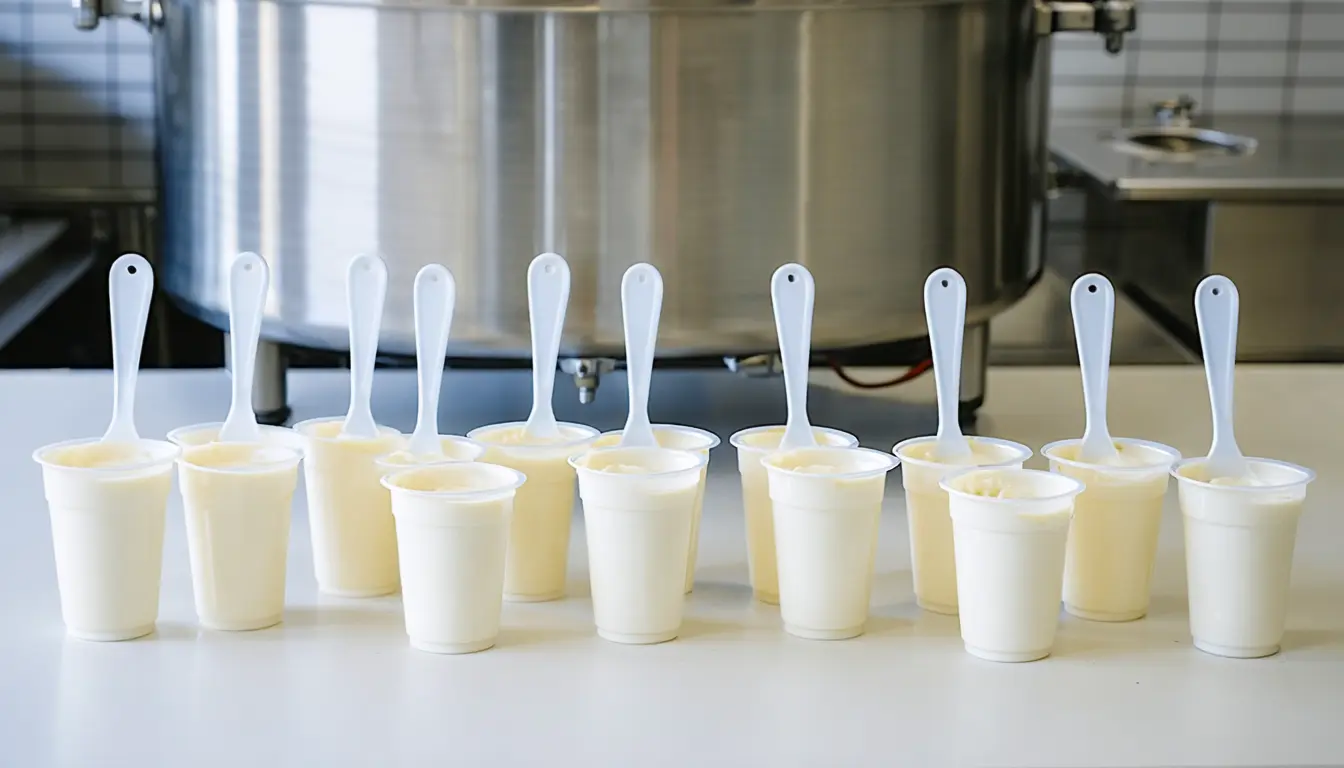
In an EIT Food qualitative study of 45 participants, many were curious enough to try precision-fermented products before forming a view. Participants also raised basic questions about the process that the report says brands must answer clearly.
The Scientist · Science desk
What happened
- Some participants struggled to understand how microorganisms are used, whether the ingredients are "real" or alternatives, and how safe the technology is; others asked about farming and food-production jobs.
- Taste, texture and nutritional value were more compelling reasons to choose a product than messages about replacing an existing ingredient for sustainability or ethical reasons.
- Linking precision fermentation to traditional fermentation made it feel less experimental to some participants.
Why it matters
- constraint Any curiosity is spent at first trial, so product quality sets the ceiling on what messaging can achieve.
- decision Brands choosing a lead message have evidence from this study for putting personal benefits first and keeping animal welfare and sustainability as supporting points.
- constraint With 45 participants and a qualitative design, the findings can guide message testing but cannot size how many consumers share each concern.
Precision fermentation puts microorganisms, yeast or fungi for instance, to work making particular substances such as proteins or fats, and those substances then go into food as ingredients [12]. The curiosity finding needs one qualification up front. In the second stage of the study, participants assessed product concepts and communication narratives [3], so the willingness to try is a stated intention about a concept. The design was qualitative and ran with 45 participants [2]. A study of that kind can show which questions come up. It cannot say how common they are, or how many of the curious would buy a product on a shelf.
Klaus G. Grunert, an Aarhus University marketing professor who leads the EIT Food Consumer Observatory, said: "Curiosity gives precision fermentation an opening, but consumers still have very basic questions about what the technology is and what it means for the food they eat" [10]. He added: "If those questions are left unanswered, novelty can quickly turn into suspicion. And once consumers decide to try a product, the product needs to deliver on their expectations" [11].
The explanation problem has two sides. Participants said vague descriptions could make precision fermentation sound almost like "magic," and some wondered whether information was being withheld [6]. The findings suggest communicators need to balance accessible science against enough detail to be transparent [17].
The familiar-food comparison runs into a related snag. Bread, yogurt and cheese are everyday foods, yet many participants did not immediately recognize them as fermented [7]. The report recommends pairing the comparison with a clear account of how precision fermentation itself works [8]. An analogy to bread or cheese helps only if the listener already thinks of them as fermented, and many participants did not.
The report, titled From Curiosity to Confidence, was published ahead of World Food Day on Oct. 16 [1][13]. It is intended to support food manufacturers, brands, retailers and other agrifood stakeholders [15]. EIT Food is supported by the European Institute of Innovation and Technology, a body of the European Union [14].
What to watch
- Any quantitative follow-up that puts numbers on how many consumers raise each question about microorganisms, safety and jobs.
- Whether brands that adopt taste-first, process-explained messaging see repeat purchase, which this study did not measure.
Clarity's read
What the record supports and how the coverage leans. The claims behind it follow.
Reality
- Evidence40
- Adoption
- Insufficient
- Hype gap+10
- Incentives45
- Confidence60
Claim ledger
Ranked by verification strength, evidence, and original report placement.
- [1]
New qualitative research from the EIT Food Consumer Observatory was published ahead of World Food Day on Oct. 16.
- [2]
The EIT Food Consumer Observatory study was conducted with 45 participants and was qualitative.
- [3]
In the first stage of the study, participants explored their perceptions of precision fermentation; in the second stage, they assessed product concepts and communication narratives.
- [4]
Participants described precision fermentation as brand new and innovative; while many were not yet convinced by the technology, they were curious enough to want to try a product before deciding what they thought of it.
- [5]
Some participants struggled to understand how microorganisms are used in the production process, whether the resulting ingredients should be considered "real" or alternatives, and how safe the technology is. Others questioned its implications for farming and food-production jobs.
- [6]
Participants said vague descriptions of microorganisms' role could make precision fermentation sound almost like "magic," leading some to wonder whether information was being withheld.
- [7]
Foods such as bread, yogurt and cheese are part of everyday diets, even though many participants did not immediately recognize them as fermented foods.
- [8]
Connecting precision fermentation with familiar food-production history made the technology feel less experimental to some participants; the report recommends combining this framing with a clear explanation of how precision fermentation itself works, rather than relying on the comparison alone.
- [9]
Taste, texture and nutritional value were identified as more compelling reasons to choose a product than messages centered primarily on why an existing ingredient should be replaced for sustainability or ethical reasons; animal welfare and sustainability still mattered but tended to play a supporting rather than decisive role.
- [10]
"Curiosity gives precision fermentation an opening, but consumers still have very basic questions about what the technology is and what it means for the food they eat," said Klaus G. Grunert, professor of marketing at Aarhus University and lead of the EIT Food Consumer Observatory.
- [11]
"If those questions are left unanswered, novelty can quickly turn into suspicion. And once consumers decide to try a product, the product needs to deliver on their expectations," Grunert said.
- [12]
Precision fermentation uses microorganisms such as yeast or fungi to produce specific substances, like proteins or fats, which can then be used as food ingredients.
- [13]
The report is titled From Curiosity to Confidence: Developing effective messaging for products made with precision fermentation.
- [14]
EIT Food is supported by the European Institute of Innovation and Technology (EIT), a body of the European Union.
- [15]
The study is intended to support food manufacturers, brands, retailers and other agrifood stakeholders in understanding how consumers respond to precision fermentation and how clearer, product-specific communication can help move consumers from curiosity toward confidence.
- [16]
The report suggests that products need to deliver on expectations from the first trial if initial curiosity is to develop into acceptance.
- [17]
The findings suggest that communicators need to strike a balance between making the science accessible and providing enough detail to be transparent.
Get this ledger inside ChatGPT. Ask about any of our stories and the answer brings its figure, each claim’s verdict and the sources. Free, no account.
Sources
1 independent publisher whose own reporting we read for this story.
- phys.orgConsumers need clearer answers before they can trust precision fermentation, new report finds
1 article · October 14, 2026
Topics and entities
Follow any of these and your For You feed starts watching them — no settings page required.