ScienceNot yet confirmed elsewhere1 publisher2 min readPublished
Cholesterol-linked antisense platform shows up to 16-fold higher potency in mice
Institute of Science Tokyo researchers report a cholesterol-linked antisense platform up to 16-fold more potent than standard ASOs in mice. It targets the potency-versus-safety trade-off of intrathecal ASO drugs, but a mouse result cannot yet say whether it holds in patients.
The Scientist · Science desk
What happened
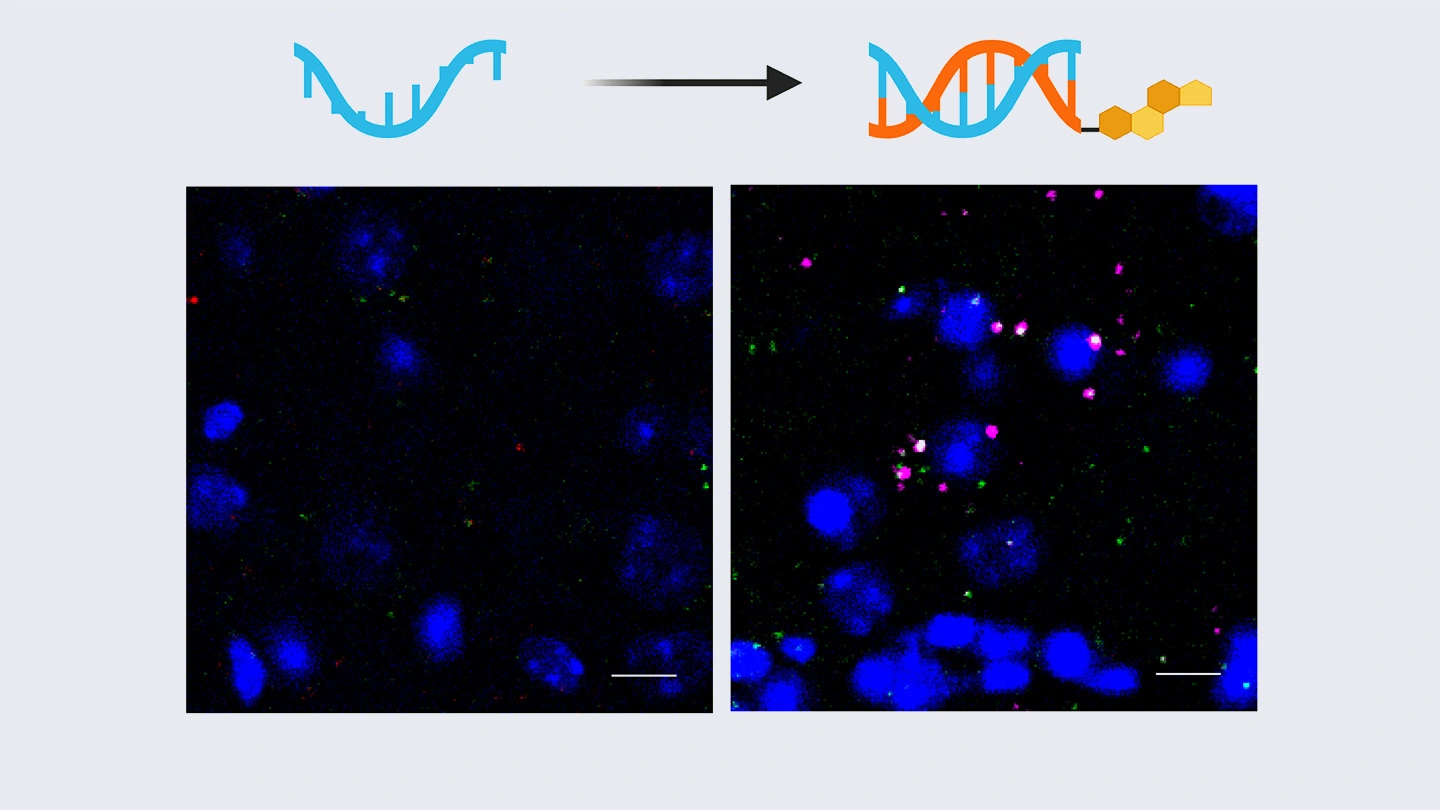
- The platform, Chol-HDO(PMO), pairs a PMO strand with its complementary RNA as a heteroduplex oligonucleotide and conjugates cholesterol to the duplex.
- Dosed into cerebrospinal fluid in mouse models, it outperformed PS-MOE and PMO ASOs on both translation inhibition and splice modulation, and the effects were long-lasting.
- The team reported no noticeable acute neurotoxicity, weight loss or immune reactions, the side effects that are common problems with many current antisense drugs.
- The same group had earlier shown PMO-based heteroduplex oligonucleotides working in muscle and, across the blood-brain barrier, in the central nervous system of a Duchenne mouse model.
Why it matters
- constraint "Up to 16-fold" is the best of several comparisons, so it cannot yet set a dose or a dosing interval for any single target gene.
- decision Developers weighing PS-MOE potency against PMO safety for a central nervous system target have a third chemistry to benchmark, though only against mouse data.
- capability Because swapping the PMO strand changed efficacy markedly, a team can hold the duplex-plus-cholesterol format fixed and compare backbones one at a time.
The proposed route into the brain runs through lipoproteins. According to the authors' mechanistic studies, Chol-HDO(PMO) gets its improved potency by binding lipoproteins in the cerebrospinal fluid [9]. Yanagidaira said "CSF lipoproteins are known to be associated with lipid transport in the brain, suggesting that exploiting them can enhance the delivery of therapeutic agents across the central nervous system" [10].
Binding is an observation. Crediting cholesterol for the potency gain is an inference. The platform stacks three components: PMO, its complementary RNA and cholesterol [3]. The comparators were PS-MOE and PMO ASOs [6]. Against those, a gain could come from the duplex, from the cholesterol or from both. We think the lipoprotein result points at cholesterol, but the summary cannot confirm it. The phys.org account does not report group sizes, doses, durations, target genes or a comparison arm that differs from the platform only by its cholesterol.
The safety finding is limited to noticeable side effects: acute neurotoxicity, weight loss and immune reactions [7]. That wording leaves subtler changes open. The problem attached to PS-MOE is neurotoxicity, including sedation, after intrathecal dosing [1]. The problem attached to PMO is frequent administration [2]. The long-lasting effect [6] is the finding that bears on the second, and its length is the number to look for in the paper.
Yanagidaira said the platform can be designed to target a wide range of genes through sequence design, and that it "holds great potential for the development of effective and safe therapeutics for many genetic diseases affecting the central nervous system" [12]. That is a projection. The paper, published in Nature Communications on Dec. 22, 2025 [4], tested splice modulation and translation blocking in mouse models [5].
What to watch
- A cholesterol-free duplex run side by side with Chol-HDO(PMO), which would show how much of the potency gain comes from cholesterol.
- Duration data for the long-lasting effect, set against the frequent dosing that limits PMO drugs today.
- Sedation and neurotoxicity checks in species larger than mice, the setting where PS-MOE problems appeared.
Clarity's read
What the record supports and how the coverage leans. The claims behind it follow.
Reality
- Evidence55
- Adoption
- Insufficient
- Hype gap+30
- Incentives
- Insufficient
- Confidence60
Claim ledger
Ranked by verification strength, evidence, and original report placement.
- [1]
PS-MOE ASOs, a phosphorothioate backbone with a 2'-O-methoxyethyl modification, have enhanced potency but can cause neurotoxic effects, including sedation, following intrathecal administration.
- [2]
PMO ASOs are safer, even at high dosages, but have lower potency, requiring frequent administration and increasing patient burden.
- [3]
A team led by Mitsugu Yanagidaira, Tetsuya Nagata and Takanori Yokota at the Institute of Science Tokyo developed Chol-HDO(PMO), a heteroduplex oligonucleotide combining PMO with its complementary RNA and further conjugated with cholesterol.
- [4]
The findings were published in the journal Nature Communications on Dec. 22, 2025.
- [5]
The researchers tested the splicing and translation-blocking abilities of Chol-HDO(PMO) in mouse models by administering it into the cerebrospinal fluid.
- [6]
Chol-HDO(PMO) outperformed conventional ASOs with PS-MOE or PMO chemistries in both translation inhibition and splice modulation, achieving up to a 16-fold increase in potency, and the therapeutic effects were long-lasting.
- [7]
Chol-HDO(PMO) did not cause noticeable side effects such as acute neurotoxicity, weight loss or immune reactions.
- [8]
The same group had previously developed PMO-based heteroduplex oligonucleotides and demonstrated efficacy in skeletal and cardiac muscles and, by crossing the blood-brain barrier, in the central nervous system, in a mouse model of Duchenne muscular dystrophy.
- [9]
Mechanistic studies revealed that Chol-HDO(PMO) achieves improved potency by binding to lipoproteins in the cerebrospinal fluid, using them as delivery vectors.
- [10]
"CSF lipoproteins are known to be associated with lipid transport in the brain, suggesting that exploiting them can enhance the delivery of therapeutic agents across the central nervous system"
ReportedSupportedSource: Mitsugu Yanagidaira, Institute of Science Tokyo, quoted by phys.orgView cited source - [11]
Substituting the PMO strand with alternative chemical backbones within the same HDO architecture markedly altered efficacy, which the authors say suggests that further refining the chemical structure could yield more effective and safer therapies.
- [12]
Yanagidaira said Chol-HDO(PMO) can be designed to target a wide range of genes through appropriate sequence design and "holds great potential for the development of effective and safe therapeutics for many genetic diseases affecting the central nervous system".
ReportedInsufficientSource: Mitsugu Yanagidaira, Institute of Science Tokyo, quoted by phys.orgView cited source
Sources
1 independent publisher whose own reporting we read for this story.
- phys.orgCholesterol-linked drug boosts gene-targeting potency in early findings
1 article · October 12, 2026
Topics and entities
Follow any of these and your For You feed starts watching them — no settings page required.
Topics
Entities
- Institute of Science TokyoFollow
- Mitsugu YanagidairaFollow
- Nature CommunicationsFollow
- Chol-HDO(PMO)Follow