ScienceNot yet confirmed elsewhere1 publisher3 min readPublished
Men who were lonely and isolated had about 5.8 fewer years free of depression and anxiety from age 50
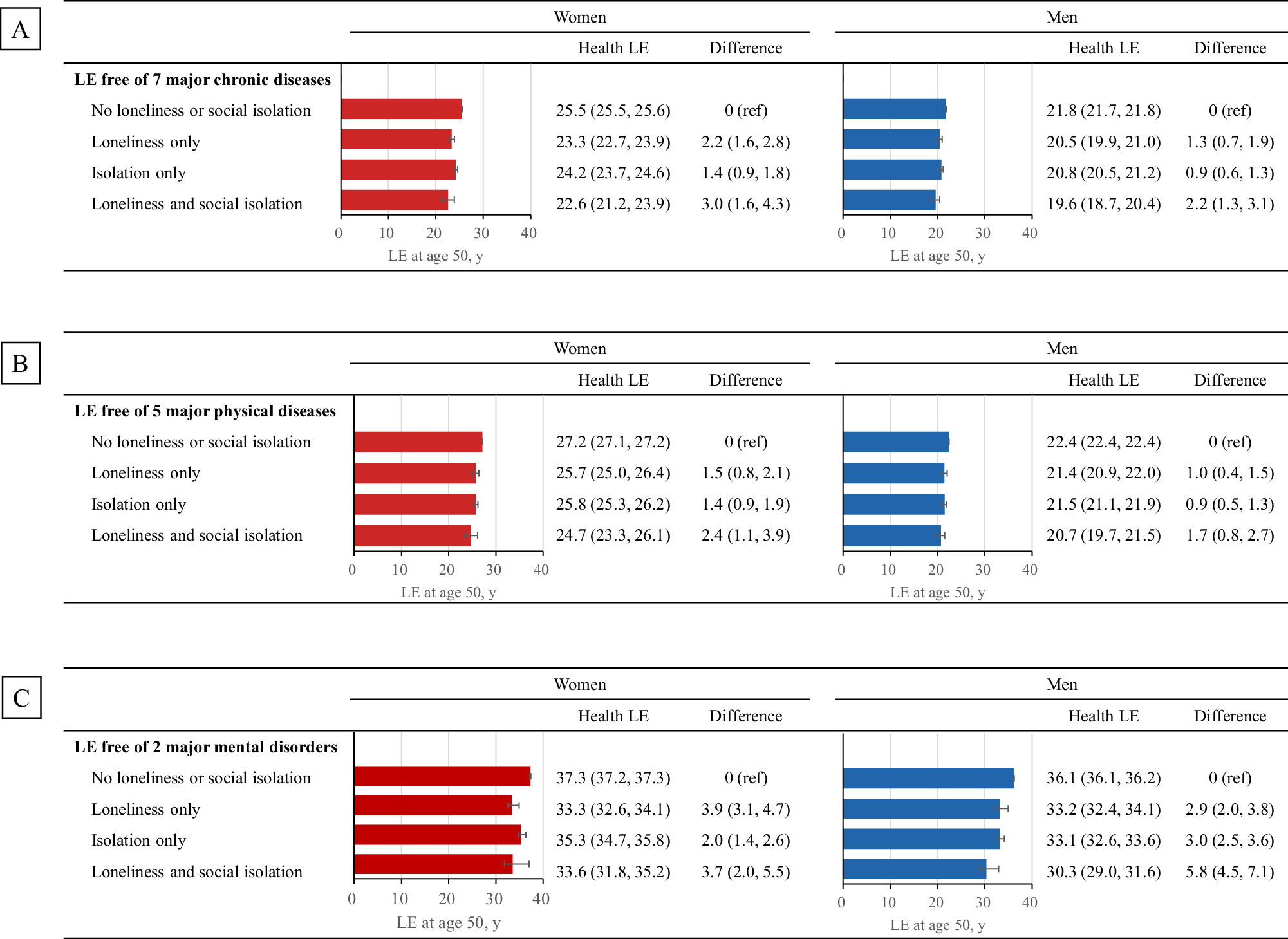
Tulane researchers found adults who were both lonely and socially isolated had fewer years free of mental disorders, about 5.8 for men and 3.7 for women. Because the study was observational, those years describe an association whose cause is still untested.
The Scientist · Science desk
What happened
- The Nature Communications study followed 277,489 adults aged 40 to 69 who started free of seven chronic conditions, including diabetes, cancer, dementia, depression and anxiety.
- On physical disease the pattern flipped, with lonely, isolated women having 2.4 fewer disease-free years and men 1.7 fewer.
- Better diet, regular exercise, enough sleep and not smoking measurably reduced the disease-free years lost in association with social isolation.
Why it matters
- constraint Until the planned trials report, the 5.8 and 3.7 years cannot be counted as healthy years an intervention would win back, so any cost-effectiveness case built on them rests on an association.
- decision Programmes for lonely middle-aged and older adults cannot assume diet, exercise and sleep coaching will cover them; in this cohort loneliness needs its own approach, separate from isolation.
- exposure If the association holds, depression and anxiety screening for lonely, isolated middle-aged men is where it applies first, since their mental-health gap is about 3.4 times their physical one.
Both headline figures are differences in expected years without disease. They are counted from age 50 and compared with people who reported neither loneliness nor isolation [5][3]. Nobody entered the cohort with any of the seven conditions [4], so every depression or anxiety diagnosis in the data arrived during follow-up. Lu Qi, the lead author, placed the work alongside earlier mortality research. "The findings weren't surprising to me," he said. "Previous studies found that social isolation and loneliness are related to mortality, especially premature mortality, and this study provides additional evidence." [13]
The study is observational [2], but some of the language around it is causal. The release headline says loneliness "may steal" nearly six years of good health [1]. Qi said: "Overall, the study found that social isolation and loneliness can have a significant impact on disease-free life expectancy." [11] The team plans clinical trials to test whether loneliness and isolation directly cause the effects [10]. That plan concedes that, for now, the years measure an association.
The thing this doesn't tell you is whether loneliness came before the mental-health decline or followed from it. Excluding people with diagnosed depression and anxiety at baseline [4] removes the obvious reverse case. We'd expect it to leave a smaller one. Some people with low mood that was present but undiagnosed may have reported loneliness because of it, then received a diagnosis later. In this design, that sequence would produce the same association.
The release does not say how many of the 277,489 participants reported both loneliness and isolation, or how many disease-free years the comparison group could expect from age 50 [4][5]. Without that baseline, 5.8 years cannot be read as a share of anyone's healthy life.
The sex differences run in opposite directions [3][6]. Men's mental-health gap is 2.1 years larger than women's [15]. For men it is about 3.4 times their physical-disease gap; for women it is about 1.5 times [16]. Qi offered an explanation. "This comes down to the gender differences between men and women," he said. "Our research found men are more susceptible to being affected by loneliness. We also know that women tend to live longer than men. There are gender advantages with certain diseases." [12] The second half of that answer is about women's longevity in general. In our view the first half is the part that bears on the mental-health gap.
We would put the most weight on the lifestyle result [8][9]. Isolation is an objective shortage of social connections, and loneliness is a person's dissatisfaction with the relationships they already have [7]. We think it is plausible that exercise, sleep and diet change a person's exposure to the first without touching the second. One condition applies. "Did not significantly reduce" means the study could not detect an effect; it does not show that healthy habits do nothing for lonely people. The researchers take the split as a sign that the two problems may need different approaches [14].
What to watch
- The clinical trials Tulane's team plans in order to test whether loneliness and isolation directly cause the lost disease-free years.
- Whether the association replicates in the additional population groups the researchers intend to study.
- Group sizes and baseline disease-free life expectancy in the full Nature Communications paper, which would show what share of healthy life 5.8 years is.
Clarity's read
What the record supports and how the coverage leans. The claims behind it follow.
Reality
- Evidence40
- Adoption
- Insufficient
- Hype gap+35
- Incentives45
- Confidence40
Claim ledger
Ranked by verification strength, evidence, and original report placement.
- [1]
The Tulane release on ScienceDaily ran under the headline "Loneliness may steal nearly 6 years of good health."
ReportedSupportedSource: ScienceDaily headline of Tulane release2 sources— create a free account to open themView cited source - [2]
Researchers at Tulane University's Celia Scott Weatherhead School of Public and Tropical Medicine published an observational study in Nature Communications on loneliness, social isolation and disease-free life expectancy.
- [3]
Compared with people who experienced neither loneliness nor social isolation, men experiencing both lived approximately 5.8 fewer years free from mental disorders such as depression and anxiety, and women about 3.7 fewer years.
- [4]
The researchers analysed data from 277,489 adults aged 40 to 69 who at baseline had none of seven major chronic conditions: diabetes, heart disease, lung disease, dementia, cancer, depression and anxiety.
- [5]
Using age 50 as a reference point, the team calculated how loneliness and social isolation were associated with the number of years participants could expect to live without these diseases.
- [6]
Compared with people experiencing neither, women experiencing both loneliness and social isolation had 2.4 fewer years free from physical disease, and men 1.7 fewer years.
- [7]
Social isolation refers to an objective lack of social connections; loneliness describes a person's subjective dissatisfaction with the quality of their relationships, regardless of how many social interactions they have.
- [8]
Healthier habits, including better diet, regular exercise, sufficient sleep and not smoking, measurably reduced the loss of disease-free years associated with social isolation.
- [9]
A healthier lifestyle did not significantly reduce the additional health risks linked to feeling lonely.
- [10]
The research team plans to study additional population groups and to use clinical trials to investigate whether loneliness and social isolation directly cause the health effects observed in the study.
- [11]
"Overall, the study found that social isolation and loneliness can have a significant impact on disease-free life expectancy," said lead author Lu Qi, HCA Regents Distinguished Chair and professor at Tulane.
- [12]
"This comes down to the gender differences between men and women," Qi said. "Our research found men are more susceptible to being affected by loneliness. We also know that women tend to live longer than men. There are gender advantages with certain diseases."
- [13]
"The findings weren't surprising to me," Qi said. "Previous studies found that social isolation and loneliness are related to mortality, especially premature mortality, and this study provides additional evidence."
- [14]
The release says the lifestyle distinction suggests loneliness and social isolation may require different approaches when it comes to protecting health.
- [15]
Men's deficit in years free of mental disorders is 2.1 years larger than women's.
- [16]
For men, the mental-disorder-free deficit is about 3.4 times the physical-disease-free deficit; for women it is about 1.5 times.
Sources
1 independent publisher whose own reporting we read for this story.
- sciencedaily.comLoneliness may steal nearly 6 years of good health
1 article · October 10, 2026
Topics and entities
Follow any of these and your For You feed starts watching them — no settings page required.
Entities
- Tulane UniversityFollow
- Celia Scott Weatherhead School of Public and Tropical MedicineFollow
- Lu QiFollow
- Nature CommunicationsFollow
- ScienceDailyFollow