Invest2 publishersIndependently confirmed3 min readPublished
Chips and servers account for nearly half of the trade growth behind the WTO's doubled forecast
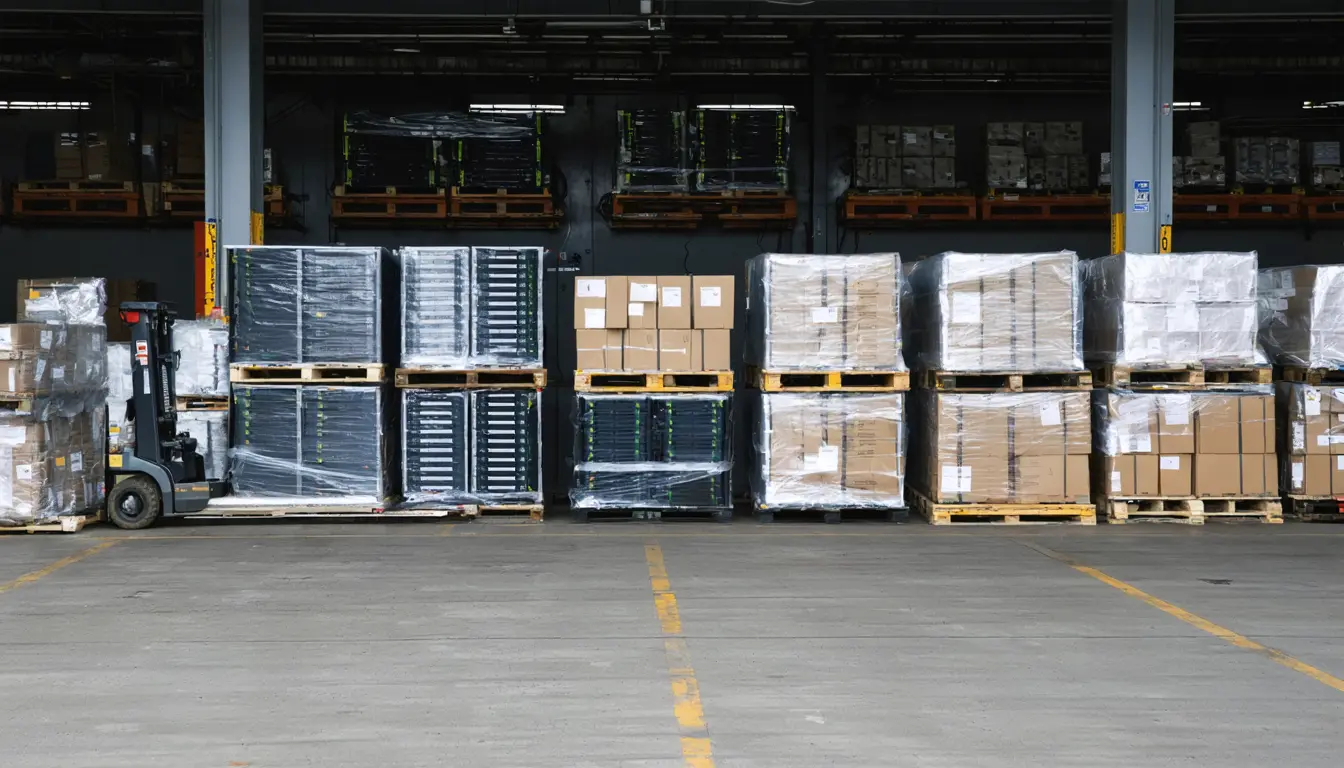
WTO economists more than doubled their 2026 merchandise trade growth forecast, to 3.9% from 1.9%. AI hardware drove nearly half of first-half goods-trade growth, Crypto Briefing reported, so the upgrade depends on how long data-center spending keeps growing.
The Investor · Invest desk
What happened
- Volumes of AI-enabling goods, including semiconductors, servers and data-center equipment, jumped 67% year on year.
- AI infrastructure spending is expected to rise at least 30% in 2026, then grow a further 10% to 20% in 2027.
- The WTO cut its 2026 services trade growth forecast to 3.3%, from the 4.8% it projected earlier.
Compiled by The InvestorSomething wrong?How this is made
Why it matters
- exposure A pause in data-center orders would remove close to half of this year's goods-trade growth, so any plan built on the WTO's 3.9% is also a bet on one category of hardware.
- cost Services exporters carry the cost of the Iran shock that goods trade absorbed: their 2026 forecast lost 1.5 points while the goods forecast gained 2.0.
- constraint With AI infrastructure spending growth expected to fall by a third or more in 2027, the higher 2027 trade forecast depends on goods outside AI hardware picking up speed.
Take the hardware out and the upgrade shrinks. Merchandise trade grew 3.5% in the first half of 2026, and AI-related goods drove nearly half of that, according to Crypto Briefing's account of the outlook [5]. Chips, servers and other data-center equipment therefore added about 1.75 percentage points, and every other traded good added roughly the same [17]. Everything else, taken together, contributed about what the WTO in March expected all merchandise trade to grow this year: 1.9% [2].
The full-year figure also asks for more than the first half delivered. If the two halves carry similar weight, a 3.9% year needs second-half growth near 4.3%, which is twice 3.9 less 3.5 [22]. Trade is running well ahead of output, at 1.5 times the WTO's 2.6% forecast for global GDP growth [12][21]. Chain 2025's 4.2% to the 2026 and 2027 forecasts and volumes end 2027 about 12.7% above 2024 [13][20]. Crypto Briefing called it one of the strongest multi-year trade forecasts since before the 2008-2009 financial crisis [14].
Goods have absorbed the shocks so far. The US-Israeli conflict with Iran, which began in February, has disrupted shipping through the Persian Gulf [6]. WTO economists credited supply chains with adapting to higher fuel and fertilizer costs, Crypto Briefing reported [7]. WTO chief economist Robert Staiger said he found it somewhat surprising that merchandise trade growth had held up so well against all the shocks, according to the South China Morning Post [15]. Asia is expected to lead the goods expansion while Middle East exports decline significantly [11].
AI spending could keep compounding faster than planned, in which case 3.9% turns out low. It could slow on the schedule the outlook sets out [10], a fall of between a third and two-thirds in its growth rate [23]. Or it could stall, and goods trade would drift back toward the roughly 1.75 points everything else supplied in the first half [17].
I think the middle path is the likeliest, and it puts the 2027 number at risk before the 2026 one. The WTO has trade growth speeding up in 2027 [9] in the same year that growth in infrastructure spending is expected to slow [10]. Some other part of the goods basket has to accelerate to close that gap, and the outlook as reported does not say which. A rebound in Middle East exports is the obvious candidate. It is also the region the WTO is currently marking down [11].
The view is wrong if second-half 2026 data show growth at or above 4.3%, with goods outside AI hardware contributing well over the 1.75 points they managed in the first half [22][17]. In that case the upgrade is broader than one capex cycle. If second-half growth stays near the first half's 3.5% [5], the 3.9% is too high.
What to watch
- The WTO's next outlook revision, and whether the 2026 goods figure holds at 3.9% once second-half volumes are counted.
- Company guidance on 2027 AI infrastructure budgets, the input the 2027 trade forecast leans on most.
- Any reopening of Persian Gulf shipping routes, the clearest route to a non-AI recovery in Middle East goods exports.
Clarity's read
What the record supports and how the coverage leans. The claims behind it follow.
Reality
- Evidence58
- Adoption62
- Hype gap+8
- Incentives
- Insufficient
- Confidence60
Claim ledger
Ranked by verification strength, evidence, and original report placement.
- [1]
The WTO raised its 2026 merchandise trade volume growth forecast to 3.9% from an earlier prediction of 1.9%, in its global trade outlook report published on Thursday.
ReportedSupportedSource: South China Morning Post; also reported by Crypto Briefing2 sources— create a free account to open themView cited source - [2]
In March, the WTO was forecasting 1.9% merchandise trade growth for 2026.
ReportedSupportedSource: Crypto Briefing2 sources— create a free account to open themView cited source - [3]
AI-enabling goods (semiconductors, servers and other data-center equipment) accounted for nearly 47% of global merchandise trade growth.
ReportedSupportedSource: Crypto Briefing2 sources— create a free account to open themView cited source - [4]
Volumes of AI-enabling goods jumped 67% year-on-year.
ReportedSupportedSource: Crypto Briefing2 sources— create a free account to open themView cited source - [5]
Merchandise trade grew 3.5% in the first half of 2026, and AI-related goods drove nearly half of it.
ReportedSupportedSource: Crypto Briefing2 sources— create a free account to open themView cited source - [6]
The US-Israeli conflict with Iran, which began in February 2026, has rattled energy markets and disrupted shipping routes through the Persian Gulf.
ReportedSupportedSource: Crypto Briefing2 sources— create a free account to open themView cited source - [7]
WTO economists pointed to the resilience of goods trade, with supply chains adapting to higher fuel and fertilizer costs.
ReportedSupportedSource: Crypto Briefing2 sources— create a free account to open themView cited source - [8]
The WTO cut its 2026 services trade growth forecast to 3.3%, down from the 4.8% it projected earlier.
ReportedSupportedSource: Crypto Briefing2 sources— create a free account to open themView cited source - [9]
The WTO raised its 2027 merchandise trade growth estimate from 2.6% to 4.1%.
- [10]
AI infrastructure spending is expected to rise by at least 30% in 2026, followed by another 10-20% in 2027.
- [11]
Asia is expected to lead the expansion in merchandise trade, while the Middle East faces significant declines in exports.
- [12]
The WTO projects global GDP growth of 2.6% in 2026 and 2.9% in 2027.
- [13]
Merchandise trade volumes grew 4.2% in 2025, and the projections imply a cumulative increase of more than 12% by 2027 compared with 2024 levels.
- [14]
The projections add up to one of the strongest multi-year trade growth forecasts since before the 2008-2009 global financial crisis.
- [15]
"It is somewhat surprising that [merchandise trade growth] is so resilient to all the shocks that have been going on."
ReportedSupportedSource: Robert Staiger, WTO chief economist, quoted by the South China Morning PostView cited source - [16]
The 2026 forecast more than doubled: 3.9% is about 2.05 times 1.9%.
- [17]
In the first half of 2026, AI-related goods contributed about 1.75 percentage points of the 3.5% growth and all other goods about 1.75 points.
- [18]
The 2026 forecast rose by 2.0 percentage points and the 2027 forecast by 1.5 points.
- [19]
The 2026 services trade growth forecast was cut by 1.5 percentage points.
- [20]
Compounding 4.2% (2025), 3.9% (2026) and 4.1% (2027) puts 2027 merchandise trade volumes about 12.7% above 2024.
- [21]
Forecast 2026 merchandise trade growth is 1.5 times forecast 2026 global GDP growth.
- [22]
Assuming the two halves of 2026 carry similar weight, a 3.9% full year after 3.5% first-half growth implies second-half growth near 4.3%.
- [23]
If AI infrastructure spending grows 30% in 2026, growth of 10-20% in 2027 is a fall of one-third to two-thirds in the growth rate.
Sources
2 independent publishers whose own reporting we read for this story.
- cryptobriefing.comWTO lifts 2026 trade growth forecast to 3.9% as AI goods carry the load
1 article · October 8, 2026
- scmp.comWTO nearly doubles trade volume forecast as AI surge counters Middle East disruptions
1 article · October 8, 2026
Topics and entities
Follow any of these and your For You feed starts watching them — no settings page required.
Topics
- AI InfrastructureFollow
- International tradeFollow
- Services tradeFollow
Entities
- Robert StaigerFollow
- World Trade OrganizationFollow
- Global Trade OutlookFollow